

Beef Lo Mein Recipe (Better Than Takeout)
This beef lo mein recipe is my answer to takeout night. It’s thin slices of ribeye, fresh lo mein noodles and crisp vegetables, all tossed in a sauce with miso and a little anchovy paste in it. (Nobody tastes fish. NO ONE, I promise.) It all happens in one hot wok, and it happens fast. Better than takeout, and you don’t have to leave the house!
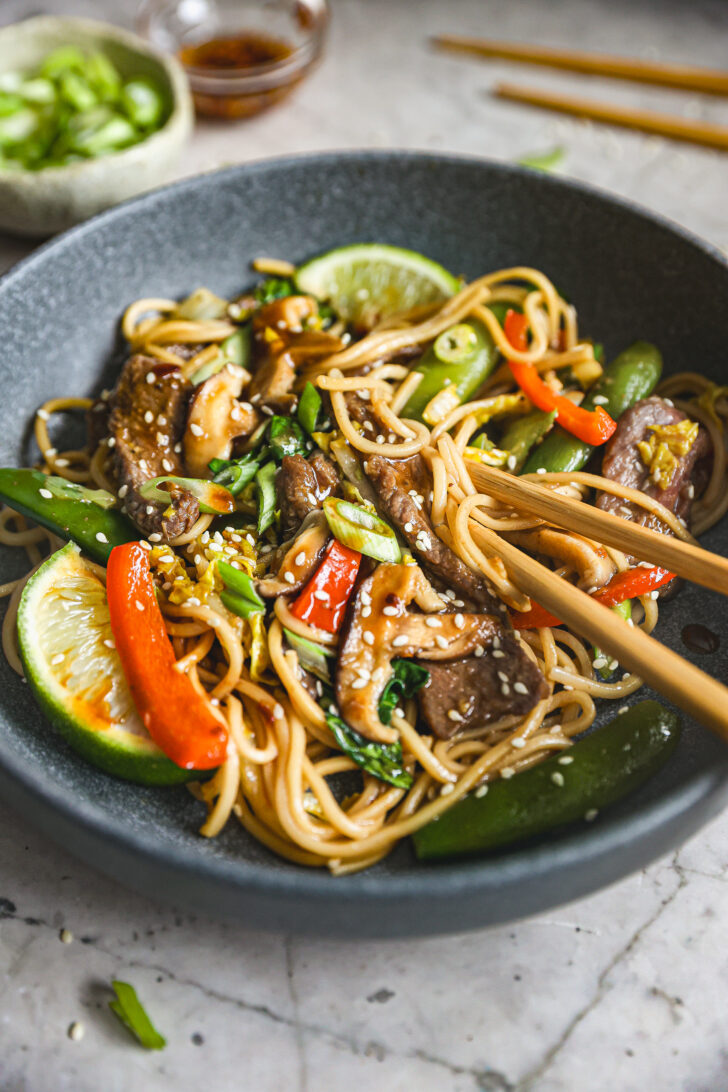
Do not forget to check out my Chefs Tips and Wine Pairings sections below!
The Recipe is next!
But remember, you can scroll past the recipe to learn a bunch more about this beef lo mein recipe. Plus wine pairings!! The recipe is listed again at the end, so you don’t have to come all the way back up here!! Unless you want to 🙂
Beef Lo Mein Recipe (Better Than Takeout)
Ingredients
For the Beef and Marinade
- 10 oz ribeye steak, thinly sliced against the grain
- 1/4 tsp baking soda , to tenderize the beef
- 1 tbsp Shaoxing wine , or dry sherry
- 1 tbsp dark soy sauce
- 1 tsp cornstarch
- 1 tsp toasted sesame oil
- 1/4 tsp black pepper
- 1 tsp grated fresh garlic
For the Sauce
- 2 tbsp dark soy sauce
- 1 tbsp hoisin sauce
- 1 tbsp oyster sauce
- 1 tsp rice vinegar
- 1 tsp chili oil , optional, for heat
- 1 tsp honey, or maple syrup
- 1 tsp white or red miso paste , for fermentation richness
- 1/2 tsp anchovy paste , for bold umami notes
- 1/4 tsp white pepper , for subtle spice and complexity
- 2 tbsp chicken or beef broth
To Finish
- 10 oz fresh Lo Mein Noodles, cooked until al dente (you can substitute Chow Mein Noodles or even Udon Noodles)
- 2 tbsp olive oil
- 2-3 large cloves garlic, minced
- 1 tbsp freshly grated ginger
- 1 cup sugar snap peas, trimmed
- 1/2 cup shiitake mushrooms, thinly sliced
- 1 red bell pepper, julienned
- 1 cup baby bok choy, chopped into bite-size pieces
- 2 cup napa cabbage, shredded (adds crunch and natural sweetness)
- 2 scallions, sliced diagonally (white and green parts separated)
Garnish
- 1 tbsp Shaoxing wine , or sherry, for delazing
- 1 tbsp sesame seeds, toasted
- Lime wedges , for serving
Instructions
Step 1: Prep Everything
- Marinate the Beef – In a bowl, mix ribeye slices with baking soda, Shaoxing wine, dark soy sauce, cornstarch, sesame oil, black pepper, and garlic. Let sit for 15–20 minutes to tenderize. But if possible marinate for 8-10 hours or overnight
- Make the Sauce – Whisk together dark soy sauce, hoisin sauce, oyster sauce, rice vinegar, chili oil, honey, miso paste, anchovy paste, white pepper, and broth. Set aside.
- Prepare Noodles & Vegetables – Cook noodles until al dente, rinse with cold water, and set aside. Slice and prep garlic, ginger, scallions, and vegetables.
Step 2: Cook the Beef First, THEN Sauté Aromatics
- Heat 1 tablespoon avocado oil in a large wok over high heat until shimmering.
- Add the marinated beef in a single layer. Sear for 2–3 minutes, stirring occasionally, until browned but still slightly underdone.
- Remove the beef and set aside (leaving flavorful oil behind).
- Reduce heat to medium-high, add garlic, ginger, and scallion whites, and stir-fry for 30 seconds until fragrant.
Step 3: Cook the Vegetables
- Add remaining 1 tablespoon avocado oil to the wok.
- Stir-fry Napa cabbage, sugar snap peas, mushrooms, bell pepper, and bok choy for 3–4 minutes, keeping them crisp-tender.
Step 4: Deglaze, Combine, and Finish
- Push vegetables to the side, pour in Shaoxing wine, and scrape up all the flavorful browned bits from the bottom.
- Return the beef and cooked noodles to the wok.
- Pour in the prepared sauce and toss everything together until evenly coated.
- Stir-fry for 1–2 minutes, ensuring everything is heated through.
Step 5: Garnish and Serve
- Sprinkle with toasted sesame seeds, garnish with scallion greens, and serve with lime wedges for a bright, fresh finish.
- Transfer the lo mein to serving plates.
Lots of good stuff below
Don’t put those chopsticks down just yet. Lo mein is noodles and sauce in a wok, and somehow the little details are the secret to getting it right.
It’s why I slice the ribeye thin, against the grain. It’s why the sauce has miso and anchovy paste in it. It’s why I let the wok get really hot before the beef goes anywhere near it.
Those details are what make this beef lo mein recipe taste like real takeout. Below you’ll find what makes it different, the best beef for lo mein, my Chef’s Tips, a Flavor Adjustment Guide, make-ahead tips, wine pairings and so much more.
The recipe link shows up at the bottom so you don’t have to scroll back up.
A Little History of Beef Lo Mein
Noodles have been around in China a long time. In 2002, archaeologists dug up a bowl of them at a place called Lajia, in northwestern China. They were about 4,000 years old. Researchers said they were made from millet, and they’d been buried under about ten feet of dirt! Lo mein itself is Cantonese. The name, 撈麵 or lou mein, means stirred or tossed noodles. The noodles stay soft and get tossed with the sauce, where chow mein, which means fried noodles, gets fried in the pan and sometimes ends up crispy.
Then it came to America, slowly. In 1849, during the Gold Rush, Chinese merchants opened restaurants in San Francisco. Over the next few generations, Cantonese cooks shaped what we now call Chinese-American food. Lo mein came right along with it.
Traditional lo mein has always had room for meat, vegetables and plenty of sauce, so there isn’t one authentic version. This is my take on a Chinese-American beef lo mein recipe, with ribeye and a sauce that has miso and anchovy paste in it, and I’m ok with that 🙂
What Makes This Beef Lo Mein Recipe Different
This one started with takeout. I wanted the lo mein from the white box, just with better beef and vegetables that still crunch.
So it’s ribeye. For lo mein, I know. The fat keeps it juicy in the wok.
You already know about the anchovy paste from up above. It goes in with the miso, and they help each other out. Miso and soy sauce have glutamates and anchovies have inosinate, so together it all tastes more savory. I wrote about that in The Umami Code.
Honey adds a little sweet and rice vinegar adds a little sour. The chili oil is up to you (add it and you’ve got a spicy beef lo mein).
The noodles stay soft, too. That’s the lo mein part, so scroll up to the history if you missed it. It’s the best beef lo mein recipe I’ve got 🙂
Why This Beef Lo Mein Recipe Works
- Ribeye, even for lo mein: Yes, it’s a splurge, I said that up above. The marbling is the point though. It keeps the beef juicy.
- The baking soda in the marinade: It’s only a quarter teaspoon, and it makes the beef so tender. Please don’t leave it out.
- The sauce: I went on about the miso and anchovy paste up in What Makes This Different, so I’ll spare you here 🙂
- Use dark soy sauce: It’s thicker than regular soy sauce, a little sweet and less salty. That deep brown color on takeout noodles comes from dark soy.
- Fresh noodles: Lo mein noodles are wheat and egg. Get the fresh ones if you can. Udon is fine too.
- Shiitake mushrooms: Even more umami. Ok, I’ll stop now.
- Napa cabbage and snap peas: All that salt needs something to push back on. They’re crunchy and a little sweet.

How to Make This Beef Lo Mein Recipe

Step 1: Prep
- Marinate the ribeye slices for 15 to 20 minutes, or overnight if you can.
- Whisk the sauce together and set it aside.
- Cook the noodles just to al dente, rinse them cold, and prep the vegetables.

Step 2: Stir-Fry
- Sear the beef in a very hot wok for 2 to 3 minutes, then pull it out.
- Stir-fry the garlic, ginger and scallion whites for 30 seconds, then the vegetables for 3 to 4 minutes.
- Deglaze with the Shaoxing wine, add the beef, noodles and sauce, and toss for 1 to 2 minutes.

Step 3: Plate and Garnish
- Plate it up.
- Top with sesame seeds and scallion greens.
- Serve with lime wedges.
Remember, you can skip ahead Jump to Recipe
Make-Ahead & Storage for This Beef Lo Mein Recipe
Prep Ahead: A lot of this recipe can be done the night before, which is nice on a weeknight. The beef is the big one. I put it in the marinade the night before whenever I can, and it’s good for as much as a day in a sealed container in the fridge. You can whisk the sauce together ahead of time too, and the vegetables can be sliced and put in a bag in the fridge. That way, when it’s time to cook, all you have to do is get the wok hot.
Leftovers: Lo mein keeps pretty well. Put it in a sealed container in the fridge and it’s good for as much as 4 days. The noodles will soak up some of the sauce overnight, so add a splash of broth when you reheat it in a hot pan.
Garnish: Save the sesame seeds, scallion greens and lime for after you reheat, so they stay fresh.
Freezing: I wouldn’t. The noodles and the snap peas get soft, and soft snap peas are sad snap peas!
Meal Prep Tip: If you’re the Sunday meal prep type, marinate a double batch of ribeye. Future you will be very happy on Monday night.
Upgrades and Variations for This Beef Lo Mein Recipe
I said up above that this one started with takeout, and that’s still the idea here. These are the things you can play with once you’ve made it the regular way.
- First, the noodles: hand-pulled noodles are chewier than the fresh ones, and some Asian markets carry them. You can make them yourself too. I’m not going to pretend that’s quick.
- Then there’s the char. If you leave the vegetables alone in the hot wok for a few seconds before you stir, they pick up a little smoke, and that’s the flavor you remember from the good takeout place.
- More umami is always an option with me (no surprise there). A spoonful of mushroom powder or a splash of fish sauce goes right into the sauce.
- Crispy noodles are fine too, just let them sit in the wok for a minute before the sauce goes in. Technically that’s chow mein territory now. Scroll up to the history if you want to argue about it 🙂
- Black vinegar can stand in for the lime at the end. It’s darker and a little malty.
- Swap the protein: chicken thighs, shrimp and tofu all work (press the tofu and sear it first). And the vegetables are flexible. Broccoli, carrots, whatever is hanging out in the crisper drawer. Lo mein doesn’t care.

Chef’s Tips for This Beef Lo Mein Recipe
I never went to cooking school, so I had to figure these out on my own. Here’s what I’d pass along for lo mein.
- Slice the ribeye against the grain: Thin slices, as thin as you can get them. Fifteen minutes in the freezer first firms it up and makes that a lot easier.
- Get the wok really hot. Ok, quick nerd moment. Flick some water in. When the drops dance around, it’s ready. That’s the Leidenfrost effect! Then the beef goes in.
- Don’t crowd it: Too much in the wok at once and it steams. That’s why the beef comes out before the vegetables go in.
- The noodles: Pull them just before al dente. Mushy lo mein is no fun.
- Mix the sauce first. It goes fast after that.
- The Shaoxing wine goes in after the vegetables, and you scrape up the brown bits. Don’t leave those behind!
And if it tastes flat, see the Flavor Adjustment Guide below.
Skip ahead Jump to Recipe
Flavor Adjustment Guide for This Beef Lo Mein Recipe
If something tastes off, don’t stress. It’s lo mein! It’s very fixable.
- Salty is the usual suspect, and that’s on me. Dark soy, oyster sauce, miso AND anchovy paste all in one sauce… I regret nothing. A little broth and a few more noodles fix it.
- If it’s flat, it wants more lime. If it’s too sweet, it wants a little rice vinegar.
- If it tastes fishy, your anchovy paste is a strong one. More lime, more scallions, and use a little less next time.
- Too hot from the chili oil means more noodles. And maybe a glass of milk.
- Noodles all clumped up just need a splash of broth and another minute in the wok.
- Tough beef… that’s a next time problem 🙂 Slice it thinner and pull it out sooner.

Key Ingredients for This Beef Lo Mein Recipe
Lo mein is noodles and sauce, mostly. So the sauce is where I’d spend a little time.
- Ribeye: It comes from the rib section, ribs 6 through 12, and that’s where all the marbling is. Splurge here (I already confessed up above).
- Shaoxing wine: Chinese rice wine from the city of Shaoxing, in Zhejiang province. Dry sherry is the closest swap.
- Dark soy sauce: Darker and thicker than the regular kind, and a little sweet.
- Oyster sauce: A cook named Lee Kum Sheung made the first batch in 1888, by accident. He forgot about a pot of oysters. Great mistake!
- Miso: Fermented soybean paste. White or red both work.
- Anchovy paste: Half a teaspoon. The poison is in the dose!
- Fresh lo mein noodles: Wheat and egg, in the fridge section at an Asian market. They’re worth the trip.
Wine Pairings for This Beef Lo Mein Recipe
Just a quick side note on wine. A few years ago I discoverd Vivino. It is an unbelievable resource for anyone interested in wine. They have an app that can read any lable in a wine store and give you a score and tasting notes. I am NOT sponsored by them in any way at all. It is just such an increadible tool. You will see many of my wine links will go to them. In any event, on to the wine!!
- Gewürztraminer (Alsace, France)
Why it Works: Gewürz is German for spice. It’s a little sweet, and that’s nice with the chili oil. The Trimbach family started growing grapes in 1626.
Tasting Notes: Lychee, rose petal, ginger, honeyed citrus
Suggested Label: Trimbach Gewürztraminer - Zinfandel (California, USA)
Why it Works: This one is big and jammy. It’s mostly Zinfandel, with some Carignane and Petite Sirah in there too.
Tasting Notes: Blackberry, plum, black pepper, vanilla
Suggested Label: Ridge Vineyards Geyserville - Grüner Veltliner (Wachau, Austria)
Why it Works: It’s crisp and a little peppery. Federspiel is the middle of the three Wachau styles.
Tasting Notes: Lime, white pepper, green apple, fresh herbs
Suggested Label: Domäne Wachau Federspiel Grüner Veltliner - Côtes du Rhône (Rhône Valley, France)
Why it Works: Guigal’s is about half Syrah. It’s easy to find and it doesn’t cost much.
Tasting Notes: Black cherry, dried herbs, pepper, earth
Suggested Label: E. Guigal Côtes du Rhône Rouge - Dry Riesling (Mosel, Germany)
Why it Works: It’s dry, and the name comes from the blue slate in the Mosel vineyards. Lime on the noodles, lime in the glass 🙂
Tasting Notes: Green apple, lime, white peach, slate
Suggested Label: Dr. Loosen “Blue Slate” Dry Riesling
Beef Lo Mein Recipe FAQs
The names tell you. Lo mein (撈麵) is tossed noodles and chow mein (炒麵) is fried noodles. So lo mein stays soft in the sauce, and chow mein goes in the pan and can get crispy.
I use ribeye, for the marbling. Flank steak and sirloin are cheaper and they work, as long as you slice them thin against the grain.
No, not really. It’s my take on Chinese-American beef lo mein. Traditional lo mein is Cantonese, and nobody I know of puts anchovy paste in it 🙂
Dry sherry. Not cooking sherry, which has salt added.
You can. The noodles will be paler and a little saltier, so I’d stir a tiny bit of molasses into it.
Fresh lo mein noodles if you can get them. Udon works. Spaghetti works too, in a pinch!
Yes! Chicken thighs, pork, shrimp or tofu. Shrimp cooks fast, so add it last
Partly. The beef can sit in the marinade overnight, and the sauce can be made a day ahead.
They’re good for as much as 4 days, sealed up in the fridge. Reheat with a splash of broth.
Yes, with some label reading. Soy sauce and Shaoxing wine are both made with wheat. Tamari, gluten-free oyster sauce and hoisin, dry sherry and rice noodles will do it.
Add more chili oil, some red pepper flakes or a sliced Thai chili, and you’ve got a spicy beef lo mein recipe!
Broccoli, snow peas, carrots and baby corn are all good. Just keep them crunchy.

Equipment Needed for This Beef Lo Mein Recipe
Wok or Large Skillet – For high-heat cooking.
- Wok or large skillet: It has to handle high heat. A 14-inch carbon steel wok is ideal, but a big skillet works too.
- Sharp chef’s knife and cutting board: For slicing the ribeye thin against the grain and prepping the vegetables.
- Two mixing bowls: One for the beef marinade, one for the sauce.
- Microplane or fine grater: For the fresh ginger and garlic.
- Large pot and colander: To cook the noodles and rinse them cold.
- Tongs or long chopsticks: For tossing the noodles with the sauce.
- Wooden spatula: For scraping up the browned bits when the Shaoxing wine goes in.
- Measuring spoons: The sauce is all teaspoons and tablespoons.
Related Recipes You’ll Love:
Spicy Pork Dan Dan Fusion: The other noodle bowl on the site, and this one has the heat. If you added the chili oil to your lo mein and wanted more, start here.
Deep & Creamy Beef Stroganoff Recipe: Same ribeye, same thin slices against the grain, completely different direction. Egg noodles, mushrooms, brandy and a creamy sauce with a little soy in it for umami.
The World’s Best Chili Recipe: There’s anchovy paste in this one too (I can’t help myself). Plus dark beer, coffee and a little cocoa. Nobody tastes any of them on their own, and that’s the point.
The Best Homemade Lasagna Recipe: More noodles, more anchovy paste! It melts into the sauce with the sausage and the beef, and a Parmesan rind goes in too.
The Best Homemade Sloppy Joe Recipe: Another weeknight beef dinner that’s better than the store-bought version. Worcestershire, A1 and a little molasses do the same salty-sweet thing the lo mein sauce does.
You made it!
That’s my beef lo mein recipe. Ribeye with a little baking soda, miso and anchovy paste in the sauce, and a wok hot enough to make the water dance (remember the Leidenfrost thing?).
If you make it, leave me a rating and a comment below. I read every one, and if you have a question, I’ll get back to you.
Now that you made it all the way down here, go get that wok hot!!
Made this tonight and WOW—it was better than any takeout I’ve ever had! The sauce is absolute perfection. I added extra mushrooms because we love them. Definitely making this again!
Hi Emily!
That is so great!! I’m so glad you liked it and yes, more mushrooms!
David