

The Best (Ever) Meatball Recipe
There are few meatball recipes that put all the rest to shame, but this is the best meatball recipe you’ll find, and I’ll stand behind that! Start by rendering the pancetta… it’s worth the patience, I promise. Then the beef and pork go in, with a sourdough panade handling the moisture while you’re at it, and the flavor left to that aged Parmigiano (the GOOD stuff, please). Bake them to a nice golden brown, give them time in the sauce, and you’ve got restaurant-quality meatballs with none of the trouble. These are IT!!
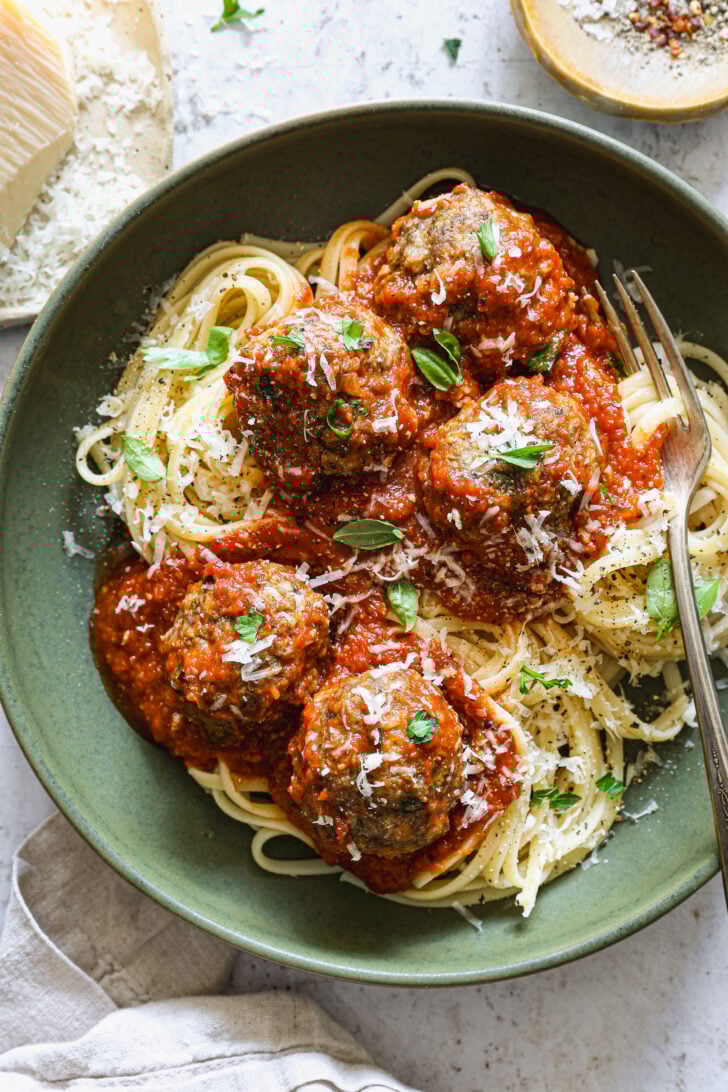
Do not forget to check out my Chefs Tips and Wine Pairings sections below!
The Recipe is next!
But remember, you can scroll past the recipe to learn a bunch more about this meatball recipe. Plus wine pairings!! The recipe is listed again at the end, so you don’t have to come all the way back up here!! Unless you want to 🙂
The Best (Ever) Meatball Recipe
Ingredients
Meat
- 1 lb ground beef, 80/20 or brisket blend
- ½ lb ground pork, or Italian sausage
- 2 oz pancetta, finely minced and lightly sautéed
Binders
- ¾ cup fresh breadcrumbs, sourdough preferred
- ¼ cup whole milk
- ¼ cup unsalted beef broth or stock
- 2 large eggs
Cheese
- ¾ cup Parmigiano Reggiano, 24-month aged, finely grated
Aromatics
- ¼ cup grated yellow onion or shallot
- 3 cloves garlic, minced
- Zest of ½ lemon
- ½ teaspoon anchovy paste
Herbs & Seasoning
- 2 tablespoons fresh parsley, chopped
- 1 tablespoon fresh basil, chopped
- 1 teaspoon fresh oregano, or ½ tsp dried
- ¼ teaspoon red pepper flakes, optional
- 1 teaspoon fine sea salt
- ½ teaspoon freshly ground Tellicherry black pepper
Optional
- Your favorite Tomato sauce , for simmering
Instructions
Step 1: Prepare the Panade
- In a small bowl, combine breadcrumbs, milk, and beef broth.
- Let sit for 5 minutes, or until fully absorbed and paste-like.
Step 2: Cook the Pancetta
- Heat a small skillet over medium-low heat.
- Add minced pancetta and sauté for 3–5 minutes, until fat renders and pancetta is lightly golden.
- Transfer to a plate and let cool slightly.
Step 3: Build the Meatball Mixture
- In a large bowl, gently combine:
- ground beef, ground pork, pancetta, grated onion or shallot, garlic, lemon zest, anchovy paste, fresh herbs, Parmigiano Reggiano, eggs, panade mixture, salt, pepper, and red pepper flakes (if using).
- Mix by hand just until incorporated. Do not overwork the mixture.
Step 4: Shape the Meatballs
- Using a scoop or wet hands, form into 1½-inch balls.
- Place on a parchment-lined baking sheet, spaced apart.
- Yields approximately 18–24 meatballs.
Step 5: Bake the Meatballs
- Preheat oven to 400°F (200°C).
- Bake for 15–18 minutes, or until browned and just cooked through.
- Internal temperature should be 160°F for pork, or 165°F for sausage blends.
Step 6: Simmer in Sauce (Optional but Recommended)
- Transfer baked meatballs to a pot of warm tomato sauce.
- Simmer gently, uncovered, for 10–15 minutes to finish cooking and allow flavors to meld. You should use my sauce!!
Step 7: Serve
- Serve hot with extra Parmigiano Reggiano and fresh basil.
- Great with pasta, polenta, ricotta, or in toasted sub rolls.
Lots of good stuff below!
Don’t grab that fork just yet. Below you’ll find what makes this best meatball recipe different from every other one out there, the full breakdown of how to make a panade for meatballs, why sourdough meatballs hold their texture, chef’s tips, make-ahead tips, wine pairings, and a lot more! The recipe link shows up at the bottom so you don’t have to scroll back up.
The Best (Ever) Meatball Recipe – A Little History
You could say the meatball came before Italy did. The Romans were writing down recipes for ground meat with seasoning and a bit of soaked bread, formed into small portions… basically a meatball, just not as perfectly round as we make them today. But you’ll see the concept in one form or another all over the world, from the Middle East and Persia to China. Some of it home grown, some of it traded around over the ages. It’s a simple formula, ground meat plus a binder plus some spice, and that kind of combination has staying power!
The Italian-American version we know is its own thing, though. When immigrants arrived in the United States in the late 1800s and early 1900s, meat was often cheaper and more available than it had been in southern Italy. Meatballs got bigger, meatier, and more plentiful. Back in Italy, polpette were commonly smaller and often served separately, as a meat course, in broth, or in sauce, not piled onto a mountain of spaghetti. That big red-sauce spaghetti-and-meatballs plate is an Italian-American invention.
No pancetta in my grandmother’s, and you definitely wouldn’t find anchovy paste. Hers was nothing but beef and a whole lot of breadcrumbs, the kind of thing you did to make ends meet during the Depression. For years I figured that was just simple cooking… took me a long time of tinkering to figure out otherwise. The breadcrumb thing was no shortcut at all, it was a panade. That bread and liquid is what keeps ground meat tender and juicy, and it’s why hers never went dry. Same principle people have been using for centuries. Just a lot more going on in the mix these days!
What Makes This Meatball Recipe Different
Three things go into these that get skipped elsewhere: rendered pancetta, a real sourdough panade, and half a teaspoon of anchovy paste. Sounds fussy. It’s four extra minutes and the payoff is enormous!
The pancetta gets cooked first, so that fat is already rendered before it ever touches the beef and pork. Cured, salty depth right from the start.
The panade is soaked in milk AND beef stock, not just milk. More flavor going in with the moisture.
And the anchovy paste is the one people question. You will not taste fish. What you get is savory backbone, the thing that makes people ask what’s in these.
Why This Meatball Recipe Works
- Three meats, different jobs: Beef gives structure. Pork adds fat. Pancetta gets cooked first so some of that fat renders out before it goes in. You get a cured, smoky depth that raw meat just doesn’t have.
- Panade traps moisture: Sourdough breadcrumbs soaked in milk and beef stock hold liquid beautifully. The meatballs stay tender all the way through.
- 24-month Parm isn’t optional: Younger cheese just salts things. Aged Parmigiano has real bite and works its way down through the meat.
- Anchovy paste: Half a teaspoon, that’s it! It WILL NOT taste like fish. Skip it and these get duller, less interesting. It adds depth quietly.
- Lemon zest, not juice: Zest lifts everything and keeps the texture right where you want it. Juice would thin the mix.
- Salt stays measured: Pancetta, aged cheese, anchovy paste all carry sodium already. One teaspoon of salt covers it. More than that and you’re oversalted before the pan even heats up.

How to Make the Best Meatball Recipe

Step 1: Mix the Meatball Mixture
- Soak sourdough breadcrumbs in milk and broth to make a panade.
- Sauté pancetta until golden, then let cool.
- Mix meats, pancetta, panade, eggs, cheese, aromatics, herbs, and seasoning until just combined.

Step 2: Shape and Cook
- Roll into 1½-inch meatballs and place on a parchment-lined baking sheet.
- Bake at 400°F (200°C) for 15–18 minutes, until browned and cooked through.
- Optional: Simmer in warm tomato sauce for 10–15 minutes to finish and absorb flavor.

Step 3: Plate and Serve
- Spoon meatballs and sauce over pasta, polenta, or toasted rolls.
- Garnish with Parmigiano Reggiano and fresh herbs.
- Serve hot.
Make-Ahead & Storage
- Prep Ahead: Shape the meatballs, put them on a parchment-lined sheet, cover them tight, and they’ll hold in the fridge for as much as 24 hours. Bake them straight from cold, no extra time needed.
- Freeze Unbaked: Flash freeze the shaped meatballs on a sheet pan for an hour, then move them to freezer bags with parchment between the layers. Good for as much as 3 months. Bake from frozen and add 5 to 7 minutes.
- Freeze Cooked: Cool them completely on a wire rack first. Freezing them in sauce works best, portioned into containers, though you can freeze them dry with parchment between layers too. Good for as much as 3 months.
- Refrigerate: Put leftovers in an airtight container with the sauce, that’s what keeps them moist. Good for as much as 4 to 5 days. If you stored them dry, add a splash of broth when you reheat.
- Reheat: A gentle simmer in sauce for 10 to 12 minutes is the way to go, it refreshes the sauce and keeps them tender. The oven works too, 350°F covered for 15 minutes and 5 more uncovered, which is easier for a big batch. Air fryer at 350°F for 5 to 7 minutes gets you a crispy exterior, perfect for subs.
- Meal Prep Tip: Make a double batch on Sunday and freeze half in sauce portions. Wednesday dinner takes 15 minutes start to finish!
Upgrades and Variations for This Meatball Recipe
- Serve them with ricotta: Whipped ricotta alongside or dolloped on top. Creamy meets savory and it’s hard to stop.
- Brown your tomato paste: Making your own sauce? Let the tomato paste darken in olive oil before anything else goes in. That caramelized base is flavor KABOOM!
- Save your leftover sauce for pizza night: Got extra tomato sauce after simmering these meatballs? Don’t toss it. Use it on my Last Pizza Recipe, since the flavors already in there (wine, herbs, anchovy depth) make for an insanely good pizza base. Same sauce logic, different canvas.
- Grate the garlic: Skip mincing. Use a microplane. Even distribution, bigger aroma, and no hidden raw chunks lurking in your bite.
- Finish with lemon oil: Zest is great. But if you want WOW, drizzle a little lemon-infused olive oil right before serving.
- Use good Parm: Not pre-grated. Not “Parmesan blend.” Go for 24-month aged Parmigiano Reggiano. Shave a little over the top and let it melt in.
- Sandwich mode: Don’t just think pasta. These meatballs in a toasted hoagie roll with melted provolone and pickled red onions? Go do it.
- Try a different meatball sauce: Red sauce is the default, but a savory meatball sauce made with beef stock and a splash of cream is worth a shot if you want something richer.

Chef’s Tips for This Meatball Recipe
- Test before you roll: Cook a tiny patty in a pan and taste it before you commit to shaping all the meatballs. It’s your one shot to adjust salt, herbs, or lemon.
- Don’t overmix: You want tenderness, not springiness. Mix just until everything holds together. No kneading. No overthinking.
- Chill if you’re batching: Making ahead? Chill the shaped meatballs for 15–30 minutes before baking. They’ll hold their shape better and roast more evenly.
- Use parchment: Line your tray. Not foil. Not bare. Parchment means even browning, no sticking, and easy cleanup.
- Low simmer only: If you finish them in sauce (and you should), keep it at a gentle bubble. A boil will break them. A simmer will bless them.
- Wet your hands: Keep a bowl of water next to you while you shape. Damp hands mean the mix releases clean every time.
- Grate the onion, don’t chop it: You want the moisture and the flavor spread evenly through the mix, not chunks of onion showing up in random bites.
- Let the panade sit the full five minutes: It needs that time to fully absorb. Rush it and you’ve got dry pockets of breadcrumb in there.
Skip ahead Jump to Recipe
Flavor Adjustment Guide for This Meatball Recipe
Small tweaks make a big difference here. Here’s how to dial it in exactly how you like it.
- Mix feels too wet: Add breadcrumbs a tablespoon at a time until it holds a shape. Happens to me more with sourdough than store-bought.
- Mix feels too dry: A splash more milk or broth into the panade does it. You want it tacky, not crumbly.
- They came out dense: You overmixed. Next time stop the second everything holds together… I know it’s tempting to keep going, don’t.
- Not enough flavor: Usually the salt, not the seasoning. Cook a test patty before you shape the rest and you’ll catch it every time.
- Too salty: Ease up on the added salt next time. Between the pancetta, the Parm, and the anchovy paste there’s already a lot of sodium in there before you add any.
- They fell apart in the sauce: Your simmer was too aggressive, or they needed a few more minutes in the oven. Gentle bubble only. I’ve broken a whole batch this way and it’s a sad thing to watch!
- Tastes flat: Check your lemon zest. Fresh matters here way more than you’d think, and old zest does basically nothing.

Key Ingredients in This Meatball Recipe
- Pancetta: Bacon’s cooler, saltier cousin, minus the smoke. It goes in already cooked with the fat rendered out, and that’s what separates real pancetta meatballs from every other version. Depth raw pork just doesn’t have.
- Parmigiano Reggiano (24-month aged): This is how you season these. Sharp, nutty, salty, and it binds everything while leaving a finish on each bite.
- Anchovy Paste: Don’t flinch. You won’t taste fish, you’ll taste depth. A tiny bit adds a savory backbone that people can’t identify but absolutely notice when it’s gone.
- Fresh Herbs: Parsley, basil, oregano, chopped and never dried. They cut right through the fat and keep everything lively.
- Lemon Zest: This is contrast, not just brightness. The citrus cuts the fat and makes the meatball taste cleaner.
- Panade (Sourdough Breadcrumb + Milk + Broth): This is why they’re tender. Learning how to make a panade for meatballs is the single biggest upgrade to your meatball game. Soaked sourdough breadcrumbs lock in moisture and hold everything together, soft the whole way through.
Wine Pairings for This Meatball Recipe
Chianti Classico (Tuscany, Italy)
Why it Works: Bright acidity and moderate tannins cut through the richness of beef, pork, and aged cheese. Sangiovese’s herbal notes and natural tomato affinity make it a natural fit if you’re serving these in red sauce.
Tasting Notes: Sour cherry, dried oregano, leather, dusty earth
Suggested Label: Fontodi Chianti Classico
Barbera d’Alba (Piedmont, Italy)
Why it Works: Naturally high acidity, low tannins, and deep berry fruit make Barbera perfect with red sauce and meatballs. It enhances the tomato without overpowering the herbs or pancetta.
Tasting Notes: Black cherry, plum, anise, violets
Suggested Label: Pio Cesare Barbera d’Alba
Montepulciano d’Abruzzo (Abruzzo, Italy)
Why it Works: This is your bold-but-friendly red, juicy, structured, and built to handle protein. Its darker fruit and soft spice complement the richness without getting heavy.
Tasting Notes: Blackberry, tobacco, black pepper, licorice
Suggested Label: Masciarelli Montepulciano d’Abruzzo
Frappato (Sicily, Italy)
Why it Works: Light-bodied but deeply aromatic, Frappato has bright red fruit and floral tones that contrast beautifully with the savory depth of the meatballs. A fresh, unexpected pairing.
Tasting Notes: Strawberry, rose petal, orange peel, earth
Suggested Label: COS Frappato
FAQs
Yes! You can shape and chill them up to 24 hours in advance, or freeze them raw for later. They go straight from freezer to oven, just add a few minutes to the bake time.
Technically no. But if you skip it, you’re leaving flavor on the table. You won’t taste “fish,” just extra savory depth. If you’re really anchovy-averse, a splash of Worcestershire is the best backup.
You can, but know this: the pork has fat, and the pancetta has flavor (convenient huh?). Sub with all beef if needed, but expect a firmer, slightly drier result. Adding a splash more broth can help.
Classic red sauce all day. Go simple: San Marzano tomatoes, garlic, olive oil, basil. Or try our Best Spaghetti Sauce You Will Ever Have , it’s built for meatballs like these.
Simmer gently in sauce on the stove until warmed through, about 10 minutes. Microwave works too, but cover and add a splash of water to keep them juicy.
Definitely. Just shape them into 1-inch balls and reduce the bake time to about 10–12 minutes. Serve with toothpicks and a warm marinara for dipping. They disappear fast.
Yes, but choose unseasoned and preferably panko if you want a lighter texture. If you can swing it, fresh breadcrumbs from day-old sourdough take this to the next level.
Use dried, just reduce the amounts. Sub 1 teaspoon dried parsley and ½ teaspoon each dried basil and oregano. It won’t pop quite the same, but it’ll still be solid.
You can, but tread carefully. Use the paddle on low speed and stop as soon as everything is incorporated. Overmixing = tough meatballs, and nobody wants that.
You can. Swap in a couple extra tablespoons of panade, or a tablespoon of ricotta, and they’ll still hold together fine. The panade is doing most of that work anyway.
Crushed crackers, panko, or even rolled oats will get you there. Sourdough is what I use because the flavor is better, but the panade technique matters more than the exact bread.
Almost always the simmer was too hot, or they came out of the oven a few minutes early. Keep it at a gentle bubble and give them the full bake time.
Equipment Needed for This Meatball Recipe
- Large Mixing Bowl: For combining everything without spilling half your panade on the counter.
- Small Skillet: To render and lightly crisp the pancetta. Nonstick or stainless both work.
- Baking Sheet: Standard half sheet pan, ideally lined with parchment for easy cleanup.
- Parchment Paper: Prevents sticking and promotes even browning. Skip the foil on this one.
- Scoop or Spoon: A 1½-inch cookie scoop makes perfect portions, but hands work just fine.
- Microplane or Fine Grater: For lemon zest, garlic (if you’re skipping mincing), and Parm.
- Meat Thermometer (Optional): Not required, but if you want to nail doneness (160–165°F), it’s your best friend.
- Sauce Pot: If you’re doing the simmer step, you’ll want something wide enough to fit all the meatballs in a single layer.
Related Recipes You’ll Love:
Swedish Meatballs with Creamy Sherry Gravy Tender beef and pork meatballs in a rich, creamy gravy with a hint of allspice and nutmeg. Comfort food that’s fancy enough for company but easy enough for Tuesday night.
The Best Homemade Lasagna Recipe Layers of pasta, slow-simmered meat sauce, creamy béchamel, and three cheeses baked until golden. This is the lasagna that makes people ask for seconds before they’ve finished their first slice.
Our House Favorite Chicken Parmesan Crispy breaded chicken cutlets topped with marinara and melted mozzarella. It’s crunchy, saucy, cheesy, and everything you want on a plate.
The Best Spaghetti Sauce You Will Ever Have San Marzano tomatoes, garlic, fresh basil, and a slow simmer. This sauce is what you serve with these meatballs—or anything else that needs real red sauce.
You made it!
That’s the best meatball recipe you’re going to find, and now it’s yours. Rendered pancetta, a real sourdough panade, aged Parm, and that half teaspoon of anchovy paste nobody sees coming.
If you made it, leave a rating and a comment below. I read every single one and it genuinely helps more people find this recipe. Got questions? Drop them in the comments, I’ll get back to you.
Now that you made it all the way down here, go grab a fork and dig in!!