

French Toast Recipe
Set your alarm for this one… a crème fraîche french toast recipe that’s well worth the effort. Thick brioche, a custard of five eggs plus an added yolk, all laced with dark rum and orange zest for a richness like no other. Cook it in the pan with some good bubbling butter until it hits a nice golden brown, then a finishing touch of flaky sea salt on top. This is the kind of breakfast that has every right to be on your plate!
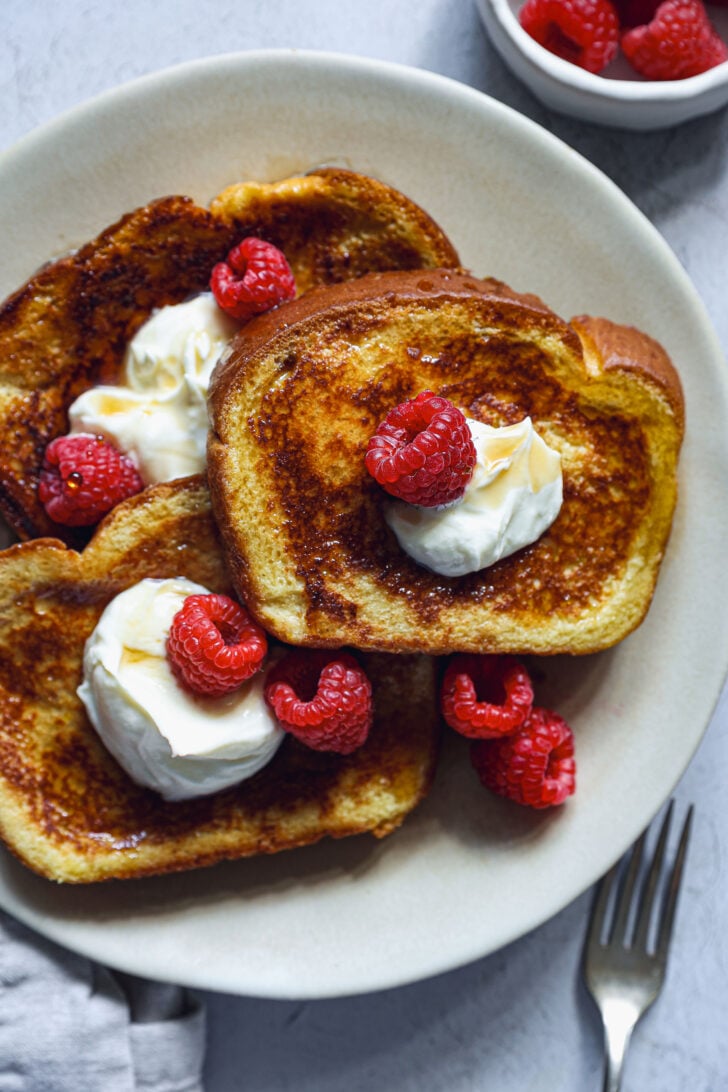
Do not forget to check out my Chefs Tips and Wine Pairings sections below!
The Recipe is next!
But remember, you can scroll past the recipe to learn a bunch more about this french toast recipe. Plus wine pairings!! The recipe is listed again at the end, so you don’t have to come all the way back up here!! Unless you want to 🙂

French Toast Recipe
Ingredients
Bread
- 8 thick slices of bread. If you can get it, Brioche or challah (¾ to 1 inch thick), preferably day-old
- Prep: Let dry uncovered for at least 4 hours, or bake at 250°F (120°C) for 15–20 minutes, flipping halfway
Custard Base
- 5 large eggs
- 1 additional egg yolk
- 1¾ cups half-and-half, or 1¼ cups whole milk + ½ cup cream
- 1 tablespoon light brown sugar
- 1 teaspoon real maple syrup
- 2 tablespoons all-purpose flour
- 2 teaspoons pure vanilla extract
- Zest of ½ orange
- Zest of ½ lemon
- 1 tablespoon dark rum
- ½ teaspoon ground cinnamon
- Small pinch freshly grated nutmeg, optional
- ¼ teaspoon kosher salt
- 1 to 2 tablespoons crème fraîche, whisked in thoroughly
For Cooking
- 2 to 3 tablespoons salted butter, or a mix of salted and cultured butter if available
- Additional butter as needed between batches
Finishing Touch (Optional)
- Flaky sea salt or vanilla salt, sprinkled just after cooking
- Optional: light dusting of brown butter powder
- Optional: a few fresh thyme leaves per slice
Instructions
Prepare the Bread
- Let bread slices dry uncovered at room temperature for 4 to 8 hours. For a quicker option, bake them on a wire rack at 250°F for 15–20 minutes, flipping once. Let cool completely before soaking.
Make the Custard
- In a large bowl, whisk together the eggs and extra yolk until smooth. Add half-and-half, brown sugar, maple syrup, flour, vanilla, citrus zests, rum, cinnamon, nutmeg (if using), salt, and crème fraîche. Whisk until fully combined and slightly thickened. Let rest for 5 to 10 minutes to hydrate the flour.
Soak the Bread
- Place the bread slices in a shallow dish and pour the custard over them. Soak each slice for 30 seconds to 1 minute per side, depending on thickness. Bread should be saturated but still hold its shape.
Cook the French Toast
- Heat a nonstick skillet or griddle over medium to medium-low heat. Add 1 tablespoon butter and swirl to coat. When the butter is gently bubbling, add soaked slices. Cook 3 to 4 minutes per side until deeply golden and set in the center. Adjust heat to prevent burning and replenish butter between batches as needed.
Finish and Serve
- Sprinkle each slice with flaky sea salt or vanilla salt immediately after cooking. Serve hot with warm maple syrup, fruit, or whipped crème fraîche.
Lots of good stuff below!
Don’t dive fork-first into that stack just yet. Below you’ll find what makes this crème fraîche french toast different from every other one out there, the full breakdown of how to make french toast with a custard core and crisp edges, chef’s tips, make-ahead tips, wine pairings, and a lot more! The recipe link shows up at the bottom so you don’t have to scroll back up.
French Toast – A Little History
French toast is much older than France. In the late-antique Roman recipe collection known as Apicius, there’s a dish of crustless bread soaked in milk, fried in oil, and served with honey. No grand name for it, just instructions. It isn’t quite modern French toast either, since the surviving recipe doesn’t call for egg. But people have been solving the hard-bread problem with dairy, heat, and sweetness for something like sixteen hundred years.
The name is a bit of a mess, historically speaking. The French call it pain perdu. Lost bread. Which is about as honest a name as you’ll get for a dish invented to save a loaf that had gone hard. Medieval and early modern Europe had its own versions and its own names: poor knights in English cookery, Arme Ritter in German, close relatives all over the place. “French toast” showed up later, and how exactly the English name became standard in America isn’t entirely clear.
My version has rum in it, which no medieval anybody would recognize. I started adding it on a whim. Something dark and sweet does things to a custard that vanilla can’t touch, and after one batch I was done arguing with myself. Crème fraîche came later. That one I’d defend in court.
Same trick people have been pulling on old bread for centuries. Just a better custard these days.
What Makes This French Toast Recipe Different
Three things separate this from the standard version: crème fraîche in the custard, a tablespoon of dark rum, and flaky salt on top at the end. None of it is hard. All of it matters.
The crème fraîche is the one people ask about. It’s tangy and thick, so the custard sets softer and richer than one made with cream alone.
The rum is doing background work. You won’t taste it as rum, but pull it out and the custard loses a layer.
And the flaky salt goes on the second it comes off the heat. Sweet needs salt. This is not a garnish!
That’s the difference between regular french toast and restaurant style french toast, and it costs you nothing.
Why This French Toast Recipe Works
- Brioche or challah is the way to go: Enriched bread soaks up all that custard and holds its shape the entire time. Cut it thick, a full inch!
- Five eggs plus a yolk: That extra yolk is the secret ingredient here. It’s what gets you the custard center.
- Half-and-half over milk: More fat means a creamier set. Perfectly soft all the way through.
- Crème fraîche in the custard: This is why crème fraîche french toast is worth a trip to the store (and I mean that). Tangy, thick, and so good inside.
- Brown sugar, not white: All that molasses depth. It caramelizes harder in the pan and gives you a deeper color.
- Butter, bubbling not screaming: Medium heat, please! I’ve rushed this more times than I want to admit and it never once worked out.
- Flaky salt at the end: Right off the heat while it’s still hot. Sweet needs salt and this is the perfect finishing touch!

How to Make French Toast

Step 1: Dry the Bread and Make the Custard
- Cut the brioche or challah into thick slices, a full inch. Leave them out uncovered for a few hours, or overnight if you can.
- Whisk eggs, yolk, half-and-half, and crème fraîche until smooth.
- Add brown sugar, maple syrup, rum, vanilla, cinnamon, nutmeg, zests, and salt. Whisk again, then pour into a wide shallow dish.

Step 2: Soak and Cook the Toast
- Lay slices in the custard. Soak 30 seconds to a minute per side, then lift and let the excess drip off.
- Melt butter in a skillet over medium heat until it’s bubbling.
- Cook slices 3 to 4 minutes per side until deep golden. Add fresh butter between batches.

Step 3: Finish and Serve
- Sprinkle flaky sea salt right off the heat.
- Serve hot with warm maple syrup, fruit, or whipped crème fraîche.

Make-Ahead & Storage
- Prep Ahead: Make the custard the night before and put it in the fridge, covered. It’ll be good for as much as 2 days. Give it a quick whisk before you soak anything, since the crème fraîche settles.
- Dry the Bread Ahead: Cut your slices and leave them out uncovered overnight. This is the one step worth planning for, and honestly it’s the difference between good french toast and the real thing.
- Refrigerate: Put cooked slices in an airtight container with parchment between the layers. Good for as much as 3 days.
- Freeze: Flash freeze the cooked slices on a sheet pan for an hour, then move them to freezer bags. Good for as much as 2 months. No thawing needed.
- Reheat: The oven at 350°F for 8 to 10 minutes is my favorite, it crisps the edges back up. A toaster oven works great for one or two slices. The microwave will get you there in a pinch but you lose the crisp, so I’d skip it if you can.
- Meal Prep Tip: Make a double batch and freeze half. Weekday breakfast goes from nothing to something in 10 minutes!
Upgrades and Variations for This French Toast Recipe
- Double soak: Soak, cook one side, then dip that cooked side back in custard before flipping. You get a molten, soufflé-like center.
- Brown the butter first: Nutty depth before the bread ever goes in.
- Swap the rum: Bourbon, Calvados, or Grand Marnier all work. Each one takes it somewhere different. RumChata french toast is a fun one if you want it creamier.
- Stuff it: Mascarpone and jam between two thin slices, then soak both as one piece.
- Savory version: Drop the sugar and maple, add black pepper and gruyère, top with a fried egg.
- Orange blossom water: A quarter teaspoon in the custard. Floral and unexpected!
- Make a quick french toast sauce: Warm maple syrup with a spoonful of crème fraîche whisked in. Pourable, tangy, so good.
- French toast toppings ideas: Macerated berries, toasted pecans, lemon curd, or a scoop of vanilla ice cream if it’s that kind of morning.

Chef’s Tips for This French Toast Recipe
- Day-old bread only. Dry slices drink up custard and hold together. If yours is fresh, dry them in a 250 °F oven for 15 to 20 minutes and you’re set.
- Don’t oversoak. Thirty seconds to a minute per side is the sweet spot. Set a timer if you’re the type to wander off.
- Medium heat, always. Gentle bubbling butter gets you golden outside and set inside at the same time.
- Wipe the pan between batches. Fresh butter each round keeps every slice tasting like the first one.
- Whisk the custard again before the last slices. The heavy stuff sinks to the bottom, and that last batch deserves the same treatment.
- Warm your maple syrup. Cold syrup on hot french toast is a crime. Thirty seconds in the microwave, that’s it.
- Zest before you juice. Do the orange and lemon zest first while the fruit is still firm. So much easier!
- Pull it when it’s deep golden. Not light golden. Deep. That color is where all the flavor is hiding!
Skip ahead Jump to Recipe

Flavor Adjustment Guide for This French Toast Recipe
Small tweaks make a big difference here. Here’s how to dial it in exactly how you like it.
- Custard is too thin: Another yolk will fix it. Or if you want to thicken french toast batter in about four seconds, whisk in a teaspoon of cornstarch.
- Tastes eggy: Too many whites for the dairy. Hold one white back next time and splash in more half-and-half, and lean on the vanilla and zest.
- Not sweet enough: More maple, not more brown sugar!
- Too sweet: Drop the brown sugar to two tablespoons. Let the syrup on top do that job.
- Outside is burning before the inside sets: Your heat is too high. It’s always the heat. Medium, and give it the full 3 to 4 minutes a side… I know, it feels like forever.
- Center is still wet: Either your slices are too thick or you let them swim. An inch max, and get them out of that custard.
- Tastes flat: It’s the salt. Not the flaky stuff on top, the half teaspoon that goes IN the custard.
Key Ingredients in This French Toast Recipe
- Brioche or Challah: Enriched, eggy, sturdy. Day-old is what you want, and thick cut, a full inch.
- Half-and-Half: More fat than milk, which is exactly the point. Creamier set, softer middle.
- Crème Fraîche: Here’s the one nobody expects, and it’s the reason crème fraîche french toast is worth doing at all. Tangy, thick, so good.
- Brown Sugar: All that molasses depth. Caramelizes hard in the pan.
- Maple Syrup: In the custard, not just on top!
- Dark Rum: One tablespoon. Rum french toast sounds like a stunt, but you won’t taste it as rum, you’ll taste depth.
- Orange + Lemon Zest: Both, and grate them right into the bowl. The two together give you a hint of acidity that cuts all that richness.
- Vanilla, Cinnamon, Nutmeg: Warm spice backbone. Go easy on the nutmeg, it’s loud.
- Butter (salted): For the pan. Medium heat, bubbling gently.
- Flaky Sea Salt: The finish, right off the heat. Non-negotiable!
Wine Pairings for This French Toast Recipe
Champagne Brut (France)
Why it Works: Rich French toast needs something to slice through all that butter and egg. Brut Champagne does exactly that. Crisp, bubbly, no sweetness to compete.
Tasting Notes: Lemon peel, almond, brioche, green apple
Suggested Label: Pierre Gimonnet & Fils Cuis Premier Cru Brut
Gewürztraminer (Alsace, France)
Why it Works: Floral, spicy white with vanilla and orange from the custard. Some sweetness but won’t push this into dessert territory.
Tasting Notes: Lychee, candied ginger, rose petal, orange blossom
Suggested Label: Domaine Weinbach Gewürztraminer Cuvée Théo
Chenin Blanc (Vouvray, France)
Why it Works: Demi-sec Vouvray mixes bright and lightly sweet, good texture. Crème fraîche and eggs, obviously.
Tasting Notes: Honeycrisp apple, lanolin, pear skin, lemon curd
Suggested Label: Domaine Huet Vouvray Demi-Sec Le Mont
Prosecco Rosé (Veneto, Italy)
Why it Works: Light, fruity, bit romantic. Festive brunch situations, ya know?
Tasting Notes: Wild strawberry, hibiscus, peach skin, soft fizz
Suggested Label: Bisol Jeio Prosecco Rosé Brut
Tokaji Late Harvest (Hungary)
Why it Works: Full sweet route with maple syrup and berries. Sweet but won’t overwhelm, enhances the flavors instead of fighting them.
Tasting Notes: Apricot jam, saffron, honeycomb, orange peel
Suggested Label: Royal Tokaji Late Harvest
FAQs
You can, but why would you? Soft white bread turns to mush. Sourdough works if it’s stale, but you lose all that richness. Brioche and challah absorb custard without falling apart.
If you can find it, yes. Gives the custard tang and an insane creaminess. Can’t find it? Mix sour cream and heavy cream or half and half.
Nope (sorry!). That’s how you get the soft, soufflé-like interior with crispy edges. One soak makes French toast. Two soaks makes this special.
Thicker, clingier custard. A little bit keeps the egg from sliding off before it cooks. You want custard consistency, not a runny mess.
Day-old bread, don’t skip the resting time, cook low and slow in butter. Looks pale? Still wet inside.
This doesn’t need much. Powdered sugar, real maple syrup, whipped cream. Fresh berries or citrus if you want fruit. Keep it simple.
Soak and rest the slices overnight, cook fresh in the morning. Reheats fine in a toaster oven with butter.
You can and it’s really good. Sourdough french toast has a tang that plays off the sweet custard, and the sturdy crumb holds up to a long soak. Just cut it thick and dry it out first like any other bread.
I go with 5 whole eggs plus a yolk to about a cup and a half of dairy. That’s richer than the standard one-egg-per-quarter-cup rule, and it’s what gets you the custard center instead of eggy toast.
Heat too high, almost always. Butter should bubble gently, never scream. If your pan is smoking before the bread goes in, pull it off and start over.
That’s my favorite way to do it. Cast iron holds heat steady so every batch cooks the same, just keep it at medium and add fresh butter each round.
Equipment Needed for This French Toast Recipe
- Wide Shallow Dish: For soaking. A pie plate or baking dish works.
- Whisk: For the custard.
- Large Skillet or Griddle: Cast iron or nonstick. Enough room for two slices at a time.
- Microplane: For the zests and the nutmeg.
- Fish Spatula or Thin Turner: Thin and flexible, so it slides right under a soaked slice.
- Wire Rack: For holding cooked slices while you finish the batch.
- Sheet Pan: Goes under the wire rack, and it’s what you’ll use to dry the bread the night before.
- Measuring Spoons: The rum is one tablespoon and the salt is half a teaspoon.
Related Recipes You’ll Love:
If you’re into french toast recipes like this one, these are worth a look too:
- The Best Fluffy Pancakes Recipe — The other side of the weekend breakfast coin. Tall, fluffy, and worth the extra ten minutes.
- The Great(est) Pumpkin Pie Recipe — Another custard, completely different job. If you like what crème fraîche does here, this one will make sense to you.
- Creamy Deviled Eggs Recipe — You’re already buying a dozen eggs. These are the ones people finish before you’ve even sat down.
- The Best (Ever) Meatball Recipe — Nothing to do with breakfast. Everything to do with a Sunday you’re not in a hurry.
You made it!
That’s the best french toast recipe I’ve got, and it’s worth every minute. Thick brioche, a custard with real depth to it, bubbling butter, and flaky salt right at the end.
If you made it, leave a rating and a comment below. I read every single one and it genuinely helps more people find this recipe. Got questions? Drop them in the comments, I’ll get back to you.
This was SO good! I don’t even know where to begin LOL. The orange zest was fantastic. The rum was perfect. It was just so good. I will be making this again and again. Thank you so much for sharing this!
Hi Janet,
That is fantastic, I’m so glad you liked it!
David
This turned out really well. The recipe is straightforward and the tips are genuinely helpful. I loved the flavor from the rum and orange zest. It’s definitely more involved than my usual weekend breakfast, but absolutely worth it when you want to make something special.
Hi Lisa,
I am very glad you found the tips helpful. That is my whole goal!! And I am really glad you liked it!
David
Great recipe with clear instructions. The tip about drying the bread really does matter. The dried bread definitely holds up better. The custard has nice flavor from the rum and spices without being overwhelming.
Hi Sarah,
The dry bread is key for sure!
Thanks
David
This is hands down the most sophisticated French toast recipe I’ve ever made. The crème fraîche adds richness that’s just incredible. Served it with fresh raspberries and whipped cream – although not quite as photogenic! Serious restaurant quality at home!
Hi Grace,
I am SURE it looked fantastic! I am so glad you liked it!!
David