

The Best (Easy) Fried Rice Recipe
If you’ve been chasing that takeout egg fried rice at home, this one gets you there. My son asked why it tastes different from the place down the street and I got about four words into explaining the marinade before he wandered off. Which is fair. But the marinade is the answer, soy and ginger and a little cornstarch on the chicken before it ever sees the pan. The rest of it is cold rice and a screaming hot wok.

Do not forget to check out my Chefs Tips and Wine Pairings sections below!
The Recipe is next!
But remember, you can scroll past the recipe to learn a bunch more about this egg fried rice recipe. Plus wine pairings!! The recipe is listed again at the end, so you don’t have to come all the way back up here!! Unless you want to 🙂
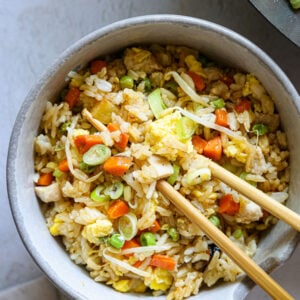
The Best (Easy) Fried Rice Recipe
Ingredients
Rice & Prep
- 4 cups jasmine rice, cooked and refrigerated overnight
Protein
- 2 eggs, beaten
- 8 oz boneless, skinless chicken thighs, diced
Chicken Marinade
- 3/4 tsp light soy sauce
- 1/4 tsp rice vinegar
- 1 clove garlic, microplaned or finely minced
- 1/2 tsp fresh grated ginger
- 1 tsp neutral oil
- 1 tsp cornstarch
- 1/2 tbsp cold water
- Optional: 2 drops toasted sesame oil
- Marinate chicken 15–20 minutes before cooking.
Vegetables
- 1/2 cup diced carrots
- 1/2 cup frozen peas, thawed
- 1 cup mung bean sprouts, optional
- 4 scallions, whites and greens separated, thinly sliced
- 1/2 cup diced fresh pineapple, optional
Aromatics
- 3 cloves garlic, minced
- 1 tbsp fresh ginger, finely chopped
Stir Fry Sauce
- 1½ tbsp light soy sauce
- 1½ tsp dark soy sauce
- 2½ tsp oyster sauce
- 1 tbsp Shaoxing wine, optional
- 1/2 tbsp sugar
- 1/2 tsp white pepper
- 1/2 tsp fish sauce, for natural umami
- 2 tbsp neutral oil, canola or vegetable
- 1 tsp toasted sesame oil, for finishing
Instructions
Prep Ingredients
- Dice chicken and marinate with the custom marinade.
- Prep all vegetables, aromatics, rice, and eggs before you start cooking.
- Mix the sauce blend in a small bowl.
- Ensure all ingredients are completely dry and staged—high-heat cooking moves fast.
Cook Eggs
- Heat ½ tbsp oil in a wok or skillet over medium-high to high heat.
- Soft scramble eggs, remove from pan.
Sear Chicken
- Add ½ tbsp oil. Increase heat to high.
- Sear marinated chicken in a single layer, undisturbed for 1–2 minutes to develop browning.
- Stir-fry until just cooked through. Remove and set aside.
Stir-Fry Vegetables
- Add ½ tbsp oil.
- Add carrots, stir-fry 1–2 minutes.
- Add garlic, ginger, scallion whites. Stir constantly 30–60 seconds until aromatic but not browned.
- Add peas, stir to heat through.
- Add mung bean sprouts and pineapple (if using), toss briefly.
Add Rice
- Increase heat to maximum your stove can handle.
- Add remaining oil, then rice. Break up clumps and press rice briefly against the hot pan to encourage slight toasting.
- Stir-fry 2–3 minutes, working quickly to prevent steaming.
Sauce the Rice
- Pour sauce blend around the hot edges of the pan (not directly on rice). Let it sizzle on contact to intensify flavor.
- Toss rapidly to coat evenly.
Finish
- Return chicken and eggs to the pan.
- Toss to combine thoroughly.
- Add scallion greens.
- Drizzle toasted sesame oil off heat just before serving.
Optional Finishers
- Add-ons (stirred in):
- Crisped Chinese sausage
- Sautéed rehydrated dried mushrooms (shiitake or black mushroom)
- Toasted cashews
- Microplaned lime zest
Garnishes:
- Toasted sesame seeds
- Chili crisp or oil
- Crispy shallots
- Fresh herbs or scallion curls
Lots of good stuff below!
Don’t walk away from that wok just yet. Below you’ll find what makes this egg fried rice recipe different from every other one out there, what an authentic fried rice recipe even means, the full breakdown of how to season chicken for fried rice, the fried rice sauce ratios, chef’s tips, make-ahead tips, wine pairings, and a lot more! The recipe link shows up at the bottom so you don’t have to scroll back up.
Fried Rice: A Little History
Nobody knows when fried rice started. What survives from the Sui dynasty is a name, not a recipe. Duke of Yue’s broken-gold rice, listed in later copies of a court document that’s itself lost. No method, no ingredients, nothing about a wok.
The folk version has Yang Su loving that dish and Emperor Yang carrying egg fried rice south to Jiangdu, which is Yangzhou today. It’s a saying. People repeat it because it’s a good story and because there isn’t a better one.
Something else complicates it. Stir-frying didn’t become an everyday method until much later, late Ming and after, once vegetable oil got cheap and urban fuel got expensive enough to make fast wok cooking sensible. Hard to have wok-fried rice as a common household dish several centuries before wok cooking itself was common.
The named dish is later still. Yi Bingshou was a real official, prefect of Yangzhou starting in 1805, and he’s who the story settled on. People say he wrote the method down. His surviving book is a collection of poetry and the recipe isn’t in it. And the plate you’re picturing, shrimp and char siu, is the Cantonese restaurant version that the diaspora carried around the world. The Yangzhou telling uses ham.
What holds up without a legend is the rice. Starch retrogrades as cooked rice cools, which dries the grains and firms them, which is why day-old rice separates in a hot pan instead of turning to paste. Cold rice, some fat, an egg. Households would have found that in a lot of kitchens without needing an emperor.
Mine is neither the Sui story nor the Qing plate. So if you came here looking for an authentic fried rice recipe, the honest answer is that there isn’t one. Mine is cold rice on a Tuesday and a marinade I worked out over about a year.
What Makes This Egg Fried Rice Recipe Different
The chicken gets a marinade, and yes it matters. Soy, ginger, rice vinegar, a teaspoon of cornstarch, fifteen minutes. Restaurants have done this forever. Home recipes tend to just dice the chicken and throw it in, and you can taste which one you’re eating!
The eggs go in and come out twice. Soft scrambled at the start, pulled while they’re still loose, then folded back at the very end so they finish in residual heat. They come out perfectly tender that way. Cook them once and leave them in and you get rubber.
Sauce goes around the hot edge of the pan and never straight onto the rice. That sizzle is the best sound in the kitchen. Pour it over the top instead and you’re steaming your rice.
And the rice presses flat against the pan for a second before you stir. That contact is where the golden toasted bits come from, and I will fight you for those bits!!

Why This Egg Fried Rice Recipe Works
- Cold rice, hot pan: Day-old rice has dried out and the starch has firmed up, so the grains stay separate and fry instead of clumping. The hot pan does the rest.
- Quick chicken marinade: Fifteen minutes of soy, ginger, and cornstarch is enough to season the chicken through and keep it tender under high heat. It seasons the meat itself rather than relying on the sauce at the end.
- Balanced sauce: Soy, oyster, and fish sauce together give you layered umami in a small amount of liquid. Concentrated enough to coat the rice and light enough that it never sits in the bottom of the pan.
- Stir-fried in stages: Eggs, chicken, vegetables, and rice each get their own turn in the wok. Each one holds its own texture. and nothing sits in the heat longer than it needs to.
- Vegetables stay crisp: High heat and a short time in the pan. Carrots keep their snap, peas stay bright, and the sprouts go in last so they barely cook at all.
- The finish is what gets you: Salt, savory depth, and a hint of sweetness, with the sesame oil going in off heat at the very end. You will eat this standing at the stove!
How to Make Egg Fried Rice

Step 1: Prep the Chicken, Rice, and Sauce
- Marinate the Chicken: Mix light soy sauce, rice vinegar, garlic, ginger, oil, cornstarch, and water. Add diced chicken and marinate for 15–20 minutes.
- Prep the Stir-Fry: Beat the eggs. Dice all vegetables and aromatics. Fluff cold rice to separate grains.
- Make the Sauce: In a small bowl, combine light and dark soy sauces, oyster sauce, Shaoxing wine, sugar, white pepper, fish sauce, and salt. Set aside.

Step 2: Cook It All Over High Heat
- Cook the Eggs: In a hot wok or skillet, scramble eggs in oil until just set. Remove.
- Sear the Chicken: Heat oil over high heat. Sear chicken until golden and cooked through. Remove.
- Stir-Fry the Veggies: Sauté carrots, then add garlic, ginger, scallion whites, and peas. Add sprouts and pineapple (if using) last.

Step 3: Combine Rice, Sauce, and Finish
- Toast the Rice: Add oil, then rice. Press and stir-fry over high heat until lightly toasted.
- Sauce the Rice: Pour sauce around the edges of the pan. Let it sizzle, then stir quickly to coat.
- Finish and Serve: Return chicken and eggs, add scallion greens, and drizzle sesame oil off heat. Garnish as desired.
Make-Ahead & Storage
- Prep Ahead: Cook the rice a day or two early, which you have to do anyway. Marinate the chicken, dice your vegetables, and mix the sauce in the morning and put all three in the fridge separately. The actual cooking is eight minutes once you’re standing at the stove.
- Refrigerate: Put leftovers in an airtight container. Good for as much as 4 days, and it’s one of the few things that tastes fine cold out of the fridge at midnight.
- Freeze: It freezes well, which surprised me. Portion it flat in freezer bags and it’s good for as much as 2 months. The egg gets a little firmer on the way back and the rice is fine.
- Reheat: A hot skillet with a splash of water or soy, 3 to 4 minutes, stirring. That’s the only way I do it. The microwave turns the rice soft and you lose the texture you worked for, so I’d stay off it.
- Meal Prep Tip: Make a double batch of rice on Sunday. Half goes in Monday’s dinner and half sits in the fridge waiting for this, and Wednesday takes you twenty minutes!
Upgrades and Variations for This Egg Fried Rice Recipe
- Pineapple or sausage, one or the other. Pineapple gives you acid and sweetness against all that soy. Chinese sausage goes richer and more aromatic. Both at once is a mess, and I have made that mess.
- Something crunchy on top. Chopped cashews or toasted sesame seeds right before it goes to the table. Texture against soft rice is the thing you notice first.
- A teaspoon of butter at the end. Off the heat, stirred through. It catches on the grains and gives the sauce some body, and yes it’s a French move in a Chinese dish. I don’t care.
- Dried shiitakes, diced small. Soak a couple, chop them fine, and they add a chew and a deep savory note underneath the rest. Save the soaking liquid and put a spoonful in the sauce.
- Lime zest, not juice. Zest at the end goes a long way and keeps the rice dry. The juice will loosen the rice you just worked to crisp up.
- Go hotter than feels right. This dish lives on heat. If the pan isn’t smoking a little when the rice lands, you’re steaming. Turn it up and stand there with it.
- Try it with shrimp. Same marinade, thirty seconds a side, in and out before the vegetables. Shrimp fried rice is a different dinner and an easy swap.

Chef’s Tips for This Egg Fried Rice Recipe
- Dry the rice out first. Cold and dry, ideally overnight in the fridge uncovered. In a hurry, spread it on a sheet tray and give it 30 minutes in there. Fresh rice steams and you’ll know within twenty seconds.
- Use thighs. They stay juicy through a hard sear and they hold the marinade better. This is one place where fat really does mean flavor.
- Slice your aromatics, don’t mash them. A fine slice or rough chop gives you fragrance and keeps the garlic sweet. Minced garlic burns in about four seconds at wok heat.
- Sear the rice, don’t steam it. Your rice needs to touch metal. Use a pan wide enough for one layer, and work in batches if you have to. Color happens on contact.
- Scramble the eggs gently and separately. Cook them first and pull them while they’re still soft. They finish in residual heat when they go back in at the end.
- Let it sit. Seriously. The rice needs a minute against the pan to caramelize, and you’ll hear it crackle when it’s ready to move. That deep toast is the difference between this and the sad version.
- Season the chicken, not only the rice. Homemade fried rice tastes flat when the flavor all arrives at the end. The marinade gives you a seasoned base that survives the fry.
- Have it all ready before you turn on the heat. The cooking is eight minutes and there is no pausing to chop a scallion. Prep it all into little bowls like a cooking show.
Skip ahead Jump to Recipe
Flavor Adjustment Guide for This Egg Fried Rice Recipe
Small tweaks make a big difference here. Here’s how to dial it in exactly how you like it.
- Tastes flat: More fish sauce, a quarter teaspoon at a time. It’s the ingredient doing the heavy work and the one people under-use because the bottle smells like it does.
- Too salty: Between the light soy, dark soy, oyster sauce, and fish sauce there’s a lot of sodium before you add any of your own. Skip the finishing salt next time and taste before you reach for it.
- Rice is clumping: Not dry enough. Break it up with your fingers before it goes in, and if it’s still sticking together, the sheet tray in the fridge for 30 minutes will save you.
- Rice is soggy: Your pan wasn’t hot enough or you crowded it. Work in two batches. It feels like a hassle and it takes three extra minutes.
- Not sweet enough: Half a teaspoon more sugar in the sauce, or pineapple if you want the acid with it.
- Too sweet: Cut the sugar and add a splash of rice vinegar off heat. That’ll pull it back.
- Chicken came out tough: Breast instead of thigh, or too long in the pan. It’s cooked when it’s golden outside, and it keeps cooking after you pull it.
- No wok flavor: You need the pan hotter than feels reasonable and you need the rice pressed flat against it. Home burners are the limit here, and a cast iron skillet gets you closer than a nonstick will.

Key Ingredients in This Egg Fried Rice Recipe
- Cold jasmine rice. Day-old, dried out in the fridge. The starch firms up as it cools and that’s why the grains separate in a hot pan.
- Chicken thighs. Dark meat through a hard sear, every time. A chicken fried rice recipe lives or dies on this, and thighs stay juicy where breast meat dries out on you.
- Light and dark soy sauce. The light one seasons, the dark one colors. Together they give you that takeout look with the salt under your control.
- Oyster sauce. This is where the sauce gets its weight. It thickens just enough to grab the rice and adds a deep savory note underneath the soy.
- Fish sauce. A small amount. It’s the thing making the sauce taste like it came from a restaurant, and half a teaspoon is all you need.
- Eggs. Soft scrambled first, folded in at the end. Tender and visible, the way they should be.
- Carrots, peas, scallions. Structure and color. Scallion whites go in hot with the aromatics, greens go in last for the sharp bite.
- Fresh garlic and ginger. Sliced or roughly chopped, never minced to death. They burn fast at wok heat so they go in after the carrots.
- Toasted sesame oil. Off heat only. It’s perfume, not cooking fat, and heat destroys it.
Wine Pairings for This Egg Fried Rice Recipe
Grüner Veltliner (Austria)
Why it Works: Grüner’s peppery snap and crisp acidity cut through the fried rice’s richness while mirroring the scallion, ginger, and sesame notes. A lean, dry style brings lift without clashing with soy or fish sauce.
Tasting Notes: Lime peel, white pepper, crushed herbs, green apple
Suggested Label: Nigl Freiheit Grüner Veltliner
Txakolina (Basque Country, Spain)
Why it Works: Slightly spritzy with briny minerality, Txakolina brings enough acid tension to slice through the chicken and egg without muting the sauce. Perfect if you’re including pineapple or Chinese sausage.
Tasting Notes: Sea spray, underripe citrus, sour melon, saline
Suggested Label: Ameztoi Getariako Txakolina
Off-Dry Riesling (Mosel, Germany)
Why it Works: A touch of sweetness helps tame the salt, chili, and umami. Mosel’s sharp acidity and slate-driven structure keep everything clean, especially with bold sauce or spice.
Tasting Notes: Green apple, lime zest, petrol, jasmine
Suggested Label: Selbach-Oster Riesling Kabinett
Chenin Blanc (Loire Valley, France)
Why it Works: Chenin rides the line between richness and nerve. Its textured palate stands up to wok sear and caramelization, while stone fruit and citrus tones echo the dish’s balance.
Tasting Notes: Yellow apple, wool, lemon curd, wet stone
Suggested Label: Domaine Huet Vouvray Sec
Crémant d’Alsace (France)
Why it Works: Light, dry bubbles refresh your palate between bites. The bright mousse and linear acidity make it ideal for fried food—especially when topped with sesame, sprouts, or cashews.
Tasting Notes: Green pear, citrus peel, pastry shell, chalk dust
Suggested Label: Meyer-Fonné Crémant d’Alsace Brut Extra
FAQs
You can get away with it if you spread it on a sheet pan and chill it for 30 minutes first. It needs to dry out. Straight from the pot it steams and clumps.
Your widest skillet. Heat matters more than shape, and a crowded pan at medium heat gives you steamy rice. Cast iron gets you closer than nonstick.
You can. Thighs hold the marinade better and take a hard sear without drying, which is why I use them. If you’re going with breast, cut it smaller and pull it earlier.
No, and the sauce is still good without it. A half teaspoon does a lot for depth if you have a bottle, and skipping MSG makes it more worth having.
Mild as written. Chili crisp, sliced Thai bird chiles, or a spoonful of sambal all work if you want heat.
Swap the chicken for mushrooms or tofu, skip the fish sauce, and add a little more soy and sesame. A few dried shiitakes put the savory depth back.
Snap peas, shredded cabbage, zucchini, or bell pepper all work. Keep the cut small and the water content low.
Yes. It reheats in a hot pan with a splash of water or soy in about four minutes. The microwave turns the rice soft, so I’d stay off it.
Scramble the eggs first in a hot pan and pull them while they’re still loose. Cook the chicken, then the vegetables, then the rice, and fold the eggs back in at the very end so they finish in residual heat rather than turning rubbery.
Twice. At the start so they cook in their own pan and stay tender, and again at the very end after the sauce. Adding them to hot rice in the middle overcooks them and they disappear into the mix.
Two for four servings, which is the ratio I like. Three if you want it eggier. More than that and you’re making something closer to an omelet with rice in it.
Jasmine, cooked the day before and chilled uncovered. Long grain works too. The important part is that it’s cold and dry, since the starch firms as it cools and that’s what lets the grains separate in the pan.
Not much, once you look into it. The Sui dynasty origin is a dish name in a lost document with no method attached. Yangzhou fried rice is probably not from Yangzhou. The version most people picture, with shrimp and char siu, is a Cantonese restaurant plate that traveled. An authentic fried rice recipe is really just cold rice, hot fat, and whatever was in the house, which is what people have been doing with leftovers for centuries.

Equipment Needed for This Egg Fried Rice Recipe
- Wok or Large Skillet. Surface area and serious heat. A wok is built for this, and a 12-inch skillet gets you close if you let it get hot enough.
- Cutting Board and Sharp Knife. Prep is half the work. Even cuts mean the carrots and chicken finish at the same time.
- Small Mixing Bowl. For the marinade, and a second one for the sauce. Have them ready before the heat goes on.
- Tongs or a Wide Spatula. Something with control. You’re moving chicken, folding rice, and scraping the bottom of the pan, and a spoon will fight you.
- Sheet Pan or Plate. For staging. Things come in and out of that pan fast and they each need somewhere to land.
- Measuring Spoons. The sauce ratios matter the first few times. After that, eyeball it.
- Fine Mesh Strainer. For rinsing the rice before you cook it the day before. Takes thirty seconds and the grains come out cleaner.
- A Second Burner. Handy if you have one. Running the sauce or a pot of rice alongside keeps it to under twenty minutes.
Related Recipes You’ll Love:
If you’re into fried rice recipes and wok cooking like this one, these are worth a look too:
Restaurant Worthy Beef Lo Mein — Same wok, same heat, noodles instead of rice. If you have the sauces out already you’re most of the way there.
Spicy Korean Gochujang Pork Stir Fry — Sweet heat and golden edges, served over brown rice. My kids fight over the last of it.
Spicy Pork Dan Dan Noodles Recipe — Sichuan heat and a sauce with real depth. Make it when you want something louder than fried rice.
Thai Red Curry Pork Recipe (Better Than Takeout) — Different technique, same instinct. Fish sauce doing doing a lot of the lifting behind a wall of other flavor.
The Umami Code, Part 3 — Why a splash of oyster sauce or a hint of fish sauce does what it does. It explains the sauce in this recipe better than I can here.
You made it!
That’s the best fried rice recipe I’ve got. Marinated chicken, day-old rice, eggs in twice, and a sauce that lands on the edge of the pan and sizzles.
If you made it, leave a rating and a comment below. I read every single one and it genuinely helps more people find this recipe. Got questions? Drop them in the comments, I’ll get back to you.
Now that you made it all the way down here, go eat it standing up over the stove like I do!!
Made this for my husband and teenage boys—nothing left. I usually rely on takeout for fried rice, but this one worked even better. I added pineapple, which balanced the sauce nicely. It’s rare we all agree on a dish, but this made the cut.
Teenage boys!??! I get it! That’s awesome
David