

Shrimp Scampi Recipe (The Ultimate)
There’s no better way to make ashrimp scampi with shallots than the way the pros do it. Quick and garlicky. Dry white wine, a splash of sherry, real butter, and good sharp lemon for character. Those shrimp come out with a perfect snap on them, every time!
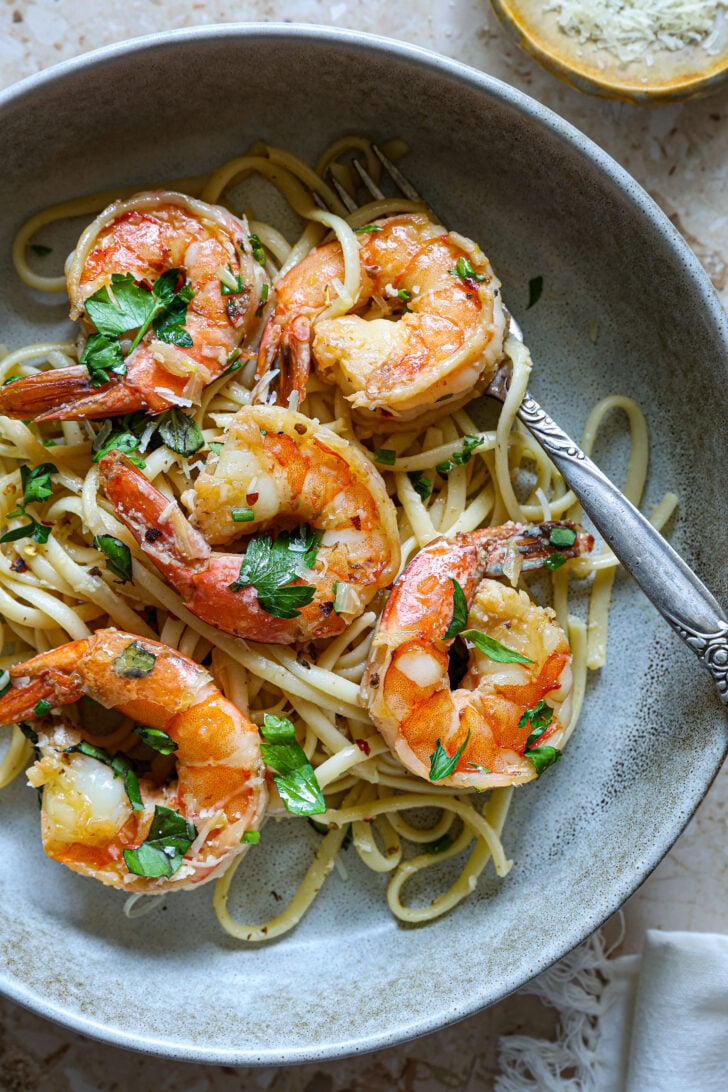
Do not forget to check out my Chefs Tips and Wine Pairings sections below!
The Recipe is next!
But remember, you can scroll past the recipe to learn a bunch more about this shrimp scampi with shallots recipe. Plus wine pairings!! The recipe is listed again at the end, so you don’t have to come all the way back up here!! Unless you want to 🙂

hrimp Scampi Recipe (The Ultimate)
Ingredients
Protein & Prep
- 1½ lbs jumbo shrimp, peeled and deveined (tails on/off)
- ½ tsp baking soda + 1 tsp kosher salt, optional pre-treatment, 15 min
Fats & Base
- 4 Tbsp unsalted butter
- 4 Tbsp extra-virgin olive oil
Aromatics & Heat
- 2 small shallots, finely diced
- 5 cloves garlic, finely chopped
- ¼ tsp crushed red pepper flakes, adjust to taste
- 2 dashes hot sauce, optional
Deglazing & Acidity
- ¼ cup dry white wine
- ¼ cup dry sherry
- Juice of 1 lemon
- Zest of 1 lemon
Herbs & Umami
- ¼ cup fresh parsley, chopped
- 1 Tbsp chives, finely chopped
- 1 Tbsp basil, optional
- ¼ cup Parmesan cheese, grated (optional)
Serving Base
- 8 oz linguine or angel hair, cooked al dente
- or
- Crusty bread, warmed (optional)
Optional Finishes
- 2 tbsp Tbsp cold unsalted butter, for mounting sauce
- Flaky Maldon salt, to finish (optional, use sparingly)
- Extra lemon zest or herb oil drizzle, optional garnish
Instructions
Step 1: Pre-Treat Shrimp (Optional but Pro-Level)
- In a bowl, toss shrimp with baking soda and salt. Let sit for 15 minutes to firm texture. Rinse, pat dry.
Step 2: Cook Pasta & Prep Mise
- Cook pasta in heavily salted water until just shy of al dente. Reserve ½ cup pasta water.
- Measure and prep all ingredients—mise en place is essential for this fast-moving dish.
Step 3: Sear Shrimp
- Heat 2 Tbsp olive oil in a large skillet over medium-high.
- Add shrimp in a single layer, cooking just until pink and lightly golden (~1–2 min per side).
- Do this in batches if needed to avoid crowding.
- Transfer shrimp to a plate. Tent loosely with foil.
Step 4: Build Sauce
- Lower heat to medium. Add 2 Tbsp butter + remaining 2 Tbsp olive oil.
- Sauté shallots until translucent (2–3 min), then add garlic and red pepper flakes.
- Once fragrant, deglaze the pan with white wine and dry sherry.
- Simmer until reduced by half (2–4 min), scraping up browned bits.
Step 5: Add Acidity & Emulsify
- Add lemon juice and zest to the pan. Stir and let bubble for 30 seconds.
- Return shrimp to the pan, along with any juices.
- Toss to coat and warm through for 1–2 minutes.
Step 6: Optional Mounting (Refined Finish)
- Off heat, whisk in 1–2 Tbsp cold butter, piece by piece, to mount the sauce.
- Sauce should turn glossy, creamy, and cling beautifully to pasta or shrimp.
Step 7: Toss & Plate
- Add cooked pasta to the pan (or spoon shrimp + sauce over bread).
- Sprinkle in parsley, chives, and optional basil. Toss gently.
- If needed, loosen with reserved pasta water (1 Tbsp at a time).
- Optional: Fold in Parmesan if serving with pasta.
Step 8: Finishing Touches
Garnish with:
- Extra herbs
- A bit of Maldon salt, only if the dish feels flat
- A final twist of lemon zest
- Optional drizzle of herb or chili oil
Lots of good stuff below!
Don’t grab your fork just yet. Below you’ll find what makes this shrimp scampi with shallots different from every other one out there… and I do mean every other one. There’s the full breakdown of which wine to cook with, plus chef’s tips, make-ahead tips, wine pairings, and a lot more! The recipe link shows up at the bottom so you don’t have to scroll back up.

Shrimp Scampi – A Little History
Scampi aren’t shrimp. That trips up everybody. Scampi is Italian for langoustines, little clawed things that look like baby lobsters, so “shrimp scampi” is shrimp standing in for the shellfish that named the dish. Americans decided a long time ago… who cares!
It comes down to history. The original Italian preparation called for olive oil, garlic and white wine, with an occasional bit of butter. When immigrants came over and found no langoustines to be had, they made do with shrimp. No one gave it another thought; the name and the method carried on as they were.
I made a version years ago that I’d rather forget. Way too much garlic, wine that never reduced, shrimp like little erasers. My wife ate it and said it was fine. Fine!
What Makes This Shrimp Scampi Recipe Different
Start with a fifteen minute soak in baking soda and salt, then rinse and dry. I put off that step for years because I thought it was too much bother, but I was wrong, very wrong. The shrimp have a perfect snap to them when you do it right.
As for the wine, I add a quarter cup of dry sherry to the white. It is what people are most curious about and no one can ever put a finger on it.
Shallots go in first, the garlic only once they are translucent. That is the way to do it. The butter is the one thing I am prone to hurry. But you have to be slow about it: off the heat, cold, and one piece at a time.
Why This Shrimp Scampi Recipe Works
- Two wines instead of one: White wine for acidity, sherry for warmth. If you’ve been wondering which wine to cook shrimp scampi with, it’s both, and they reduce down together into something sharp and clean.
- Garlic goes in second: After the shallots have softened. It stays sweet that way, and mellow.
- The baking soda trick: Fifteen minutes, salt and baking soda, then a rinse. Firm, snappy shrimp every time.
- Lemon at the end: Juice and zest both, and timing is the thing here. Late means bright.
- Butter twice: Some early for richness. Cold butter off heat at the finish, whisked in slow, and the sauce turns creamy.
- Fast, but there’s a sequence: Shrimp out, shallots, garlic, deglaze, shrimp back in. Follow the order and it works!
How to Make Shrimp Scampi with Shallots

Step 1: Prep the Shrimp and Pasta
- (Optional but recommended): Mix shrimp with baking soda and salt, let sit 15 minutes to firm the texture. Rinse and pat dry.
- Boil pasta in well-salted water until just shy of al dente. Reserve some pasta water, then drain and set aside.
- Prep all ingredients (shallots, garlic, herbs, butter, etc.) because this dish moves fast once the pan is hot.

Step 2: Sear Shrimp and Build the Sauce
- Sear the shrimp in hot olive oil just until pink and lightly golden. Set aside.
- Sauté shallots first, then garlic, in butter and oil. Add red pepper flakes and a splash of hot sauce (optional).
- Deglaze with dry white wine and sherry. Reduce by half, then stir in lemon juice and zest. Return shrimp to warm through.

Step 3: Finish, Mount, and Serve
- Off heat, whisk in cold butter to mount the sauce until it’s creamy and emulsified.
- Fold in pasta, parsley, chives, and optional Parmesan and basil. Loosen with pasta water if needed.
- Plate and finish with fresh herbs, lemon zest, and a few flakes of Maldon salt, only if it needs it.

Make-Ahead & Storage
- Prep Ahead: Do the baking soda treatment on your shrimp the night before, rinse them, pat them dry, and put them in the fridge covered. Good for as much as 24 hours. Chop your shallots and garlic ahead too and you’ve cut your active time in half.
- The Sauce: Here’s the honest answer, this one doesn’t hold well. The butter emulsion breaks when it sits and no amount of whisking brings it back the same. Make it fresh.
- Refrigerate: Put leftovers in an airtight container, shrimp and pasta together with whatever sauce is left. Good for as much as 2 days. Any longer and the shrimp go rubbery on you.
- Freeze: I wouldn’t. Cooked shrimp and a butter sauce both come out of the freezer worse than they went in, and this dish takes twenty minutes to make fresh.
- Reheat: Low heat in a skillet with a splash of pasta water or broth, about 3 to 4 minutes, and stir gently. The microwave will overcook your shrimp before the pasta is even warm, so skip it.
- Meal Prep Tip: Do the shrimp treatment and the prep on Sunday. Then it’s a twenty minute dinner on a Wednesday and you’ll feel like you cheated!
Upgrades and Variations for This Shrimp Scampi Recipe
- Mount it right: Cold butter, off heat, whisked in a piece at a time. That’s the restaurant finish right there.
- Finish with good olive oil: Use the nice bottle. Seriously.
- Toast your garlic: Toast a few slivers separately in olive oil and spoon them on at the end, and yes it’s another pan to wash, and yes it’s worth it. Golden and nutty.
- Use fresh pasta: Fresh linguine or tagliatelle if you can get it. It holds the sauce more delicately.
- Preserved lemon works here: A few drops of brine, or a fine zesting at the end… sharper and more floral than juice alone.
- Try a different wine: Sauvignon Blanc is my default, but a dry Riesling works beautifully here and Pinot Grigio is fine in a pinch. Skip anything labeled cooking wine.
- Go heavier on the herbs: Parsley and chives are the base. Tarragon is the one nobody expects, and I only figured that out last summer.
- Serve in warm bowls: Sounds fussy. It isn’t, and your sauce will still be fluid at the end of dinner.

Chef’s Tips for This Shrimp Scampi Recipe
- Don’t crowd the pan: Work in batches. I know, I know… but a crowded pan is a sad pan and those shrimp deserve better!
- Use the pasta water sparingly: One tablespoon at a time. You want glide, not soup!
- Reduce the wine fully: Syrupy is the word you’re after here. It should cling to a spoon and hold on.
- Add garlic after the shallots: Give those shallots their moment to go soft and translucent, and the garlic comes in right behind them.
- Mount the sauce off heat: Cold butter into a warm pan, never a hot one. This is the part I still get impatient about.
- Season at the end: Always taste after the butter goes in. You’ll need less salt than you think!
- Pick your cooking wine the way you’d pick a drinking wine: Sauvignon Blanc is what I reach for, though Pinot Grigio is lovely and a dry Riesling works beautifully. If you wouldn’t drink it, it’s not going in my pan!
- Warm your bowls: Thirty seconds of hot tap water and a quick towel dry. Sounds like nothing. It’s not nothing.
- Buy shell-on shrimp when you can: Peel them yourself and simmer those shells in a splash of the wine for a few minutes. Strain it into your sauce and people will genuinely wonder what you did.
Skip ahead Jump to Recipe
Key Ingredients for Shrimp Scampi Recipe
- Jumbo shrimp: Size matters here. Big shrimp give you a real sear and enough bite to hold their own once the sauce goes on.
- Dry white wine: Sauvignon Blanc or Pinot Grigio, crisp and dry. If you’ve been wondering what’s the best dry white wine for shrimp scampi, that’s your answer, and a dry Riesling is right there with them.
- Dry sherry: A quarter cup, and it’s the ingredient people can never place. Nutty, warm, deeper than the wine on its own.
- Garlic: Five cloves, finely chopped. Chopped gives you the melt-in texture that grating or smashing just won’t.
- Shallots: Softer than an onion and cleaner in the sweetness. They’re what the sauce is anchored on.
- Lemon (juice + zest): Zest for the aroma, juice for the edge, and both go in late.
- Cold unsalted butter: For mounting. Cold, off heat, and your sauce turns creamy and rich.
- Olive oil: Half for cooking, half for finishing. Use something you’d happily dip bread in.
- Pasta (or bread): Linguine gives you sauce cling and chew. Bread soaks it up. Get the carbs in there either way!
- Fresh herbs: Parsley and chives are the base. Basil’s welcome too, and everything goes in at the end.
Wine Pairings for This Shrimp Scampi Recipe
Vermentino (Liguria or Sardinia, Italy)
Why it Works: Bright citrus, a little salinity, and just enough herbal lift to play off the garlic and lemon. It cuts the butter but doesn’t overpower the shrimp.
Tasting Notes: Lime zest, sea breeze, green almond, thyme
Suggested Label: Cantine Lunae Vermentino Colli di Luni
Sancerre (Loire Valley, France)
Why it Works: High acidity keeps the palate clean, while subtle minerality and citrus match the sauce’s sharp edge. Pairs beautifully with herbs and shellfish.
Tasting Notes: Grapefruit, flint, white flowers, gooseberry
Suggested Label: Domaine Vacheron Sancerre
Albariño (Rías Baixas, Spain)
Why it Works: Made for seafood. Its acidity and peachy brightness complement the lemony sauce and the sweetness of the shrimp.
Tasting Notes: Peach skin, lemon oil, crushed stone, salinity
Suggested Label: Bodegas del Palacio de Fefiñanes Albariño
Dry Riesling (Clare Valley, Australia or Alsace, France)
Why it Works: Its sharp acidity and citrus-lime profile pair up with the lemon in the sauce, while the minerality mirrors the shellfish’s brine.
Tasting Notes: Lime, petrol, green apple, slate
Suggested Label: Grosset Polish Hill Riesling
Sparkling Brut (California or Champagne)
Why it Works: Bubbles scrub the richness from your tongue while keeping up with the dish’s brightness. Great with the buttered finish and garlic.
Tasting Notes: Lemon curd, green apple, toast, white blossom
Suggested Label: Roederer Estate Brut (California) or Pierre Gimonnet Brut (Champagne)
FAQs
You can. It’s fifteen minutes for shrimp that come out firm and snappy, so I’d give it those fifteen minutes.
Use both if you’ve got them. The white wine sharpens things and the sherry goes deeper, and together you get a sauce with more going on in it.
A small amount of sweet onion gets you close. Mince it finer than you would the shallots and cook it a minute longer.
Go with raw. Pre-cooked shrimp are already done, so by the time your sauce is ready they’ve been cooked twice.
Linguine or angel hair. You want something that coats easily and twists well with the shrimp.
Scampi’s a fast, on-the-spot dish. If you need to prep ahead, measure everything out, but cook last-minute.
Absolutely. Just keep the sauce a touch looser so it soaks the bread without drying out.
Barely. The red pepper is background heat. You can leave it out—or crank it up.
Yes. That cold butter gives the sauce its body and sheen. Don’t skip it unless you’re skipping the sauce.
For cooking, a crisp dry white. Sauvignon Blanc is my default, Pinot Grigio is easy to find, and a dry Riesling is lovely if that’s what’s open. For drinking, look at the wine pairings section below, though honestly the bottle you cook with is a perfectly good bottle to pour.
Yes, as long as it’s dry. That lime and green apple thing in a good dry Riesling goes beautifully with the lemon in the sauce. Skip anything off-dry or sweet.
Chicken broth with an extra squeeze of lemon will get you most of the way there. A splash of dry vermouth works too and it keeps better in the cupboard than an open bottle of wine does.

Equipment Needed for This Shrimp Scampi Recipe
- Large skillet: Surface area is the thing here. Stainless or cast iron, and big enough that your shrimp sit in one layer with room around them.
- Medium saucepan: For the pasta and for saving that water. Deep enough that the noodles move around freely.
- Tongs or fish spatula: Either one gives you the control to flip shrimp cleanly.
- Microplane or fine grater: Lemon zest, garlic if you’re grating rather than chopping, and Parmesan if you’re using it.
- Sharp knife + cutting board: Shallots, garlic, herbs. Get it all prepped before the pan gets hot, because this dish moves.
- Citrus juicer (optional): Makes the squeezing clean and seed-free. I use one, though a fork and a steady hand work fine.
- Heatproof bowl or plate: Somewhere for the shrimp to rest after searing while you make the sauce.
- Serving bowls (warmed): Keeps the sauce fluid and the dish hot. Makes a real difference and takes thirty seconds.
Related Recipes You’ll Love:
- Chicken Piccata Recipe — The closest cousin to this one. Lemon, butter, wine, capers, and the same pan-sauce logic from start to finish.
- Creamy Chicken Alfredo Recipe — If you liked mounting a sauce with cold butter, this one takes that idea somewhere richer.
- Filet Mignon with Mushroom Madeira Wine Sauce Recipe — Another dish where reducing the wine properly is the entire ballgame.
- Caramelized Shallots — Since you’ve got shallots out anyway. Slow, sweet, and good on almost anything.
- The Five Mother Sauce Recipes — Scampi is a pan sauce at heart. This is where all of them come from.
You made it!
That’s shrimp scampi with shallots, and it’s worth every one of those twenty minutes. Two wines, cold butter mounted off heat, and shrimp with a real snap to them.
If you made it, leave a rating and a comment below. I read every single one and it genuinely helps more people find this recipe. Got questions? Drop them in the comments, I’ll get back to you.
Now that you made it all the way down here, go twirl some pasta!!
Really great dish! The shrimp turned out tender and the sauce was incredible. I’ve made scampi before but this recipe is definitely my new favorite. Thanks for sharing!
Hi Patricia,
New favorite!? That. Is. Fantastic!!
David
Made this for dinner tonight and it was fantastic! The shrimp had great texture and the sauce was incredible. I served it over angel hair pasta and everyone loved it. Thank you for such a wonderful recipe!
Hi Rebecca,
I think you and Amy are on the same page with the baking soda. I am so glad you liked it!!
David
Made this last night and my family loved it! I used the baking soda trick and it really made a difference. I served it over linguine and it was perfect. Will definitely be making this again!
Hi Amy,
That is awesome! The baking soda trick is so simply right? It make such a huge difference
David