

Best Homemade Pizza Dough Recipe (No-Knead, NY Style)
This homemade pizza dough is the real deal. No-knead, garlic-herb, and it makes a New York style crust that is totally, completely different from anything you’ve tried at home. The sauce is clean and bright, tastes like tomatoes, yes, as it should!! No weird ingredients, no fancy stuff. Simple ingredients, good technique, and you get pizza that beats most places. Your home oven can handle this, seriously.
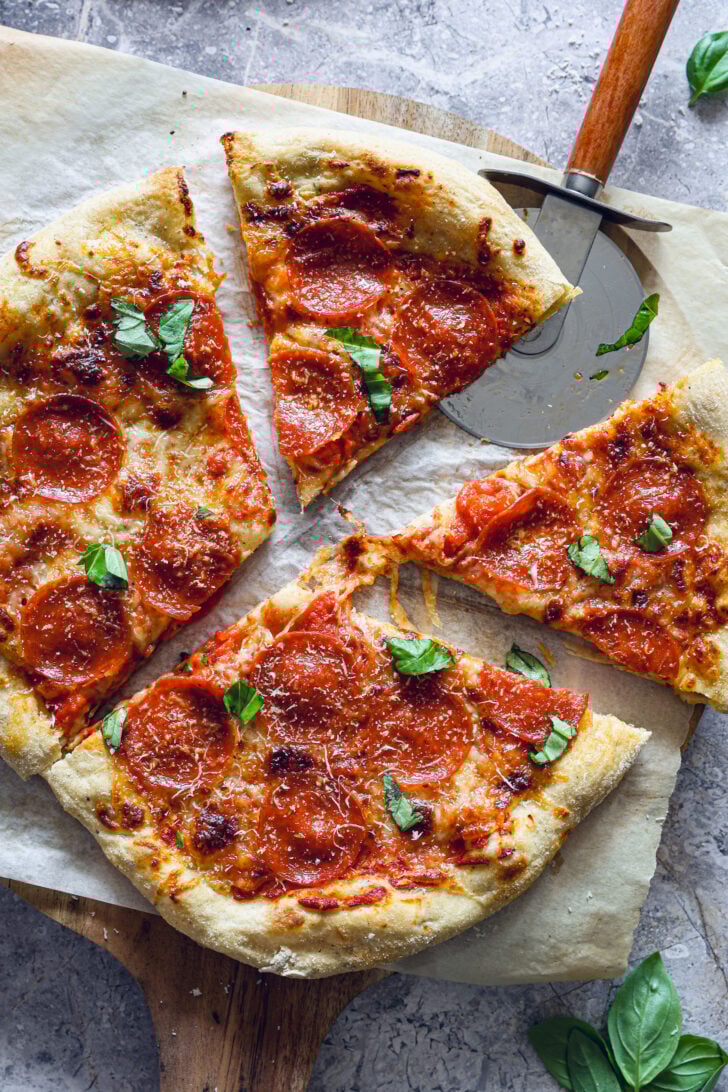
Do not forget to check out my Chefs Tips and Wine Pairings sections below!
The Recipe is next!
But remember, you can scroll past the recipe to learn a bunch more about my Best Homemade Pizza Recipe. Plus wine pairings!! The recipe is listed again at the end – so you don’t have to come all the way back up here!! Unless you want to 🙂

Best Homemade Pizza Recipe
Ingredients
Dough (Garlic-Herb No-Knead Crust)
- 2½ cups 312g bread flour
- ½ cup 63g whole wheat flour
- 1¾ tsp 7–8g fine sea salt
- 1½ tsp instant yeast
- 1½ cups 360ml room temperature water
- 1 tbsp olive oil
- ½ tsp garlic powder
- ½ tsp dried oregano
- Optional ¼ tsp crushed red pepper flakes
Sauce (Refined NY–NJ Style)
- 4.5 oz 120g / ½ cup ground tomatoes
- 2.2 oz 65g / ¼ cup tomato paste
- 2 oz 55g / ¼ cup hand-crushed whole plum or pear tomatoes
- Pinch dried oregano
- Pinch dried basil
- Scant ¼ tsp fine sea salt
- Pinch black pepper
- 1 tsp extra virgin olive oil
- ¼ tsp minced garlic or garlic powder
- 1 –2 splashes red wine vinegar or lemon juice
Cheese and Topping Suggestions
- 8 –10 oz whole-milk low-moisture mozzarella, shredded
- A sprinkle of grated Parmigiano-Reggiano or Pecorino Romano
- Optional toppings: mushrooms, caramelized onions, pepperoni, sausage, or fresh basil leaves after baking
Instructions
Mix the Dough
- Dough Prep Note: In a large mixing bowl, whisk the flours, salt, yeast, garlic powder, oregano, and red pepper flakes if using. Add the water and olive oil. Stir until a chunky, scrappy dough forms. It will look rough, uneven, and frankly a little wrong — but that’s exactly what you want. If there are still dry pockets of flour, add a tablespoon or two of water until everything is just barely hydrated. Do not knead. Cover the bowl with plastic wrap or a lid.
Ferment the Dough
- Minimum fermentation: Let rest at room temperature for 4–6 hours, until bubbly and doubled. Overnight (8–12 hours) at room temp gives much better flavor.
- Extended fermentation (recommended): Refrigerate covered dough immediately after mixing for 48–72 hours. Remove from fridge 1–2 hours before shaping to relax gluten and take off the chill.
Prepare the Sauce
- In a bowl, combine ground tomatoes, tomato paste, and hand-crushed tomatoes. Stir in oregano, basil, salt, pepper, garlic, olive oil, and vinegar or lemon juice. Mix gently. Rest 30 minutes before use to let flavors meld. Do not cook.
Divide and Pre-Shape
- Lightly flour a work surface. Turn dough out gently and divide into two portions. Shape each into a loose round by folding edges under. Cover loosely and let rest 30–60 minutes.
Preheat the Oven
- Place a pizza stone, steel, or inverted baking sheet in the oven. Preheat to 500°F (260°C) or the maximum your oven allows. Heat for at least 45 minutes before baking.
Stretch the Dough
- On a floured surface or parchment:
- Press dough gently from the center outward, leaving a ¾-inch rim untouched.
- Lift dough and let gravity stretch it while rotating like a steering wheel, or drape it over your knuckles to ease it outward.
- If dough resists or snaps back, cover and rest 5–10 minutes before continuing.
Assemble the Pizza
- Spread a thin layer of sauce on the stretched dough. Add mozzarella, followed by toppings. Finish with a light sprinkle of Parmigiano-Reggiano or Pecorino Romano.
Bake
- Slide onto the preheated stone or steel. Bake 7–10 minutes, until crust is puffed and golden and cheese is melted with light browning.
Cool and Serve
- Remove to a cutting board. Rest 2–3 minutes before slicing. Garnish with basil or a drizzle of olive oil if desired.
Lots of good stuff below!
Don’t run off to preheat that oven just yet… there’s a TON here to help you absolutely nail this pizza dough recipe and pizza sauce recipe, every single time. Wondering why this weird-looking no-knead dough actually works, or how long you can cold-ferment it before it goes too far? Read on for chef’s tips, a full Flavor Adjustment Guide, wine pairings, FAQs, and more. The full recipe is waiting again at the end!

Best Homemade Pizza — A Little History
While the origins of pizza are in Naples, the kind that comes to mind for most Americans is a New York style. In the late 19th and early 20th centuries Italian immigrants came to the city with their own methods, and from the coal ovens of Brooklyn and Manhattan emerged a pizza all its own. It has a base that is sturdier and a touch thicker than the Neapolitan classic so as to be folded, yet it remains thinner than many other styles.
Many home cooks don’t do justice to the pizza dough (myself included, in the early days!). For an authentic New York pie, time is what imparts the flavor and chew, not merely the ingredients. A quick same-day dough is no match for what you get from a long, slow fermentation, be it in the fridge for several days or at room temperature overnight. It is the same logic you find in good bread and has been the way of the pizzeria for more than a hundred years.
The sauce is made with equal restraint. Many a shop in New York and New Jersey will put together an uncooked or barely cooked sauce from quality canned tomatoes and little else. The thinking is that with fine tomatoes there is no need to put anything in front of them (why mess with a good thing?). This recipe follows both of those old rules… which is what makes it a classic pizza dough recipe instead of just another one
What Makes This Best Homemade Pizza Recipe Different
First the garlic and oregano are worked into the flour, after which the mixture is put in the fridge to rest for what can be days. It is that extended cold fermentation that puts some character in the crust; a hasty pizza dough has no hope of replicating the chewy texture or the way the flavor develops over time.
The sauce is handled differently. There is no need to put it on the stove to simmer for twenty minutes. One simply combines some fine canned tomatoes with a touch of paste, olive oil and vinegar and lets it stand for half an hour. When the pizza is in the oven the rest is taken care of, resulting in a sauce with the taste of a proper tomato.
Then you have the stone. It is preheated for 45 minutes at least o that as soon as the pizza dough goes in, the bottom is met with searing hot ceramic or steel. You will see the open bubbles and blistering on the crust that one would want from a pizzeria. The sauce is applied sparingly, a thin layer that does its part without compromising the crispness of the base.
Why This Best Homemade Pizza Recipe Works
- Long fermentation builds real flavor: Days of sitting around – honestly, the dough gets better while you forget about it completely. It develops a chewy, almost sourdough character that’s way deeper than anything rushed.
- High hydration creates lift: More water in your pizza dough sounds weird but creates those big bubbles you see. Crisp outside, tender inside. The contrast is everything.
- Garlic and herbs add backbone: They don’t scream at you like some crusts do. Just quiet savory depth.
- Uncooked sauce stays bright: Raw sauce keeps that fresh tomato punch. The oven does the concentrating work for you – no stirring over a stove required.
- Hot stone mimics pizza ovens: Bottom heat gives you those blistered edges and caramelized cheese spots. Like the good places, but in your regular home oven.
- Mix by hand: Stir until it comes together and stop. Seriously, overthinking kills good dough.
- Let it rest: Relaxed dough cooperates instead of fighting you when it’s time to stretch. Makes shaping so much easier.
- Light sauce layer: Thin coverage keeps things crisp underneath while delivering plenty of flavor. Balance, not drowning.
- Fresh basil after baking: It protects that bright herb flavor and gives everything a fresh finish that really pops.
How to Make This Best Homemade Pizza Recipe

Step 1: Make the Pizza Dough
- Mix: In a large bowl, whisk together the flours, salt, yeast, garlic powder, and oregano. Stir in water and olive oil until a rough, shaggy dough forms. It will look scrappy and uneven. Trust the process.
- Rest: Cover the bowl and let it rise for 4–6 hours at room temperature (overnight is better), or refrigerate for up to 72 hours for deeper flavor.
- Divide & Rest: Lightly flour a surface, divide into two balls, and let rest for 30–60 minutes before stretching.

Step 2: Prepare the Sauce
- Combine: Mix ground tomatoes, tomato paste, and crushed tomatoes in a bowl.
- Season: Stir in oregano, basil, garlic, salt, pepper, olive oil, and a few splashes of red wine vinegar or lemon juice.
- Rest: Let stand 30 minutes to allow flavors to meld. Do not cook.

Step 3: Stretch, Top, and Bake
- Preheat: Heat a pizza stone or steel at 500°F (260°C) for at least 45 minutes.
- Stretch: Press dough outward from the center, leaving a rim. Use gravity or your knuckles to gently stretch to 10–12″.
- Assemble & Bake: Spread a thin layer of sauce, add mozzarella and toppings, then bake 7–10 minutes until blistered and golden. Cool slightly before slicing.
Make-Ahead & Storage
- Prep Ahead: Make the pizza dough a day ahead and put it covered in the fridge. The flavor gets even better overnight, seriously. You can divide it into portions and chill them that way too, ready to stretch and bake whenever you want.
- Extended Fermentation (2-3 Days): This is where the magic happens. The dough develops way more flavor sitting in the fridge for a couple days. Just pull it out an hour before you want to use it so it warms up and becomes easier to stretch.
- Sauce Prep: Make the sauce up to 3 days ahead. Store it covered in the fridge and it tastes even better after the flavors meld.
- Refrigerate Leftovers (3-4 Days): Store slices in the fridge covered. Cold pizza for breakfast? No judgment here. Reheat in a skillet over medium heat for 2 to 3 minutes to get the bottom crispy again. Way better than the microwave.
- Leftover Pizza Dough (Up to 1 Week): Wrap tightly and refrigerate. The flavor keeps developing the whole time. Bring to room temperature before using, about an hour out of the fridge.
- Reheat: Skillet method, medium heat, 2 to 3 minutes, crispy bottom, melted cheese on top. Oven method, 350°F for 5 to 6 minutes if you’re reheating multiple slices.
- Pizza Pro Tip: Keep some dough balls in the freezer for pizza emergencies. They thaw in a couple hours and you’ve got fresh pizza whenever the craving hits.
Best Homemade Pizza Upgrades and Variations
This pizza is already dangerous. Here’s how to make it even more so.
- Brown the garlic and herbs: Toast the garlic powder and oregano in a dry pan for 30 seconds before adding to the dough. The flavor gets deeper and nuttier, way more interesting than just stirring them in raw.
- Add a touch of honey to the sauce: Just a teaspoon balances things out without making it sweet. You won’t taste honey but something feels different, in a good way.
- Finish with good olive oil: Drizzle some extra virgin over the hot pizza when it comes out of the oven. Everything tastes more expensive somehow.
- Try different cheese combos: Mix mozzarella with sharp provolone or aged cheddar. The complexity wins every time.
- Brush the crust with garlic butter: Melt butter with minced garlic and brush the edges before baking. Full pizza place vibes.
- Add fresh herbs after baking: Basil, oregano, fresh thyme, protects the flavors and gives that bright finish that makes people ask questions.
- Use semolina for stretching: Dust with semolina instead of regular flour. The bottom gets a slight crunch and doesn’t burn easily.
- Make it a white pizza: Skip the tomato sauce, brush with olive oil, add ricotta, mozzarella, and garlic. Simple but fancy.
- Try the cast iron method: Stretch the dough right in an oiled cast iron pan. Crispy bottom, puffy edges, looks impressive with almost no extra effort.

Chef’s Tips for This Best Homemade Pizza Recipe
- Use a kitchen scale for the dough: Measuring flour by weight instead of volume is the difference between an average dough and the best pizza dough recipe you’ll find. Cups can vary by 20% depending on how you scoop – weight doesn’t lie.
- Don’t flour your hands when stretching: Use a tiny bit of olive oil instead. Flour makes the dough slip and tear, oil lets you grip it properly without sticking.
- Stretch from the center outward: Start in the middle and work your way to the edges, leaving that outer rim untouched. That’s where your crust puffs up and gets those nice bubbles.
- Let the pizza dough tell you when it’s ready: If it keeps snapping back when you stretch it, cover it and wait another 15 minutes. Fighting tight dough just tears it up.
- Preheat your stone or steel for at least 45 minutes: Most people don’t heat it long enough. You want that thing scorching hot to get proper oven spring and a crispy bottom.
- Less sauce than you think: New pizza makers always use too much sauce. You want to see some dough showing through – the sauce spreads as it bakes.
- Slide it confidently: Hesitation when transferring to the oven creates disasters. One smooth, confident motion gets it where it needs to go without sticking or folding.
- Don’t open the oven door: I know you want to check, but every time you open it, you lose heat. Trust the timing and let the oven do its work.
- Cool for at least 3 minutes before cutting: Hot cheese slides right off if you cut too early. Those few minutes let everything set up properly for clean slices.
Skip ahead Jump to Recipe

Flavor Adjustment Guide for This Best Homemade Pizza Recipe
Pizza dough and sauce are forgiving. Here’s where to look if something’s off.
- Pizza Dough Tough or Chewy in the Wrong Way? Probably overworked or overproofed. Next time mix it just until it comes together and stop. If it’s fermented too long at room temp, the gluten breaks down too far and you lose structure instead of gaining chew.
- Pizza Dough Won’t Stretch, Keeps Snapping Back? It needs more rest. Cover it and let it sit another 15 to 30 minutes to relax the gluten. Fighting tight dough just tears it.
- Crust Too Pale? Your oven or stone wasn’t hot enough. Preheat for the full 45 minutes, and make sure the oven is actually at 500°F, not just set there.
- Crust Burnt on the Bottom, Raw on Top? The stone is too hot relative to the top heat, or the pizza is too close to the bottom element. Move the rack up a notch next time.
- Sauce Too Watery? You used too much or the tomatoes had extra liquid. Drain a bit before mixing, and remember, thin layer only.
- Sauce Tastes Flat? Check your salt and vinegar. That splash of red wine vinegar or lemon juice is what wakes the tomatoes up. Taste before you spread it.
- Pizza Soggy in the Middle? Too much sauce, not enough heat, or both. Use less sauce than feels right, and make sure your stone has had its full preheat time.
- Cheese Greasy or Oily? You used fresh mozzarella with too much moisture, or too much cheese overall. Stick with low-moisture mozzarella and don’t overload it.
- Dough Sticking to the Peel? Not enough flour or semolina underneath. Dust generously and move quickly once it’s time to slide the pizza onto the stone.
Key Ingredients in This Best Homemade Pizza Recipe
- Bread Flour: Higher protein content than all-purpose flour gives you that chewy, stretchy texture every good homemade pizza dough needs. All-purpose works in a pinch, but bread flour makes the difference between good and great.
- Whole Wheat Flour: Just a small amount adds nutty depth and helps the crust develop better color in the oven. Don’t go overboard – too much makes it dense and heavy.
- Instant Yeast: Also called bread machine yeast, it mixes right into the flour without proofing. More reliable than active dry yeast and gives consistent results every time.
- Fine Sea Salt: Enhances flavor and controls yeast activity during fermentation. Table salt works, but sea salt has a cleaner taste that doesn’t compete with other flavors.
- Garlic Powder: Mixed into the pizza dough itself instead of just sprinkled on top. Gives subtle savory depth throughout the crust without overwhelming the other toppings.
- Dried Oregano: Classic pizza herb that belongs in the dough. Use the good stuff if you have it – dried oregano from the Mediterranean has way more flavor than the grocery store bottles.
- Crushed Red Pepper Flakes: Optional but adds a gentle heat that builds as you eat. Just a pinch warms up the whole crust without making it spicy.
- Ground Tomatoes: The base of the best pizza sauce recipe starts here – look for San Marzano or fire-roasted varieties. Avoid anything with added seasonings since we’re building our own flavor profile.
- Tomato Paste: Concentrates the tomato flavor and adds body to the sauce. A little goes a long way for depth without making it too thick.
- Hand-Crushed Whole Tomatoes: Adds texture and bright tomato chunks to balance the smooth ground tomatoes. Crush them yourself for better control over size.
- Whole-Milk Low-Moisture Mozzarella: The holy grail of pizza cheese. Melts perfectly, browns beautifully, and doesn’t make your pizza soggy like fresh mozzarella can.
Wine Pairings
- Chianti Classico (Tuscany, Italy)
Why it Works: Natural acidity cuts through the cheese and garlic-herb crust while complementing the bright tomato sauce. Sangiovese’s earthy undertones and moderate tannins won’t overpower the clean flavors of the pizza.
Tasting Notes: Red cherry, dried herbs, earth, leather
Suggested Label: Fontodi Chianti Classico - Barbera d’Alba (Piedmont, Italy)
Why it Works: High acidity and low tannins make this the pizza wine. Its bright berry fruit lifts the tomato sauce, while Barbera’s food-friendly nature lets the garlic and herbs come through
Tasting Notes: Black cherry, violet, spice, mineral
Suggested Label: Michele Chiarlo Barbera d’Alba - Nero d’Avola (Sicily, Italy)
Why it Works: Medium-bodied with enough structure for cheese and garlic, but not so heavy that it overshadows the clean tomato flavors. Its rustic warmth matches the unfussy nature of this pizza.
Tasting Notes: Dark plum, black pepper, Mediterranean herbs, smoke
Suggested Label: Planeta Nero d’Avola - Lambrusco di Sorbara (Emilia-Romagna, Italy)
Why it Works: A lightly sparkling red with bright acidity that cleanses the palate between bites. Its effervescence cuts through the cheese while the berry notes play beautifully with tomato.
Tasting Notes: Strawberry, cherry, violet, mineral
Suggested Label: Cleto Chiarli Lambrusco di Sorbara
Faq’s
Absolutely, and you should. Make it up to 3 days in advance and store it covered in the fridge. The flavor actually gets better with time as it cold ferments.
Use an inverted baking sheet preheated in the oven. It won’t get quite as crispy as a stone, but it works surprisingly well for home pizza making.
Yes. Divide into portions, wrap tightly, and freeze for up to 3 months. Thaw overnight in the fridge and bring to room temperature before stretching.
It needs more rest time. Cover it and let it sit for another 15-30 minutes to relax the gluten. Fighting tight dough just tears it.
You can, but the texture won’t be quite as chewy. Bread flour has higher protein content that gives you better gluten development and structure.
Thin enough that you can almost see through it in the center, but leave a thicker border around the edges for the crust. Don’t worry about perfect circles.
Use a pizza peel dusted with semolina or cornmeal, or build it on parchment paper and slide the whole thing onto your stone. Move quickly and confidently.
Sure, but you’ll lose some of the flavor depth. If you skip them, consider brushing the crust with garlic oil after baking.
Usually too much sauce or not enough heat. Use less sauce than you think you need, and make sure your oven and stone are fully preheated.
Definitely. Grill one side of the stretched dough first, flip it, then add toppings to the cooked side. Keep the heat medium-high to avoid burning.
If you’ve got extra sauce, cheese, or toppings left after making this recipe, save them for a second pizza later in the week, or toss them into a quick pasta bake. Cold toppings folded into scrambled eggs also works surprisingly well.
Reheat slices in a skillet for the best texture, or chop leftover pizza into croutons for a salad. You can also crumble it into a frittata, or use the crust as a base for garlic bread. Leftover pizza doesn’t have to just be leftover pizza.
Usually overworked dough or too much flour worked in during stretching. Handle it gently, use oil instead of extra flour on your hands, and don’t overmix at the start.
Add a tablespoon of water at a time while mixing until it comes together without dry flour pockets. If it’s already shaped and dry, a light brush of olive oil before stretching can help it cooperate.
Start in the center and work outward, leaving the rim untouched. If it resists or springs back, stop, cover it, and let it rest 10 minutes before trying again. Patience beats force every time here.
Whole-milk, low-moisture mozzarella. It melts smoothly, browns instead of just going greasy, and doesn’t water out the crust the way fresh mozzarella can. For New York style specifically, that’s the standard — a little Parmigiano-Reggiano or Pecorino on top adds a sharper edge fresh mozz can’t match.

Equipment Needed for This Best Homemade Pizza Recipe
- Large Mixing Bowl: For combining the dough ingredients without making a mess all over your counter.
- Kitchen Scale (Highly Recommended): Measuring flour by weight gives you consistent results every time. Cups can vary by 20% depending on how you scoop.
- Pizza Stone or Steel: Creates the intense bottom heat you need for crispy crust and proper oven spring. An inverted baking sheet works in a pinch.
- Pizza Peel or Large Spatula: For transferring the pizza dough to and from the oven. Dust with semolina or cornmeal to prevent sticking.
- Bench Scraper: Makes dividing the dough clean and easy without deflating it. Also great for cleaning flour off your work surface.
- Clean Kitchen Towels: For covering the dough during rises and keeping your hands clean while stretching.
- Small Bowls: For mixing the sauce and holding your toppings so everything’s ready when you need it.
- Ladle or Large Spoon: For spreading sauce evenly without overloading the dough.
- Measuring Cups and Spoons: Standard measuring tools for liquids and smaller ingredients.
- Plastic Wrap or Tight-Fitting Lids: To cover the dough during fermentation and prevent it from drying out.
- Parchment Paper (Optional): Useful for beginners – you can build the pizza on parchment and slide it onto the stone.
- Instant-Read Thermometer (Optional): Helps you nail water temperature for the dough and check oven heat if your gauge seems off.
Related Recipes You’ll Love:
The Best Spaghetti Sauce You Will Ever Have Perfect if you want to make extra sauce for pasta night. This is the sauce that goes with everything and makes people ask for seconds.
The Best (Ever) Meatball Recipe Turn your leftover pizza sauce into the base for these incredible three-meat meatballs. They’re better than anything you’ve tried before.
The Best Cheddar Cheese Biscuits Warm, cheesy biscuits that pair perfectly with pizza night. Simple to make and disappear fast.
Crispy Roasted Brussels Sprouts with Balsamic and Pancetta Need something green on pizza night? These Brussels sprouts get crispy and caramelized in a way that makes people who hate vegetables ask for more.
Buffalo Chicken Dip Recipe Perfect appetizer before pizza or use it as a pizza topping for something completely different. Creamy, spicy, addictive.
You made it!
OK! Now that you made it all the way down here, you can just go right back up to the recipe!!
This is officially the last pizza recipe I’ll ever need! The 3-day cold ferment on that garlic-herb dough gave it the perfect chewy New York-style crust. My family said it’s better than our local pizzeria.
Hi Karen,
Thank you! I’m so glad the long ferment delivered that pizzeria chew for you. That’s exactly why I do the 2–3 days. Appreciate you trying it!
David