

Oven Braised BBQ Brisket in Sticky-Sweet Vinegar Sauce
BBQ brisket without a smoker, without a grill, without even going outside!! This oven braised BBQ brisket goes low and slow at 275°F, smothered in a homemade sauce made from vinegar, brown sugar, Worcestershire, Dijon, and garlic. The sauce gets sticky and sweet-sharp as it braises, and you baste it into the meat until every slice is soaked through. BBQ braised brisket with this much flavor usually takes a pit and half a day. This takes your oven and a baking pan.
Do not forget to check out my Chefs Tips and Wine Pairings sections below for making the best Homemade Braised BBQ Brisket.
You can even do it in a slow cooker – see notes in recipe!!
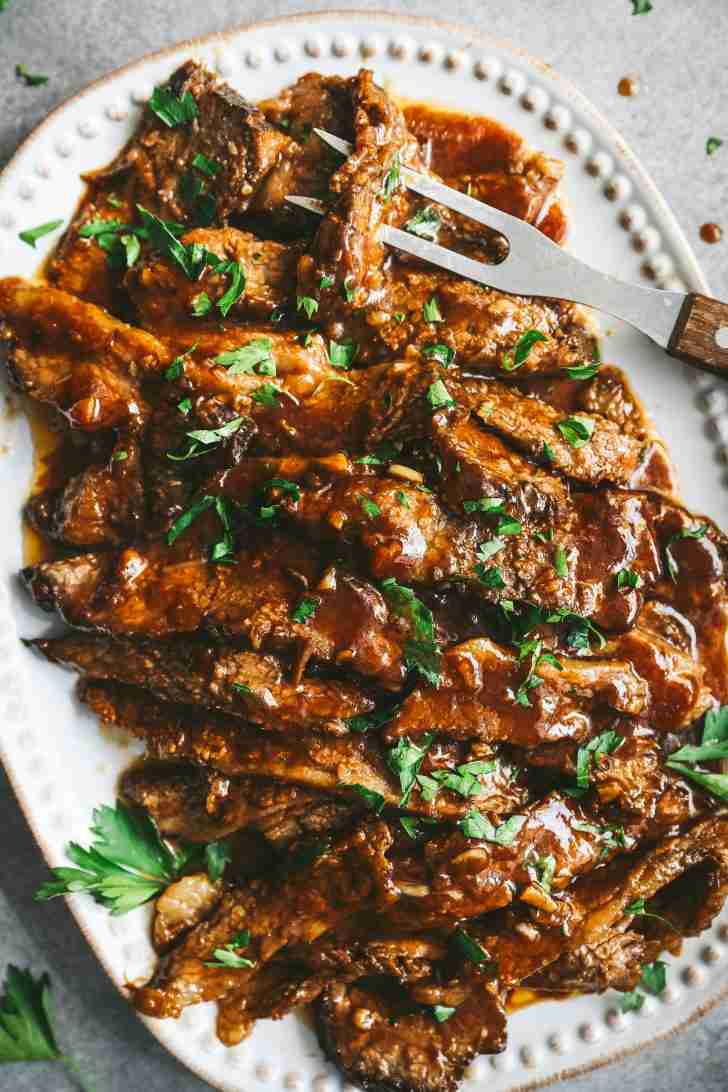
Why This Oven Braised BBQ Brisket Works
- Slow and low is how to get it done: 275 degrees for several hours. That’s what turns beef brisket, easily one of the toughest cuts you can buy, into something that falls apart just by looking at it. The collagen breaks down and the fat renders out. This is the key, this gives you meat that’s unbelievably tender, from your oven!
- The sauce is really the key: Cider vinegar, brown sugar, Worcestershire, Dijon, garlic, and a couple of bay leaves. The vinegar and sugar do that sticky sweet-sharp thing, the Worcestershire pushes it savory, and the Dijon gives it a bite. You won’t be needing any bottled BBQ sauce for this one.
- No grill, no smoker, doesn’t matter: This brisket is braised in the oven, start to end. No special gear, no keeping an eye on a fire, no worrying about the weather. Your oven does the slow cooking, and the sauce does the job that smoke normally does. (There’s a slow cooker option in the recipe notes too.) And for more hands-off dinner ideas, check out our easy crockpot and slow cooker recipes.
- Basting makes the flavor: Every forty-five minutes or so, you spoon that sauce back over the top. Each time you do it, more flavor gets into the meat, and the sauce gets thicker and stickier as it reduces. By the end the brisket and the sauce are pretty much the same thing.
- It’s better the next day: The flavors get deeper overnight. The meat takes in more sauce, the spices settle, and slices reheated on the second day are (I will admit this) sometimes better than day one. Leftover brisket sandwiches aren’t something you can skip.
- Feeds a crowd without the stress: One brisket, one pan, one sauce. This is an easy BBQ brisket that looks and tastes like you spent all day on it. You didn’t. Your oven did.
- The oven does the job: Mix the sauce, pour it over the brisket, cover the pan, and walk away. Come back to baste. That’s it. No turning, no rotating, no managing the temperature. An oven is steady in a way a grill never is.
A little history
Brisket was being braised in ovens a long time before smoked brisket became the thing everyone thinks of when you say Texas barbecue. Ashkenazi Jewish cooks figured this out ages ago, that this tough, cheap cut from the chest of the cow turned into something really special if you just cooked it low and slow in a pan with some liquid. It became the holiday dish, braised with onions, vinegar, sugar, and really just whatever was around. And when Heinz ketchup got its kosher certification in 1927, well, that went in the pot too. Vinegar, sugar, ketchup. I mean, that’s basically what’s in the sauce on this page.
Smoked brisket, the Texas version that everyone pictures now, came a good bit later. Jewish immigrants appear to be the first documented group to have smoked brisket in the US, and it was showing up on deli menus in Texas by the early 1900s. But the actual barbecue restaurants didn’t start serving it until the late 1950s and 1960s, places like Black’s BBQ in Lockhart being some of the first.
So no, this oven braised BBQ brisket is not some shortcut version of the smoked thing. If anything (and I love this part) it’s closer to the original. Braised, in a pan, in the oven, with a sweet-sharp sauce doing all the work. The smoker came second.
And, if you would like to learn the history of Texas brisket, look no further: The history of Texas Brisket
The Recipe is next!
But remember, you can scroll past the recipe to learn a bunch more about Oven Braised BBQ Brisket. The recipe is linked again at the end – so you don’t have to come all the way back up here!! Unless you want to 🙂
Oven Braised BBQ Brisket in Sticky-Sweet Vinegar Sauce
Ingredients
- 2 lb Brisket
- 1 cup Cider Vinegar
- 6 clove Garlic
- 2 tbsp Vegetable Oil
- 8 tbsp Worcestershire Sauce
- 6 tbsp Brown Sugar
- 2 Bay Leaf
- 1 cup Ketchup
- 4 tbsp Dijon Mustard
Instructions
- Set your oven to preheat at 275°F
- In a saucepan, combine cider vinegar, minced garlic, vegetable oil, Worcestershire sauce, brown sugar, bay leaf, ketchup, and Dijon mustard. Cover the saucepan and let the mixture simmer for 15 minutes.
- Place the brisket in a large baking pan. Pour the prepared sauce over the brisket, ensuring it is well covered. Cover the baking pan. Place in the preheated oven and bake for 2-3 hours, or until the brisket is tender. Internal temp should be about 200℉. THIS IS CRITICAL, STOP AT 200 DEGREES – a little over is fine – 204, 206, fine. Baste the brisket often during the cooking process.
- Once cooked, remove the brisket and cool it slightly. Slice the meat thinly. Return the sliced meat to the sauce in the pan. Continue cooking for an additional 15 minutes in the oven, turning the meat occasionally to ensure even cooking.
- Before serving, remove the bay leaf from the sauce. Serve the brisket slices coated in the tangy sauce.
Notes
Heat the mixture over medium heat until it begins to simmer, then reduce the heat and let it gently simmer for about 10 minutes. This helps meld the flavors. Prepare the Brisket: If desired (YOU SHOULD!), sear the brisket in a skillet with a little vegetable oil over medium-high heat. Sear each side for 2-3 minutes to develop a beautiful, tasty crust. (This step is optional but adds depth to the flavor.)
Place the brisket in the slow cooker. Slow Cooker Setup: Pour the prepared sauce evenly over the brisket, ensuring it is well coated.
Cover the slow cooker with its lid. You may want to consider doubling the sauce to make sure it covers completely. Cooking Time: Cook on low for 8-10 hours or on high for 4-6 hours, until the brisket reaches an internal temperature of about 200°F. Use a meat thermometer for accuracy. Slice and Finish: Once cooked, carefully remove the brisket and let it cool slightly. Slice the brisket thinly against the grain.
Return the sliced brisket to the slow cooker, ensuring the slices are submerged in the sauce. Cook for an additional 20-30 minutes on low to allow the flavors to infuse the meat. Serve: Before serving, discard the bay leaf. Serve the brisket slices generously coated in the tangy sauce. Enjoy!!!
Lots of good stuff below
Don’t head to the kitchen just yet. Below you’ll find what makes this oven braised BBQ brisket recipe different from every other one out there, a full Flavor Adjustment Guide for dialing in the sauce, make-ahead tips, wine pairings, and a lot more. The recipe link shows up at the bottom so you don’t have to scroll back up.
What Makes This Oven Braised BBQ Brisket Recipe Different
If you search for a BBQ brisket recipe, you’ll get pretty much the same thing each time: a smoker recipe, meaning you’re expected to have the smoker, the wood, the time, and a whole afternoon to keep an eye on the fire, or a slow cooker one where everything’s from a bottle. This recipe isn’t like either of those. It’s brisket, braised in the oven, with a sauce made from scratch, real technique, and ready to serve without even needing to go outdoors. There is a slow cooker option in the notes if you want it, but the oven is the perfect way!
The brisket sauce is the secret, the really good secret, and now you know it too! Cider vinegar with brown sugar gets you that sticky sweet-sharp base; Worcestershire sauce makes it deep and savory, Dijon mustard provides a bit of bite, garlic does what garlic always does. It isn’t a bottled sauce. You cook it in a pan for about 15 minutes, and it’s better than anything you could buy. The low heat of the oven, and continually spooning the sauce over the meat, builds up the flavors as a smoker would, but without the smoke. Each time you open the oven and put the sauce back on top, more flavor goes in.
The result is brisket which is braised until it is soft enough to fall apart, sliced thinly, and in a sauce which has been cooking down and becoming more concentrated for hours. It’s sticky, sweet, sharp, and clings to every slice. People will think you’ve been working on it all day, or that you’ve got a smoker out back. You haven’t. You’ve got an oven, a baking pan, and a really good homemade brisket sauce. That’s it. This braised brisket recipe doesn’t need anything else.
How to make Oven Braised BBQ Brisket
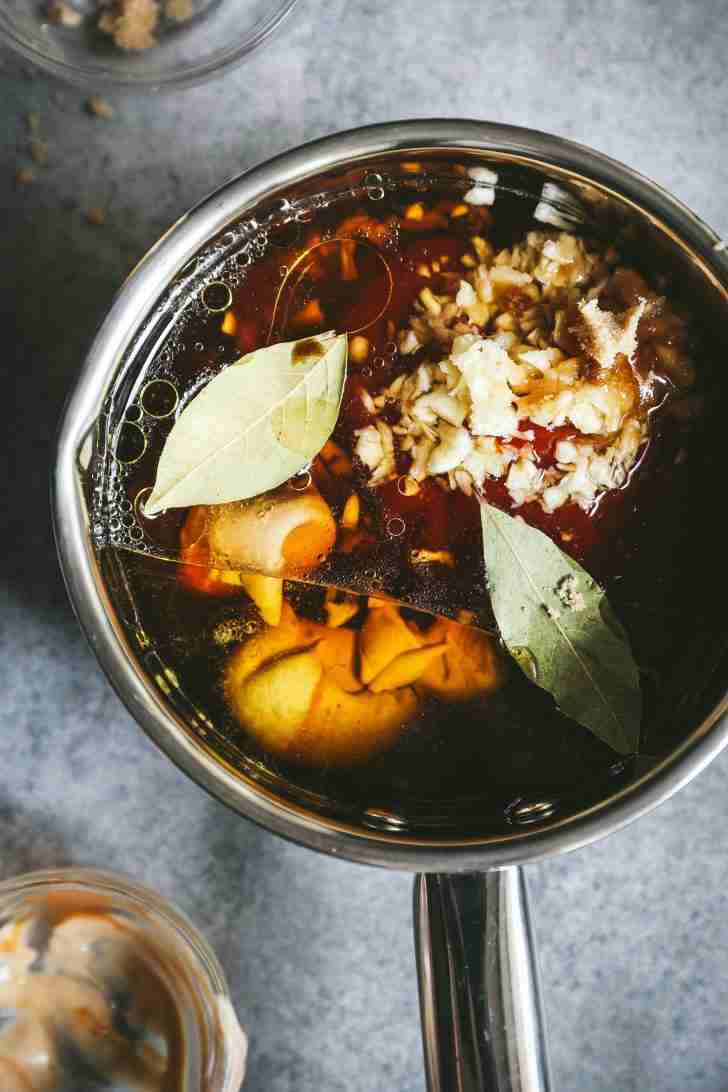
Step 1: Make the Sauce
- Combine cider vinegar, minced garlic, vegetable oil, Worcestershire sauce, brown sugar, bay leaf, ketchup, and Dijon mustard in a saucepan.
- Let it simmer for 15 minutes to let the flavors come together.
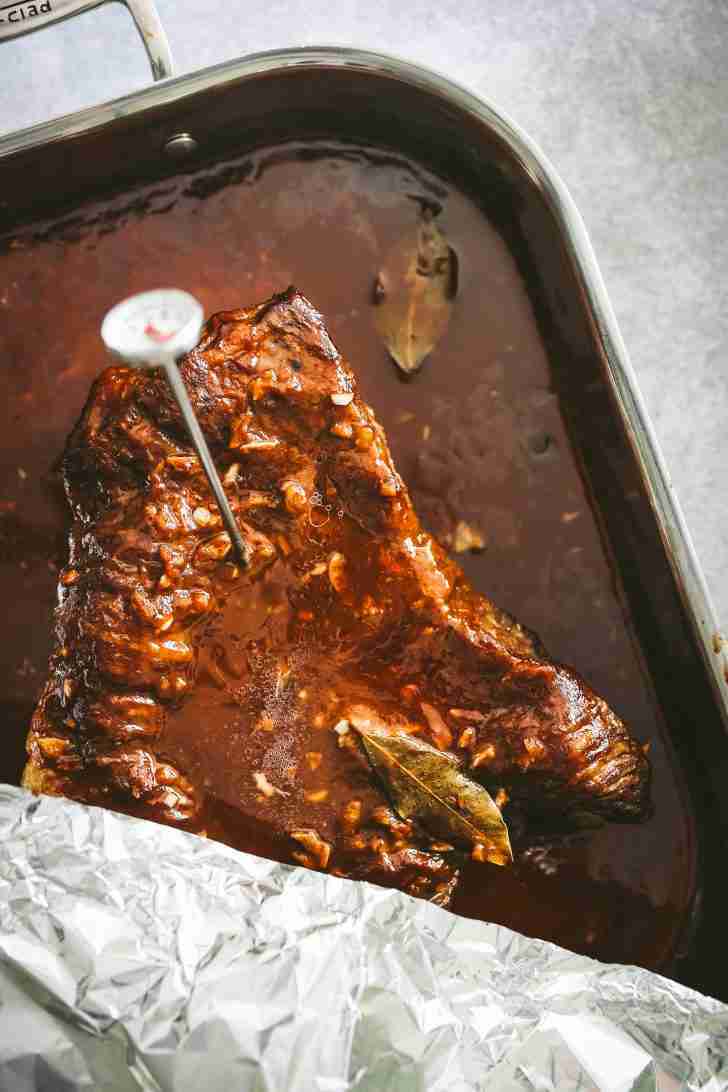
Step 2: Cook the Brisket
- Place the brisket in a baking pan and pour the sauce over it, making sure it’s fully coated.
- Cover the pan and bake at 275°F for 3 hours, basting often. The brisket should reach an internal temp of about 200°F.
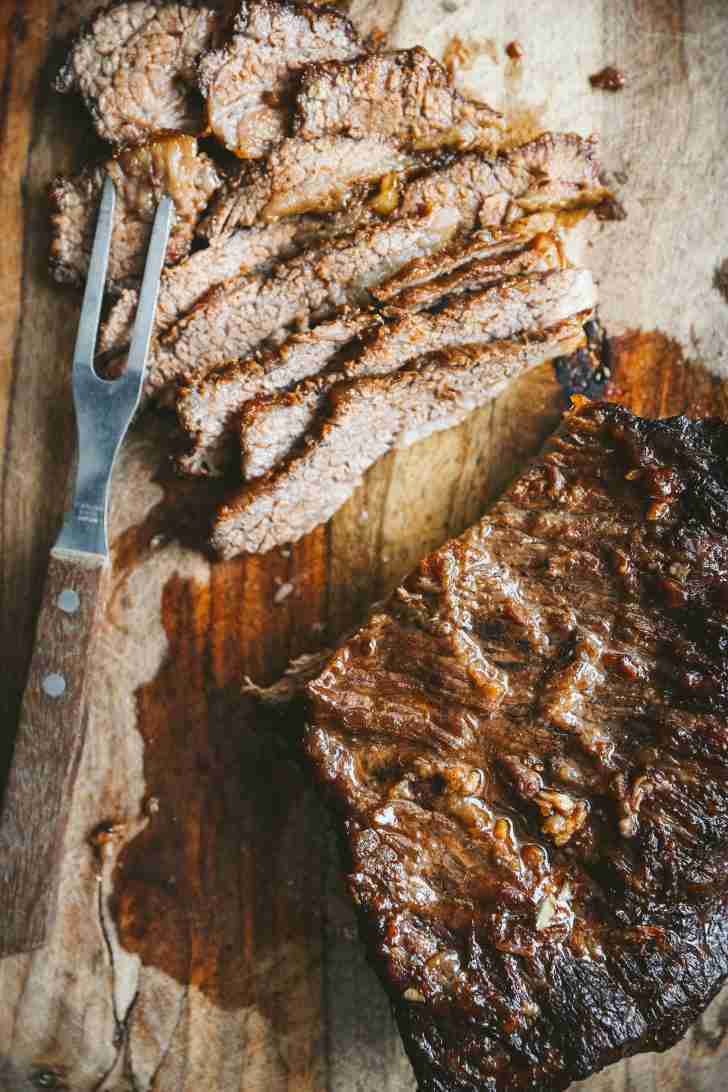
Step 3: Slice and Finish Cooking
- Once the brisket is tender, slice it thinly and return the meat to the sauce in the pan.
- Cook for another hour, turning the slices often to soak up more sauce. Remove the bay leaf before serving.
Remember, you can skip ahead Jump to Recipe
Make-Ahead & Storage
- Make Ahead: The sauce can be made a day or two before you need it, kept in the fridge, and warmed up when you’re ready to cook. You can also cook the whole brisket ahead and store it sliced in the sauce. It gets better the next day because the meat keeps absorbing the sauce overnight.
- Refrigerate: Keep the sliced brisket in the sauce in an airtight container for up to 4 days. Unlike some dishes where you want to store things separately, this one you want sitting together. The longer the meat sits in that sauce, the more flavor it takes on.
- Freeze: Slice the brisket, pack it in containers with plenty of sauce, and freeze for up to 3 months. The sauce freezes well because there’s no cream or dairy to go grainy on you. Make sure the slices are covered in sauce or they’ll dry out.
- Reheat: Low and slow, same way it was cooked. Stovetop on gentle heat or back in the oven at 275°F, covered, with a splash of broth if the sauce has thickened up too much. Don’t rush it with high heat or the meat will toughen up on you.
- The Garnish Rule: Fresh parsley goes on right before serving. It loses its color and flavor fast if it sits in the hot sauce.
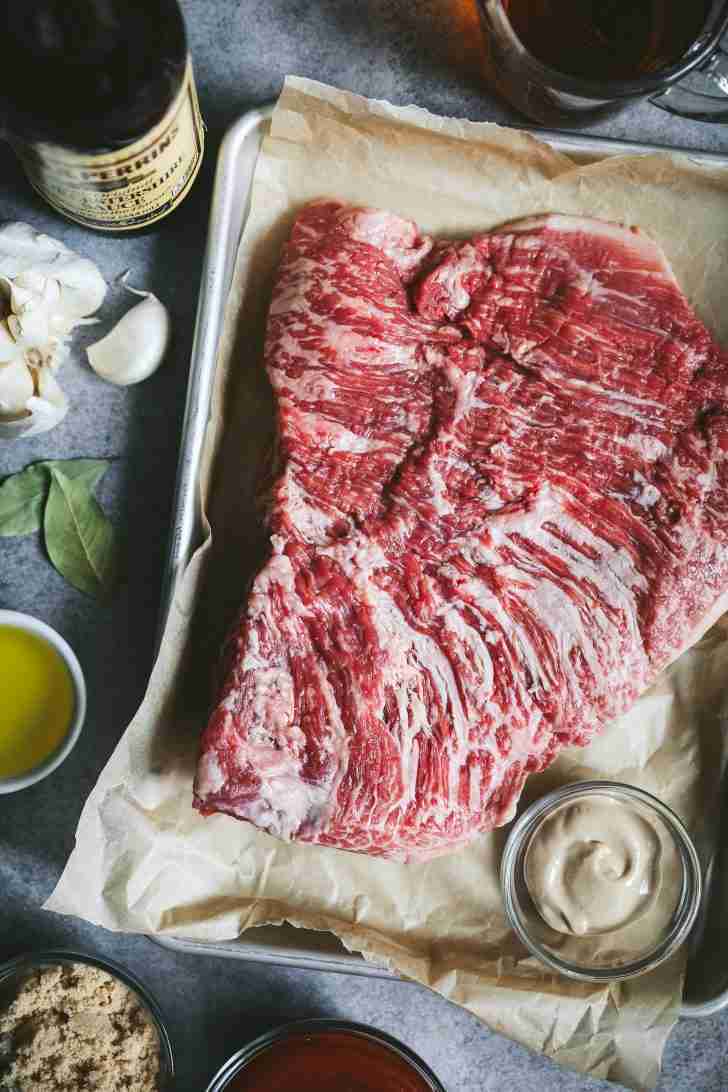
Oven Braised BBQ Brisket Upgrades and Variations
- Start with Better Meat: A good brisket from a butcher you trust makes a difference you can taste. Grass-fed or organic if you can find it, the flavor and texture are noticeably better. If you want really great meat delivered, I always recommend Snake River Farms.
- Make Your Own BBQ Sauce: The sauce in this recipe is already homemade, but if you want to go further, I’ve got a Classic KC BBQ Sauce recipe that works great as a base. From there you can get creative with it, a special honey, a splash of bourbon, whatever you’re feeling. You are the chef here!
- Add a Smoky Touch: No smoker? No problem. A pinch of smoked sea salt or some smoked paprika in the sauce gives you that smoky flavor without any equipment. And if you do have a smoker (I love my Big Green Egg!) you can absolutely finish the brisket on it for the last hour or so.
- Layer the Sauce: Smoked paprika, chipotle, even a tiny bit of espresso powder stirred into the sauce before it goes over the brisket. These are small additions that change the whole dish. Espresso powder especially, it deepens the savory side of the sauce in a way that’s hard to describe until you taste it.
- Fresh Herbs in the Braise: A sprig of thyme or a branch of rosemary dropped into the braising liquid while the brisket cooks. The herbs infuse into the sauce slowly and add an earthy quality that works with the vinegar and brown sugar. Pull them out before serving.
- Wine or Beer in the Braising Liquid: Putting roughly half a cup of a good dark beer, or a full-bodied red wine, in with the sauce before it goes over the brisket gives it a depth of flavor that’s hard to get any other way. Stouts and porters work particularly well with the brown sugar and Worcestershire.
Chef’s Tips for the Best Oven Braised BBQ Brisket
- Sear the brisket first: in a hot pan with a little oil, before the oven. That’s the Maillard Reaction; it gives you a real, flavorful crust. A few minutes each side is all you need. It’s optional but I promise you, the difference is huge.
- Let it rest: After the brisket comes out of the oven, give it a full 15 minutes before you start cutting. The juices go back into the meat if you do. Cut it too early and all that liquid ends up on the board, not in the brisket.
- Cut across the grain: this one thing will make the biggest difference in tenderness, and it surprises me how many people don’t do it. Look for the lines in the meat and cut across them, not with them. And keep the slices thin so they soak up as much sauce as they possibly can.
- Slow and low is what matters: 275°F, and don’t rush it. At that temperature the fat renders, the tough stuff breaks down. If you crank the heat to go faster and you’ll end up with something dry and chewy. Not worth it. DON’T DO IT!!
- Baste often: every 45 minutes or so, open the oven and spoon that sauce back over the top. Every time you do it, more flavor goes into the meat, and the sauce gets thicker and stickier as it cooks. Do not skip this.
- Get the sauce right before it goes on: taste it. More brown sugar if you want it sweeter. More vinegar if you want more bite. A tiny splash of soy sauce adds a savory punch that’s hard to describe but you’ll notice it. Get it where you want it before the brisket goes in, because it’s a lot harder to adjust once it’s in the oven.
Skip ahead Jump to Recipe
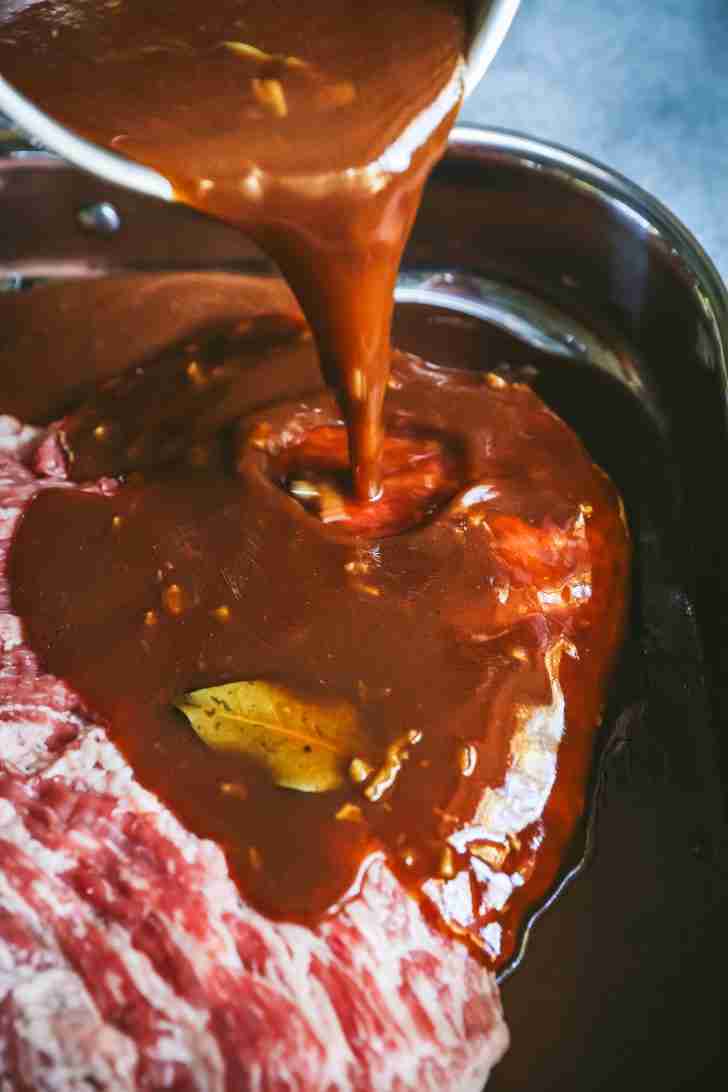
Flavor Adjustment Guide for Your Oven Braised BBQ Brisket Sauce
This brisket sauce recipe lives or dies by the balance, and here’s how to put it right if it isn’t perfect.
- Too Sweet? The brown sugar is probably doing too much; put in a bit more cider vinegar, little by little, until you get the tang back. A little Dijon mustard is good for this too.
- Too Tangy? The vinegar has the upper hand. Mix in some more brown sugar to move it back towards sweetness. Don’t rush it, as you don’t need a lot.
- Sauce Too Thin? Either don’t cover the pan in the oven and allow it to reduce by itself, or transfer the sauce to a saucepan on the stovetop and simmer it until it thickens up. It needs to be sticky, not watery.
- Sauce Too Thick? Use a little beef broth, not water; water makes it weak, broth keeps the flavor where it is. Add it gradually until it loosens up.
- Bland or Flat? More Worcestershire first, then more garlic, and then a little salt. Do not simply add salt, because this just makes it salty, not flavorful. Worcestershire is what gives this sauce its depth, and if it’s flat, that’s usually what’s missing.
- Missing Depth? A little soy sauce adds a savory element that’s hard to get any other way. Smoked paprika also works if you want a smokier flavor; and if you’re feeling bold, a tiny amount of bourbon in the sauce does something really special.
Key Ingredients
- Cider Vinegar adds a tangy (acidic) kick that cuts through the richness of the brisket, giving the sauce a nice balance of big flavors.
- Brown Sugar adds just the right amount of sweetness to balance the tangy vinegar. Its that sweet-savory combo that makes this sauce one of my absolute favorites!
- Worcestershire Sauce has a deep, savory umami (we love umami!) flavor that adds richness and that super cool Worcestershire flavor!
- Garlic gives the sauce a bold, savory flavor that gets right into the brisket. You are going to have great flavor throughout the whole brisket.
- Dijon Mustard has a sharp, tangy flavor that brightens up the sauce and balances the richness of the brisket.
- Ketchup adds a sweet, tangy flavor that thickens the sauce. It also adds a little richness, and even a little smokiness – yes!
Wine Pairings
- Zinfandel (California)
Why it Works: Zinfandel’s ripe fruit and peppery spice match the sweet-tangy BBQ sauce while its bold body stands up to the richness of brisket.
Tasting Notes: Blackberry, raspberry jam, black pepper, baking spice
Suggested Label: Seghesio Sonoma Zinfandel - Syrah / Shiraz (Northern Rhône or Australia)
Why it Works: Syrah brings savory depth and peppery structure that pairs beautifully with the Worcestershire, garlic, and slow-braised beef.
Tasting Notes: Black plum, cracked pepper, smoked meat, dark chocolate
Suggested Label: E. Guigal Côtes-du-Rhône - Cabernet Sauvignon (Napa Valley or Washington)
Why it Works: Firm tannins cut through the richness of brisket while dark fruit balances the sweet edge of the sauce.
Tasting Notes: Blackcurrant, cassis, cedar, dark cherry
Suggested Label: Stag’s Leap Wine Cellars Artemis Cabernet Sauvignon - Barbera (Piedmont, Italy)
Why it Works: Barbera’s bright acidity mirrors the vinegar in the sauce and keeps the dish lively while the fruit complements the brown sugar.
Tasting Notes: Cherry, plum, raspberry, herbs
Suggested Label: Vietti Barbera d’Asti Tre Vigne - Malbec (Argentina)
Why it Works: Malbec’s plush fruit and velvety texture pair naturally with slow-braised beef and work well with the sweet-savory sauce.
Tasting Notes: Blackberry, plum, cocoa, violet
Suggested Label: Catena Malbec (Mendoza)
Faq’s
You can, but this recipe is really meant for brisket. The whole point of the long braise at 275°F is what turns brisket, which is a genuinely tough cut, into something tender. Chuck roast or short ribs would work too, they respond nicely to a long, slow cook, but the texture will be different and the timing won’t be the same.
Yes. And actually I’d recommend it. Make it, cool it down, fridge it, done. The flavors get better overnight which is always a nice bonus. Warm it up before it goes on the brisket.
200°F and this is not a rough guideline. At 200 the collagen has broken down completely and the meat is tender enough to fall apart. A couple degrees over, fine. Under 195 and you’ll feel it, still tough in the middle.
Same way you cooked it. Low, slow, covered. Oven at 275°F or gentle stovetop heat. Splash of broth or extra sauce so it doesn’t dry out. Try to avoid the microwave if you can.
Slice it, pack it with plenty of sauce, freeze for up to 3 months. There is not any dairy in this sauce so it freezes well. Thaw overnight in the fridge and reheat gently on the stovetop or in the oven.
The oven, at 275°F, no grill, no smoker, nothing special. The sauce does what smoke would normally do and the basting builds flavor the same way a pit does, just inside your kitchen. There’s a slow cooker version in the notes too if you want to go that way. To be fair, you do get a really nice strong smoke flavor in a pit but believe me, this is amazing.
A homemade one for sure! This one is cider vinegar, brown sugar, Worcestershire, Dijon, garlic, bay leaf. The vinegar and brown sugar do that sticky sweet-sharp thing (that’s the whole identity of this sauce), Worcestershire makes it savory, Dijon gives it bite. Fifteen minutes on the stove and it’s better than anything you’ll find in a bottle.
Cider vinegar, brown sugar, Worcestershire, Dijon mustard, garlic, ketchup, bay leaf. Vinegar and brown sugar are doing the heavy lifting, everything else supports that. You can adjust the ratio before it goes on the brisket. Sweeter? More sugar. More bite? More vinegar. Get it right in the saucepan because once it’s in the oven it’s a lot harder to change.
Two different things that happen to use the same cut. Smoked brisket gives you bark, smoke ring, that deep wood flavor. Oven braised brisket is meat that’s been sitting in sauce for hours, soaking up flavor from every direction. It’s more tender, more saucy, and you don’t need any special equipment. If you want the sauce-forward version without standing outside for six hours, this is the one.
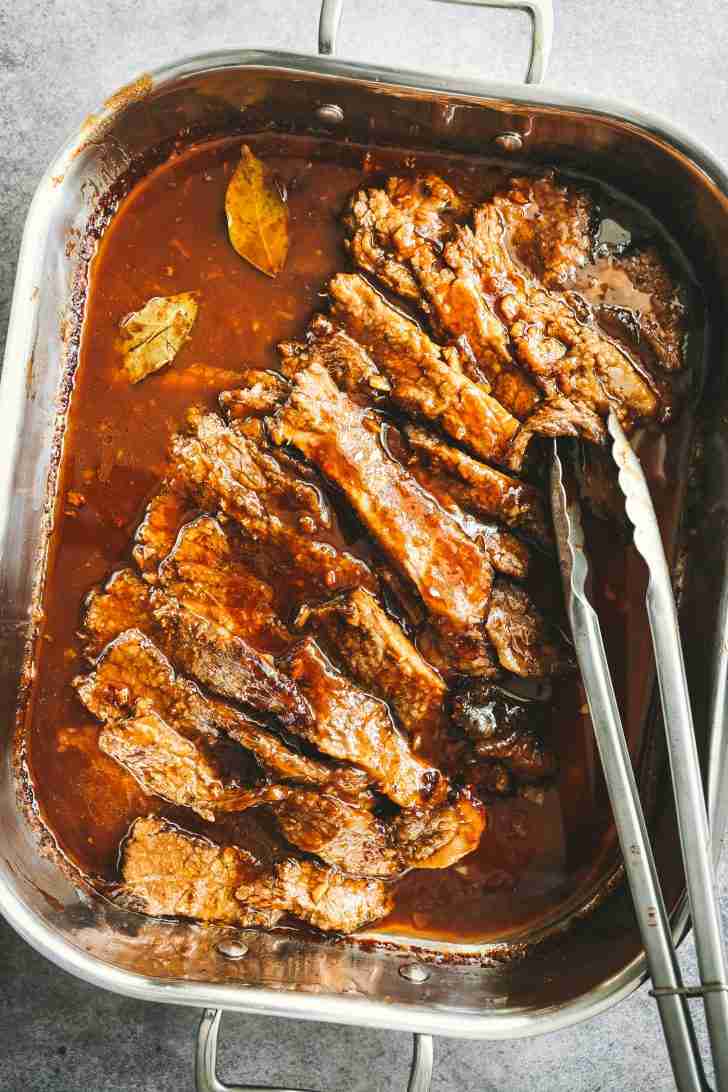
Equipment You’ll Need for This Oven Braised BBQ Brisket
- Saucepan: For simmering the sauce. Make sure it’s big enough to hold all the ingredients comfortably. You’re going to be stirring this for about 15 minutes.
- Large Skillet or Heavy Pan: For searing the brisket before it goes in the oven. You want something heavy that holds heat well. Cast iron is ideal. Get it hot, get a good crust on both sides, then transfer to the roasting pan.
- Baking or Roasting Pan: Needs to fit the brisket with room for the sauce around it. Depth matters here because you want the sauce to come up the sides of the meat, not spill over when you baste.
- Aluminum Foil or Oven-Safe Cover: The brisket stays covered while it braises. This is what keeps the moisture in and stops the top from drying out before the inside is done.
- Meat Thermometer: 200°F is the target and you are not going to be able to tell by looking at it. This is the one tool you really cannot skip.
- Sharp Knife: You’re slicing the brisket thin after it cooks. A dull knife will shred it instead of giving you clean slices, and after all that braising work you want clean slices.
- Cutting Board: Have one ready for slicing. If you can find one with juice grooves, even better, because there will be a lot of liquid coming off the brisket.
- Basting Spoon or Brush: Every 45 minutes you’re opening that oven and spooning sauce back over the meat. A large spoon works fine. A basting brush works too but the spoon gives you more sauce per pass.
Related Recipes You’ll Love:
Perfect Sloppy Joe Sauce-forward ground beef on a bun. Same obsession with getting the sweet-savory balance right, different format.
Ultimate Glazed Meatloaf Another oven comfort classic with big sauce energy. If you like what the brisket sauce does, you’ll love what the glaze does here.
Deep & Creamy Beef Stroganoff Braised beef in a rich sauce over noodles. Same low and slow mindset, different flavor profile.
World’s Best Chili Low and slow beef with layers of flavor that build over hours. Same patience, same payoff, totally different dish.
Kansas City BBQ Sauce If you want to take the brisket sauce in a different direction, start here. Homemade BBQ sauce from scratch that works on everything.
You made it!
OK! Now that you made it all the way down here, you can just go right back up to the recipe!!
OMG this was the best brisket I’ve made!! The meat was melt-in-your-mouth tender and the BBQ sauce was so flavorful. I served it with mashed potatoes and it was the perfect comfort meal. My family is already asking when I’m making it again!!
Hi Julie,
I am SO glad you liked it! Thanks for the kind words
David
This one of my favorites!! My kids always say it tastes like “the best thing ever!!” We all really love it. Its really tasty and is super and I mean super easy to make. Thanks so much for this!
Hi Jan,
That is so funny!! I am glad your kids loved it. It is truly one of my favorites and yes I agree…super easy!!
Thanks
David
Oh my goodness, this brisket is EVERYTHING!! It’s sweet, tangy, and so juicy. My husband said it’s the best brisket he’s ever had. Thank you for sharing!
Hi Nancy,
I will admit, this is one of my favorites! I am soooo glad you all liked it!
David
Hi David, can this be done in slow cooker.
Hi Elaine!!
That a really good question and I am going to add this into the notes but I wanted you to have it here:
Instructions for Slow Cooker Brisket
Prepare the Sauce:
In a medium saucepan, combine the cider vinegar, minced garlic, vegetable oil, Worcestershire sauce, brown sugar, bay leaf, catsup, and Dijon mustard.
Heat the mixture over medium heat until it begins to simmer, then reduce the heat and let it gently simmer for about 10 minutes. This helps meld the flavors.
Prepare the Brisket:
If desired (YOU SHOULD!), sear the brisket in a skillet with a little vegetable oil over medium-high heat. Sear each side for 2-3 minutes to develop a beautiful, tasty crust. (This step is optional but adds depth to the flavor.)
Place the brisket in the slow cooker.
Slow Cooker Setup:
Pour the prepared sauce evenly over the brisket, ensuring it is well coated.
Cover the slow cooker with its lid. You may want to consider doubleing the sauce to make sure it covers completely.
Cooking Time:
Cook on low for 8-10 hours or on high for 4-6 hours, until the brisket reaches an internal temperature of about 200°F. Use a meat thermometer for accuracy.
Slice and Finish:
Once cooked, carefully remove the brisket and let it cool slightly. Slice the brisket thinly against the grain.
Return the sliced brisket to the slow cooker, ensuring the slices are submerged in the sauce. Cook for an additional 20-30 minutes on low to allow the flavors to infuse the meat.
Serve:
Before serving, discard the bay leaf. Serve the brisket slices generously coated in the tangy sauce.
Enjoy!!!
David