

Easy Gazpacho Recipe
This gazpacho recipe is done the Andalusian way, soaked bread and everything, and it is SO good. Ripe tomatoes, sherry vinegar, good olive oil, all blended into a base that’s smooth and creamy with real body to it. Then right before serving you fold in fresh diced vegetables for crunch. Smooth base, fresh crunch. That’s the whole idea. Easy gazpacho that comes together fast. Homemade gazpacho the way southern Spain has been doing it for centuries, and once you taste it you get why.
Do not forget to check out my Chefs Tips and Wine Pairings sections below for making the best Spanish Gazpacho
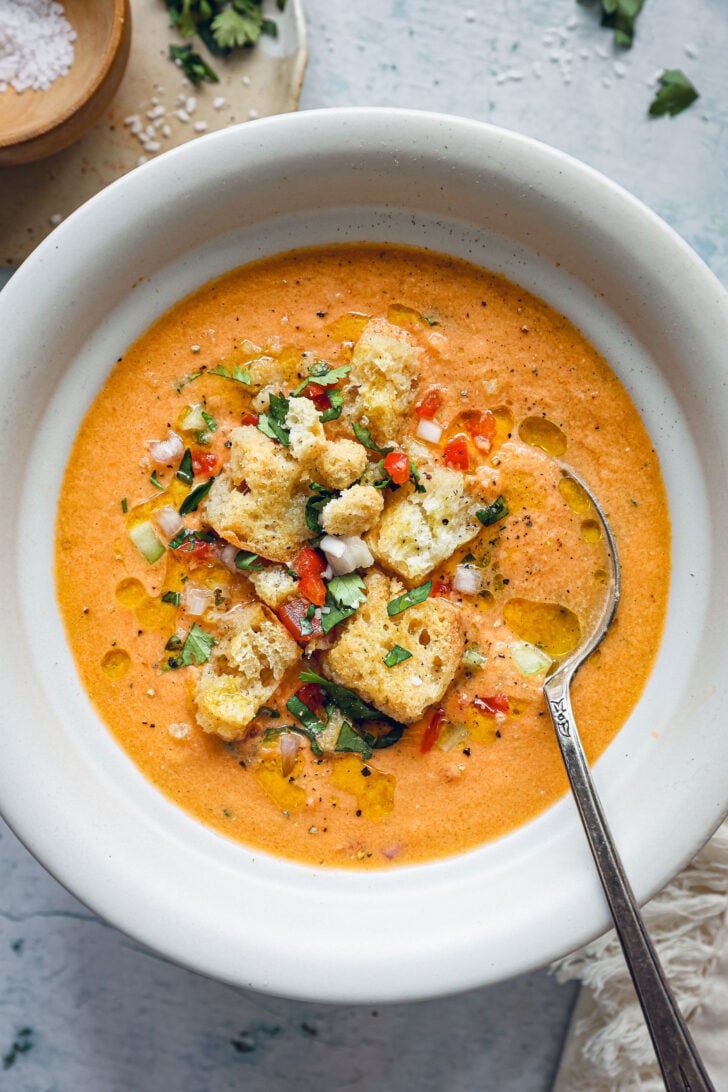
The Recipe is next!
But remember, you can scroll past the recipe to learn a bunch more about this easy Gazpacho. The recipe is linked at the end – so you don’t have to come all the way back up here!! Unless you want to 🙂

Easy Gazpacho Recipe
Ingredients
For the Blended Base
- 2 slices day-old country bread, crusts removed
- 2½ cups vine-ripened tomatoes, peeled and chopped
- ½ cup chopped red bell pepper
- ½ cup peeled, chopped cucumber
- ⅛ cup chopped celery
- 1 clove garlic, roughly chopped
- 1 tablespoon finely chopped shallot, about 1 small shallot; reduce if sensitive to raw allium
- ⅓ cup high-quality extra virgin olive oil, Spanish, fruity and peppery
- 3½ tablespoons sherry vinegar
- Juice of 1 lime
- 1½ teaspoons fish sauce
- 1 tablespoon Worcestershire sauce
- ½ teaspoon sweet Spanish paprika
- ½ teaspoon black pepper, or reduce to ¼ teaspoon for subtler heat
- 1 teaspoon salt, adjust after blending
- Optional: Small pinch of cayenne or a few drops of hot sauce, to taste
- Optional: Strain base through fine-mesh sieve after blending for ultra-smooth texture.
For the Folded-In Vegetables
- ¾ cup finely diced vine-ripened tomatoes
- ⅓ cup finely diced cucumber
- ⅓ cup finely diced red bell pepper
- ¼ cup finely diced red onion
- 1 tablespoon chopped parsley
- 1 teaspoon snipped chives
For Finishing
- Flaky sea salt
- Best olive oil you have
- Lime wedges
Instructions
Soak the bread:
- Place the bread in a bowl and cover with reserved tomato juice or water until fully softened. Squeeze out excess liquid, but keep it damp.
- Blend the base:
- Combine all blended base ingredients in a high-powered blender. Start on low, then increase to high and blend for a full 2 minutes until smooth and emulsified. It should look creamy. Taste — it should be bright and punchy. Adjust salt, vinegar, or fish sauce as needed. Add cayenne or hot sauce if using. Strain through a sieve now if desired.
Chill deeply:
- Transfer the base to a container, cover, and chill for at least 4 hours, ideally overnight.
Prep the fold-ins:
- Dice and chop all fold-in vegetables and herbs. Keep them cold but separate until serving time.
- Assemble and serve:
- Just before serving (no more than 10–15 minutes ahead), stir the folded-in vegetables into the chilled base. Spoon into chilled bowls. Garnish with flaky sea salt, a drizzle of your best olive oil, and serve with lime wedges.
Notes
- Use the ripest tomatoes you can find—they’re the foundation
- Don’t skimp on the olive oil quality; you’ll taste it
- The fish sauce doesn’t make it taste fishy—it makes everything taste MORE like itself
- Blend for the full 2 minutes; proper emulsification matters
- Keep those fold-in vegetables separate until just before serving for textural contrast
- Taste and adjust after chilling—cold mutes flavor, so it should taste almost too bright before it goes in the fridge
Lots of good stuff below
Don’t grab a spoon just yet. Below you’ll find what makes this gazpacho recipe different from every other one out there, a full Flavor Adjustment Guide for dialing in the base, make-ahead tips, wine pairings, and a lot more. The recipe link shows up at the bottom so you don’t have to scroll back up.
Gazpacho – A Little History
Gazpacho didn’t start out red (or orange!)
The early version of traditional gazpacho in southern Spain was a bread-and-garlic concoction Think of stale bread, olive oil, vinegar, water and salt. Sometimes a little garlic. It was cheap, filling, and was perfect when the sun was nice and hot. Food historians usually point to Roman-era staples and later Arab influence in the region, but it’s not a neat little timeline. More like a slow drift of a “working bowl” that stuck around because it worked.
And it really was working food. Rural Andalusia, long hot days, something cool and salty that satisfied. You can see why it lasted.
Tomatoes show up later, after Spain brings them over from the Americas in the 1500s. But the tomato-heavy gazpacho we recognize doesn’t snap into place overnight. It seems to show up clearly in recipes much later, around the 18th and 19th centuries, as tomatoes became everyday eating.
Modern Andalusian gazpacho is usually blended smooth with olive oil, often bread, then chilled. Some versions stay rustic. Some get strained. Either way, it’s built for heat and it’s built to keep you going.
What Makes This Gazpacho Recipe Different
I made gazpacho for years that was… fine. Cold tomato soup, basically. It was missing something and I couldn’t figure out what until I started reading about how they actually make it in Andalusia. Well, it turns out the bread is the secret. You soak day-old bread and blend it into the base with the tomatoes. And in return, you get a creamy, emulsified texture that feels more like a sauce (soup!) than juice. It’s the bread doing that. I don’t know why it took me so long to figure that out but it did.
The other thing that changed was the two-step approach. Most gazpacho recipes have you blend all the vegetables together and call it done. This one blends most of them INTO the base so they season the soup from the inside, and then you fold in fresh diced vegetables right before serving for crunch. So you get both… the smooth, rich base AND the fresh, crisp bite on top. That contrast is a huge secret in cooking in general. Now, it’s not just cold soup anymore. It’s a dish with structure.
And then there’s the stuff nobody tells you about. Fish sauce and Worcestershire go in the base (I know, sounds strange, but they make the tomato flavor deeper without tasting fishy AT ALL). Sherry vinegar, not red wine vinegar, because that’s the Andalusian way and honestly it’s just better. The base gets chilled overnight if you can manage it. The difference between four hours and overnight is… significant. Everything settles, the garlic mellows out, and what you end up with is a perfect, and I really do mean gazpacho that tastes absolutely fantastic!!
Why This Gazpacho Recipe Works
- The base is built like a sauce, not a juice: Like so many of my recipes, the foundation is everything. For the base, we’re using soaked bread, ripe tomatoes, olive oil, and sherry vinegar. Blended into a smooth emulsion that gives the soup structure and body without heaviness.
- Vegetables are blended for flavor, not just texture: Most of the cucumber, pepper, celery, garlic, and shallot go into the base, so they actually season the soup instead of just sitting in it. Only a small amount stays chunky for contrast.
- Cold food needs aggressive acid and salt: Sherry vinegar and lime keep the flavor bright after chilling. The right amount of salt will help make sure it doesn’t taste flat or muted once it’s cold. This is where most gazpachos go wrong, so pay close attention to this step!
- Olive oil is part of the texture, not a garnish: Blending it into the base creates richness and cohesion. A good olive oil makes a real difference here, and you’ll taste it in the first spoonful.
- Chill time transforms everything: Chilling is important here (and in life, to be honest!), so don’t rush it. When chilled, the soup becomes tighter and smoother. Flavors meld, garlic softens, and the texture improves noticeably.
- The fold-in vegetables have a purpose: Everyone’s playing a role in this dish. The diced tomatoes, cucumber, and pepper are there for textural contrast, and they help reset your palate between spoonfuls.
- Fresh chile brings heat that integrates, not just burns: Jalapeño or serrano blended into the base adds vegetal brightness and warmth. It’s not an afterthought, these become part of the soup’s structure.
- Umami anchors the bright flavors: Worcestershire, fish sauce, and tomato paste add savory depth, preventing the soup from tasting one-dimensional or too sharp. This is a secret trick to boosting the tomato flavor without just adding more tomatoes.
How to Make This Gazpacho Recipe

Step 1: Build the Base
- Soak the Bread: Soften crustless day-old bread in water or tomato juice. Squeeze out most of the liquid, but keep it damp.
- Blend: Combine all base ingredients in a high-speed blender. Blend until completely smooth and creamy — 2 full minutes. Adjust seasoning to taste. Optional: strain for ultra-smooth texture.

Step 2: Chill and Prep
- Chill the Base: Transfer to a container and chill at least 4 hours (overnight is best).
- Dice the Fold-Ins: Finely chop your tomatoes, cucumber, bell pepper, red onion, and herbs. Keep cold but separate.

Step 3: Assemble and Serve
- Combine: Stir the chopped vegetables into the chilled base 10–15 minutes before serving.
- Finish: Serve in chilled bowls. Drizzle with your best olive oil, hit it with flaky salt, and add lime wedges on the side.
Make-Ahead & Storage
Make Ahead: You can make the blended base a day or two ahead. The flavors all come together really well, plus the garlic’s strength mellows out quite a bit if it sits in the fridge overnight. But you need to keep the diced vegetables separate. Don’t even cut them until the day you’re serving. Add them too early and they go soft and you lose that crunch… which is kind of the whole point.
Refrigerate: Base goes in a sealed container, good for up to 3 days but don’t push it past that. Diced vegetables go in their own container. I know it feels like overkill keeping them apart but believe me… mushy diced cucumber in gazpacho is a sad, sad thing.
Freeze: Base only, not the fold-in vegetables, and it freezes fine for up to 2 months. Leave room in the container because it expands. Thaw overnight in the fridge and hit it with a quick blend to get the texture back. Not quite as good as fresh but still really good.
Reheat: Don’t!! It’s gazpacho! Cold, always cold. If it’s been sitting out and lost its chill, back in the fridge for 30 minutes. Or toss in a couple ice cubes, I’ve done it, no shame.
Refresh Before Serving: The flavors get a little muted after sitting in the fridge, that’s just what cold does to food. Taste it again and add a splash of sherry vinegar or a squeeze of lime to wake it back up. You will almost always need to re-season. Almost always!
Wine Pairings
- Fino Sherry (Jerez, Spain)
Why it Works: Fino’s bone-dry salinity, nutty undertones, and savory complexity create a thrilling contrast with the cold, creamy gazpacho. An unconventional but deeply Spanish pairing.
Tasting Notes: Almond, sea salt, dried herbs, lemon peel
Suggested Label: Valdespino Fino Inocente - Albariño (Rías Baixas, Spain)
Why it Works: Crisp, citrusy, and lightly saline, Albariño highlights the tomato’s brightness and cucumber’s freshness without clashing with the soup’s acidity or herbs. Its natural vibrancy and minerality make it feel like a seaside breeze.
Tasting Notes: Lemon zest, green apple, white peach, sea spray
Suggested Label: Pazo de Señorans Albariño - Dry Rosé (Provence, France)
Why it Works: The rosé’s subtle red fruit and herbal edge play beautifully with the red pepper and olive oil in the soup. It’s a chilled, palate-cleansing match that amplifies the freshness without adding weight.
Tasting Notes: Strawberry, watermelon rind, thyme, citrus peel
Suggested Label: Domaine Tempier Bandol Rosé - Txakolina (Basque Country, Spain)
Why it Works: Lightly effervescent and razor-sharp, Txakolina cuts through the creamy base and lifts the flavor profile with every sip. Think of it as gazpacho’s high-acid, high-energy best friend.
Tasting Notes: Lime, green herbs, green apple, mineral sparkle
Suggested Label: Ameztoi Getariako Txakolina - Verdejo (Rueda, Spain)
Why it Works: Verdejo’s crisp acidity and notes of citrus and fennel echo the soup’s herbal brightness while refreshing the palate between spoonfuls. It’s a natural partner to cold vegetable dishes.
Tasting Notes: Grapefruit, lime blossom, fennel, grass
Suggested Label: Belondrade y Lurton Verdejo
Gazpacho Recipe Upgrades and Variations
These upgrades are what take this gazpacho from great to… I don’t even have a word for it. Yes, that good!!!
- Use peak-season tomatoes: This gazpacho lives or dies by the quality of its tomatoes. I can’t stress this enough. When possible, seek out those late-summer vine-ripened tomatoes. They always outperform hothouse tomatoes. Tip: If they’re not in season, add a tablespoon of tomato paste to boost concentrated flavor.
- Char your red pepper before blending: A quick roast or char adds a smoky edge that deepens the soup without overpowering it. Peel the skin before blending for a cleaner texture.
- Go premium with your oil and vinegar: This isn’t the dish for bargain-bin olive oil. Opt for a fruity, peppery extra virgin and proper Spanish sherry vinegar to elevate the finish. Trust me, you’ll taste the difference.
- Add a touch of almond for richness: Throw on a few crushed Marcona almonds or toasted slivered almonds just before serving. These add a hint of nut and a bit of textural contrast without messing with the soup’s balance.
- Garnish with chilled olive oil, not room temp: Pop your finishing oil in the fridge for 10-15 minutes before drizzling. Trust the science – the colder oil adds contrast and sharpens the overall feel of the bowl.
- Strain the base for an ultra-smooth finish: Want that restaurant-level polish? Run the blended base through a fine-mesh strainer. It removes any fibrous bits, making the gazpacho much more silky and refined. (Hey, we’re going pro here, okay?)
- Serve in chilled bowls or glasses: The cold snap of a pre-chilled bowl keeps the gazpacho crisp and refreshing longer — especially useful on hot days or when serving outdoors.
- Let it rest overnight if possible: While 4 hours is the minimum, an overnight chill allows the flavors to marry completely. The garlic mellows, the spices integrate, and the whole thing just tastes more… gazpacho. 😉

Chefs tips for our Gazpacho Recipe
- Dry your vegetables before blending: Here’s a tip from your trusty chef: excess water from washed produce dilutes your base. So make sure and pat everything dry before it goes into the blender to keep the flavor concentrated. You’ll notice the difference.
- Soak the bread, but squeeze it out: You want your bread fully soft, but not dripping. Like you remove excess from your vegetables, squeeze out excess moisture, or you’ll throw off the texture and emulsification.
- Blend longer than you think: Fight the temptation here. Run it for a full 2 minutes on high to create a smooth, silky base. Don’t stop at “good enough”.
- Taste after chilling, not before: Gazpacho has this quality where it changes as it rests. Salt and acid should be adjusted after it’s cold, not straight from the blender when flavors are sharper. This is the step that separates “meh” gazpacho from great gazpacho.
- Use a high-powered blender, not a food processor: A food processor won’t break everything down finely enough. So I always encourage investing in a strong blender to get that creamy, emulsified consistency.
- Balance your garlic carefully: Three cloves blended into the base is right for immediate flavor, but garlic sharpens as it sits. If you’re making this a day ahead, consider dialing back slightly.
Skip ahead Jump to Recipe

Key Ingredients in our Gazpacho
- Vine-ripened tomatoes: In the Andalusian style, tomatoes are the backbone of the gazpacho. Use the ripest, most flavorful tomatoes you can find, preferably late summer ones. If they taste flat, your soup will too.
- Day-old country bread: The bread is key for body and creaminess. Quality bread thickens the soup without muting flavor and gives it that signature Andalusian silky texture. I find that country bread adds more flavor than plain white bread.
- Sherry vinegar: The acid that defines traditional gazpacho. It’s complex yet balances the sweetness of the tomatoes better than wine vinegar or lemon alone. Don’t skip this step, it’ll really make a difference in the final product!
- Extra virgin olive oil: Blended into the base, it creates a rich emulsion and gives the soup proper mouthfeel. Use a fresh, fruity bottle, you’ll definitely taste it.
- Cucumber and red bell pepper: These bring a sweetness and freshness to both the base and the fold-in vegetables. Blending most of them keeps the flavor integrated rather than chunky or raw.
- Garlic and shallot: My suggestion? Use garlic and shallot in bold but balanced amounts. They season the base without making it harsh. They’ll also help mellow the dish as the soup rests in the fridge.
- Jalapeño or serrano: Fresh chile brings vegetal heat that integrates into the soup’s structure instead of just floating on top like hot sauce would.
- Cumin and smoked paprika: These are quiet background spices that add warmth and flavor without dominating the dish. They make the base taste complete and layered, not one-dimensional.
- Fish sauce and Worcestershire: Umami builders that amplify the tomato flavor and add savory depth. Don’t worry, the fish sauce doesn’t taste fishy — it just makes everything else taste more like itself.
Flavor Adjustment Guide for Your Gazpacho Recipe
The base is where everything lives in this gazpacho, and here’s how to fix it if something’s off.
- Tastes Flat? More salt first, always more salt first. Cold mutes everything and I cannot tell you how many times I’ve under-salted gazpacho because I tasted it warm from the blender and thought it was perfect. It wasn’t. Taste it cold, then decide. If salt alone doesn’t fix it, a splash more sherry vinegar usually does the trick.
- Too Acidic? You went heavy on the vinegar or lime… it happens. A little more olive oil will smooth it out, or blend in a small piece of soaked bread to absorb some of that sharpness. Don’t add sugar though. I tried that once and it tasted like tomato candy. Not great.
- Base Too Thick? Thin it with ice-cold water or cold tomato juice, a little at a time. And I mean cold. Room temperature liquid in cold gazpacho is… honestly it’s a crime. It kills the chill and then you’re waiting another hour for it to get cold again.
- Base Too Thin? You probably didn’t use enough bread, or your tomatoes were watery. Blend in another small piece of soaked bread. It thickens without changing the flavor. If that’s not enough, let it sit uncovered in the fridge for a while and it’ll tighten up on its own.
- Not Enough Depth? More fish sauce. I know, I know. But a few extra drops and the tomato flavor gets this savory backbone that you just can’t get any other way. Or a tiny bit more Worcestershire. Start with a quarter teaspoon and taste.
- Garlic Too Strong? This happens a LOT when you make it ahead. Garlic sharpens overnight in a way that can take over the whole bowl. More lime juice helps cut through it, or blend in a little extra cucumber to dilute it. Next time, use less garlic if you’re chilling it overnight. I had to find this out the hard way… twice!!
Faq’s
This is one of those dishes where making it ahead of time and allowing it to chill works wonders. The flavor improves after a few hours in the fridge. Make it in the morning or the night before for the best result.
You do if you want real gazpacho. The bread gives it structure and that signature creamy body. You’ll find that without the bread, you’re just drinking a cold (albeit still tasty) vegetable juice.
Always use ripe, in-season tomatoes — ideally vine-ripened or heirloom. If they’re out of season, add a small amount of tomato passata or roasted tomato to boost flavor.
You can, but it will change the texture. The oil emulsifies with the bread and tomatoes to give the soup body. Cutting it down makes the soup thinner and less satisfying.
Not really. This gazpacho should be warm and savory, not hot. Yes, we add jalapeño in there, but it’s more for vegetal brightness — you can leave it out or adjust to taste.
Technically yes, but it’s best fresh. The texture can separate after freezing. If you do freeze it, blend it again after thawing to bring it back together.
You can! All you need to do is use a slice or two of gluten-free white bread with a neutral flavor. You still need the bread for texture, but it doesn’t have to be wheat-based.
It likely needs more salt or vinegar — especially after chilling. Cold dulls acidity and seasoning, so always adjust once the soup is cold. Don’t be afraid to re-season.
Yes, absolutely. Running the blended base through a fine-mesh strainer or chinois will give you a smoother, more refined finish — especially helpful if your blender isn’t high-powered.
3 to 4 days, tightly covered. The flavor stays sharp, but give it a stir before serving, as the emulsion may separate slightly over time.
Soak bread, blend it with ripe tomatoes, sherry vinegar, olive oil, and vegetables until smooth. Chill it for at least 4 hours (overnight is better). Then fold in fresh diced vegetables right before serving. The full step-by-step is above with photos.
Real Andalusian gazpacho starts with day-old bread, ripe tomatoes, sherry vinegar, and good olive oil. Those four are the foundation. Everything else, the cucumber, pepper, garlic, spices, fish sauce, that’s what makes this version go deeper than most.

Equipment Needed for our Gazpacho
- High-powered blender: For blending the base into a smooth, creamy emulsion. This is a key part of the texture.
- Fine-mesh strainer or chinois (optional): A strainer is optional, but great for removing any fibrous bits and refining the texture if your blender isn’t top-tier.
- Cutting board and sharp knife: Essential for prepping both blended and garnished vegetables with clean, precise cuts.
- Vegetable peeler (optional): Use if you prefer a peeled cucumber for a cleaner look and smoother texture.
- Large mixing bowl: To fold the chopped vegetables into the blended base without making a mess.
- Storage container with lid: For chilling the finished soup. A wide, shallow container chills more evenly than a tall one.
- Serving bowls or glasses: Gazpacho is traditionally served cold in bowls or small glasses. Use chilled ones if possible.
Related Recipes You’ll Love:
Roasted Garlic – If you loved how garlic added backbone to the gazpacho base, roasted garlic brings similar depth with mellowed sweetness. Perfect for when you want rich, soft allium flavor without the sharp bite.
Epic Pasta Salad – Another chilled dish that balances freshness with bold hits of acidity and texture. Great if you’re looking for a make-ahead side with crunch and herbaceous zip—minus the blender.
Easy Tomato Blue Cheese Sauce – If the tomato base in our gazpacho hooked you, this sauce leans into rich, creamy tomato flavor with a funky blue cheese punch. Use it hot, but the tomato-lime-vinegar vibe will feel familiar.
Next-Level Deviled Eggs – Different format, same energy: sharp mustard, bright acid, creamy textures, and garnishes that matter. A perfect party pairing with gazpacho if you’re serving a spread.
Secrets to Julienning – Want sharper knife work for those veggie fold-ins? This guide gives you the skills to dice, julienne, and chop with confidence—so every spoonful pops with clean texture.
You made it!
OK! Now that you made it all the way down here, you can just go right back up to the recipe!!
This was my first gazpacho and it turned out amazing. I kept it a little chunky and loved the texture with all the fresh veggies. Chilled it for a few hours and it was so refreshing. Served it with some garlic toast and it was the perfect light dinner.
Hi Sophia,
That is awesome that you tried it and even better that you liked it!!
David
Made this on a really warm evening and it hit the spot. The cucumber and peppers gave it such a fresh taste. I added a tiny bit of garlic and it was just right. My kids even tried it and said it was “pretty good” which is big for them.
Hi Taylor,
I literally LOL’d at “pretty good”. That is so funny! I am so glad they “liked” it.
David
This gazpacho tasted so clean and summery. I made a big batch and we had it for a couple days. The olive oil drizzle on top was perfect. My husband kept saying how “awesome” it was!!
Hi Brittany,
“Awesome”. I love it! Thank you so much!
David
This gazpacho is seriously my new favorite summer recipe. It was cold, flavorful, and tasted so fresh. I made a double batch and we enjoyed it all weekend long. This one is definitely going on repeat every summer.
Hi Zoe,
I love it…. on repeat!! I do the same thing
David
This was my first time making gazpacho and it turned out perfect. Super easy in the blender and tasted so light and summery. I left it a little chunky and loved the texture. Served it with some crusty bread for lunch — total winner.
Hi Lauren,
It really is super easy!! I am so glad you liked it!
David
OMG this gazpacho is my new favorite summer recipe!! It was super fresh tasting and the olive oil on top made it rich without being heavy. I made a big batch and we drank it like soup for two days. This one is a keeper!!
Hi Victoria,
Thank you so much! I’m really glad the fresh flavor and olive oil drizzle worked perfectly for you. Appreciate the support!
David
This is absolutely the best gazpacho I have ever made. I garden every summer and always end up drowning in tomatoes in August (I know its March!). This recipe is now my answer to that problem. Made a double batch and it disappeared in two days.
Hi Jan,
That was perfect timing. I was just doing some updates to this page, that’s funny! I am so, so glad you liked it. You will have to share some gardening secrets with me!
David