

Swiss Cheese Fondue Recipe (A Family Tradition)
Cheese Fondue!! This Cheese fondue recipe goes back to when I was a kid. Fire crackling in the background, my whole family around the table with those long forks, trying not to drop bread into the pot. Mozart playing softly, Dad’s choice, always. My parents understood something I didn’t get until now: fondue wasn’t just dinner, it was this whole ritual that made us slow down and be together. Now I’m doing the same thing with my wife and boys, and I understand it much better!! This recipe comes straight from those nights.
Do not forget to check out my Chefs Tips and Wine Pairings sections below for making this Swiss Cheese Fondue Recipe

Ok, I really hesitated to put this here but you really MUST read this history of fondue. It’s fun, informative and will get you ready for one of the greatest meals there is!!!
The Wonderful History of Fondue
Ok, now you are ready!! 🙂

The Recipe is next!
But remember, you can scroll past the recipe to learn a bunch more about my Cheese Fondue. Plus wine pairings!! The recipe is listed again at the end – so you don’t have to come all the way back up here!! Unless you want to 🙂
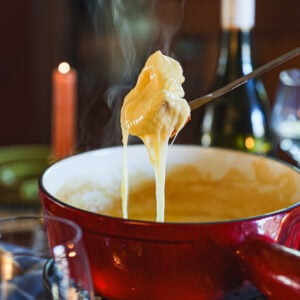
Swiss Cheese Fondue Recipe (A Family Tradition)
Ingredients
- 1 clove garlic, halved
- 1 cup dry white wine, Sauvignon Blanc or Pinot Grigio
- 1 teaspoon lemon juice
- 8 ounces 225 grams Gruyère cheese, grated
- 8 ounces 225 grams Emmental cheese, grated
- Flour for dredging
- 1 tablespoon kirsch, optional
- Freshly ground black pepper
- Pinch of nutmeg, optional
Dippers (choose any combination):
- Cubed crusty bread, baguette, sourdough, rye
- Steamed baby potatoes
- Blanched broccoli or cauliflower
- Apple or pear wedges
- Pickles or cornichons
- Cured meats, such as prosciutto or salami
Instructions
- Grate the Gruyère and Emmental, then toss them together in a large bowl.
- Sprinkle the flour over the cheese and toss to coat evenly. Set aside.
- Rub the inside of a heavy saucepan or fondue pot with the halved garlic clove. Discard or leave it in for a stronger garlic flavor.
- Pour in the white wine and lemon juice. Warm gently over medium-low heat until it just begins to simmer.
- Gradually add the dredged cheese mixture, one handful at a time, stirring constantly in a figure-eight motion. Wait for each addition to melt fully before adding more.
- Once the mixture is smooth and melted, stir in the kirsch if using.
- Season with freshly ground black pepper and a pinch of nutmeg, to taste.
- Keep warm over low heat or a fondue burner. Serve immediately with your chosen dippers.
Lots of good stuff below!
Don’t put those forks down just yet. Below you’ll find what makes this the best cheese fondue recipe out there, a full Flavor Adjustment Guide for when the cheese isn’t cooperating, prep-ahead tips, wine pairings, and a lot more. The recipe link shows up at the bottom so you don’t have to scroll back up.
Swiss Cheese Fondue – A Little History
Fondue has a wilder history than you’d think — a cheese cartel, a World’s Fair debut, and a reference in Homer’s Iliad dating back to 800 BC. The full story is equal parts delicious and surprising. Worth a read over HERE!
What Makes This Swiss Cheese Fondue Recipe Different
This recipe wasn’t born in a professional kitchen. It’s from my mom and dad’s dining room, with a fire in the fireplace, Mozart on the “stereo” (which probably reveals my age!) and my sister desperately trying to stop her bread from falling into the pot. I discovered from that experience that fondue isn’t really about getting the cheese to melt. It’s about all the fun that happens while the cheese is melting.
The recipe is simple, a classic in fact. Gruyère and Emmental are grated, then coated in flour and slowly melted into white wine with a little lemon juice. There’s no cornstarch, no quick ways to do it, and absolutely no strange things added. The flour makes the melted cheese hold together beautifully, and feels smooth, without altering the flavor like cornstarch would. A tablespoon of kirsch at the very end gives it a subtle, difficult to identify, but very noticeable, richness. And before you add anything to the pot, rubbing it with garlic gives everything a wonderful smell that comes through in every mouthful.
It isn’t a single, brilliant move that makes this fondue special. It’s that each part of the process is done on purpose, and nothing is in there by chance. The wine isn’t merely a liquid, it’s an acid that stops the cheese from becoming a solid lump. The lemon juice isn’t just for a bit of brightness, it also helps the melted cheese stay combined. And stirring in a figure eight isn’t being fancy, it’s the way to prevent the cheese proteins from tightening up. I had no idea about any of this when I was younger. I just knew it was amazing to eat and my parents made it look simple. I understand why it works now, and this recipe is a way of writing all of that down so you can make it too.
Why this Swiss Cheese Fondue Recipe works
- Grated cheese melts faster: Breaking the cheese into smaller pieces gives you way more surface area to work with. That means smoother, quicker melting with no stubborn chunks hiding in your pot.
- Mix before you heat: Combining the Gruyère and Emmental first ensures a perfect flavor balance.
- Flour keeps it silky: Tossing the cheese in flour before adding it to the pot binds it together beautifully. No splitting, no graininess, just perfectly creamy fondue without needing cornstarch.
- Wine and lemon brighten it up: A splash of white wine and a squeeze of lemon juice cut through all that richness. The fondue stays indulgent without feeling heavy on your palate.
- Go low and slow: Patient, gentle heat is what transforms this into that classic velvety texture. You can’t rush fondue, it rewards the wait.
- Garlic sets the tone: A quick rub of the pot with garlic leaves behind this subtle aromatic layer that runs through the whole dish. Not bold, just a hint of garlic
- Kirsch adds complexity: One tablespoon brings a soft, almost fruity depth that is just perfect.

How to Make This Swiss Cheese Fondue Recipe

Step 1: Prep the Cheese and Dippers
- Grate the Gruyère and Emmental, then toss them together in a bowl.
- Add flour to the grated cheese and mix to coat evenly.
- Rub the inside of your fondue pot with halved garlic, then discard or leave it in.
- Prep your dippers: cube bread, steam or blanch veggies, slice apples or pears.

Step 2: Make the Fondue
- In the prepared pot, heat white wine and lemon juice over medium-low until just simmering.
- Slowly add the floured cheese mixture, one handful at a time, stirring constantly in a figure-eight motion.
- Stir in kirsch (if using), then season with freshly ground black pepper and nutmeg.

Step 3: Serve and Dip
- Keep the fondue warm over low heat or a burner to maintain a smooth texture.
- Serve immediately with your choice of dippers arranged on a board or platter.
- Stir the fondue occasionally at the table to keep it unified and velvety.

Make-Ahead & Storage
- Prep Ahead: Grate the cheese, toss it with flour, and keep it in a sealed container in the fridge for up to a day. Get your dippers ready too, cube the bread, blanch the vegetables, slice the fruit. But don’t melt the fondue until everyone is at the table. Easy cheese fondue to prep, but it’s a right-now dish. IMPORTANT NOTE: If you are going to cube the bread ahead of time, make sure to put it in a sealable bag or container. You DO not want the bread to go stale!!
- Leftovers: If you end up with leftover melted fondue, let it cool and put it in a sealed container in the fridge. It solidifies into a cheese disc. You can reheat it the next day over very low heat with a splash of wine, whisking the whole time. It won’t be quite as silky as the first round but it’s still great on toast or tossed through pasta.
- Freeze: Don’t. The emulsion breaks completely and you end up with a greasy, grainy mess that no amount of whisking will save. Just make a fresh batch.
- Serving Tip: Keep the fondue over a low flame the entire time you’re eating. If it cools down it tightens up and goes stringy. A tea light or Sterno under the pot is all you need.
Swiss Cheese Fondue Recipe Upgrades and Variations
This fondue is perfect, but… but you can easily make it your own.
- You could try different cheese mixes: Replace some of the Gruyère and Emmental with Comté, Appenzeller or Fontina. Each of these will alter the flavor in a different way: Comté makes it more nutty, Appenzeller is more pungent, and Fontina will make it richer.
- At the very end, just before you serve, add a little truffle oil: It doesn’t take much, and even though it sounds expensive, it’s really, REALLY good with Gruyère. But don’t use too much, as truffle oil can quickly become overpowering.
- For dippers, don’t just stick to regular bread: Sourdough, pumpernickel, pretzel bread, or even older focaccia are all good. They each have a different taste and texture with the cheese. I particularly like rye, though pumpernickel is almost as good.
- If you don’t have and/or don’t particularly like kirsch, use dry vermouth instead. It has a similar, herby intricacy of flavor, just different.
- Don’t limit yourself to bread for dipping: Roasted baby potatoes, blanched broccoli, cornichons, and apple slices are all nice, as are cured meats. A good fondue spread will have at least five or six options for dipping and it’s fun to find new pairings.
- Make it a meal, not just a course: Put out a big board with the dippers, a simple green salad with a bright vinaigrette on the side, and a bottle of something cold and crisp. That’s dinner. That’s the whole evening.
Chefs tips for the best Swiss Cheese Fondue Recipe
- Grate by hand: Pre-shredded cheese often contains anti-caking agents that affect melt. Grating it fresh ensures a smoother fondue.
- Don’t skip the dredge: Coating the cheese in flour helps stabilize the emulsion as it melts — especially important without cornstarch.
- Low and slow: Keep the heat low and stir constantly. High heat will cause the cheese to seize or separate into oil and solids.
- Wine matters: Choose a dry white wine with good acidity — like Sauvignon Blanc or Pinot Grigio. Sweet wines will throw off the balance.
- Taste as you go: Add pepper and nutmeg gradually. The flavor develops as the fondue melts — don’t overseason up front.
- Serve warm, not hot: Fondue should be fluid but not scalding. If it gets too thick, a splash of warm wine will loosen it.
- Keep stirring: At the table, stir the fondue every so often to maintain a smooth, unified texture all the way through.
Skip ahead Jump to Recipe

Flavor Adjustment Guide for Your Swiss Cheese Fondue Recipe
Fondue can go wrong, but it can almost always be rescued. Here’s how.
- Too Thick? Add a splash of warm wine, not cold, and stir gently. A little at a time until it loosens up. If you add too much at once it’ll thin out too fast and then you’re chasing it the other direction. Warm wine, small amounts, patience.
- Too Thin? You probably didn’t use enough flour when you dredged the cheese. You can’t really go back and add flour at this point without it clumping. Instead, toss a small handful of extra grated cheese in flour and add it gradually, stirring constantly. It’ll thicken back up.
- Cheese Is Clumping? The heat was too high or you added the cheese too quickly. Turn the heat down right away and keep stirring in that figure-eight motion. A splash of lemon juice can help bring it back together. Next time, add the cheese one small handful at a time and wait for each to melt completely before adding more.
- Fondue Separated or Looks Greasy? The emulsion broke. This usually happens from too much heat. Take it off the burner, add a splash of warm wine and whisk steadily. It may not come back perfectly but it’ll improve. If it’s really gone, a teaspoon of cornstarch dissolved in a little wine whisked in can sometimes save it… but honestly, prevention is better. Keep that flame low.
- Tastes Bland? More salt first. Then check your garlic, if you just gave the pot a quick swipe it might not have left enough behind. A tiny squeeze of extra lemon juice can work wonders too. And make sure the wine you used has good acidity. Sweet wine makes flat fondue.
- Getting Stringy at the Table? It’s cooling down. The flame under your pot isn’t strong enough or went out. Get the heat back under it and stir. Fondue needs to stay warm the entire time you’re eating. If you’re using tea lights, make sure they haven’t burned out halfway through dinner… I’ve had that happen more than once.
Key Ingredients in This Swiss Cheese Fondue Recipe
- Gruyère: Aged and nutty, Gruyère melts smoothly and brings rich, savory depth to the base of the fondue.
- Emmental: Milder than Gruyère but just as melty, Emmental adds elasticity and balances the overall flavor.
- Dry white wine: Adds acidity to help the cheese melt without clumping. Look for something crisp like Sauvignon Blanc or Pinot Grigio.
- Lemon juice: A touch of extra acid to keep the emulsion stable and prevent the fondue from becoming greasy.
- All-purpose flour: Lightly coats the cheese to aid in emulsification and thicken the fondue without changing flavor.
- Garlic: Rubbed into the pot to build aromatic depth from the start — subtle, but essential.
- Kirsch (optional): A traditional cherry brandy that adds a faint floral complexity and helps smooth the texture.

Wine Pairings
- Chasselas (Valais, Switzerland)
Why it Works: A traditional Alpine pairing, Chasselas has gentle acidity and a soft, mineral finish that won’t overpower the cheese. It echoes the fondue’s subtle nuttiness and keeps the palate refreshed between bites.
Tasting Notes: White flower, crushed stone, pear skin, fresh cream
Suggested Label: Domaine Jean-René Germanier Fendant Balavaud - Sauvignon Blanc (Loire Valley, France)
Why it Works: Bright acidity cuts through the richness of the cheese while citrus and herbal notes lift the fondue’s flavor. Especially good if you’re serving veggies and apples alongside.
Tasting Notes: Lime zest, gooseberry, flint, cut grass
Suggested Label: Lucien Crochet Sancerre Blanc - Grüner Veltliner (Kamptal, Austria)
Why it Works: Grüner brings peppery, green energy and crisp structure that plays beautifully with both the garlic and the nutmeg in the fondue. Great with veggie dippers.
Tasting Notes: White pepper, green apple, snap pea, lemon balm
Suggested Label: Bründlmayer Grüner Veltliner Kamptal Terrassen - Crémant de Loire (France)
Why it Works: Sparkling wine offers lift, acidity, and a little celebratory energy. The bubbles help cleanse the palate between creamy bites.
Tasting Notes: Apple skin, biscuit, lemon curd, chalk
Suggested Label: Domaine Huet Crémant de Loire Brut
Faq’s
You can grate and dredge the cheese ahead, but don’t melt it until ready to serve. Homemade cheese fondue is best fresh! Reheated, it can separate.
Use low-sodium vegetable broth with a splash of lemon juice or white wine vinegar. You’ll miss some complexity, but it still works.
Yes. Fontina, Comté, or Appenzeller melt well and can be swapped in or blended with Gruyère and Emmental. Avoid pre-shredded cheese.
Not necessarily. A heavy-bottomed saucepan works on the stove. For serving, use a small slow cooker, tea light warmer, or Dutch oven.
Too much heat or adding cheese too quickly. Keep the flame low, add cheese gradually, and always stir in a figure-eight motion.
Try whisking in a splash of warm wine and stirring gently off heat. If it’s greasy, you may have overheated the cheese.
Absolutely. It’s traditional, but optional. You can leave it out entirely or add a dash of brandy or white vermouth instead.
It leaves behind a thin layer of garlic oil and aroma that infuses into the wine as it heats. You won’t taste garlic as a separate flavor, but it gives the fondue a warmth and depth that you’d miss if it wasn’t there. It’s a small step but it’s one of those things that makes the difference between fondue that’s good and fondue that feels complete.
Low heat, patience, and the figure-eight stir. Add the cheese one small handful at a time and let each addition melt completely before adding more. If you rush it or turn the heat up, the proteins tighten and you get lumps. The flour coating on the cheese helps too, it stabilizes the emulsion as it melts.
Plan on about 6 to 8 ounces per person if fondue is the main course. This recipe uses a pound total (8 ounces Gruyère, 8 ounces Emmental) and serves four comfortably. If you’re serving it as an appetizer with other dishes, you can get away with less.

Equipment Needed for Swiss Cheese Fondue Recipe
Fondue pot or heavy-bottomed saucepan:
Used to melt and serve the cheese. A fondue pot with a burner is ideal for table service, but a saucepan works for stovetop prep.
Portable heat source (optional):
A tea light burner, Sterno, or electric fondue base helps keep the fondue warm and fluid during service.
Fondue forks or skewers:
Essential for dipping bread, vegetables, and fruit into the cheese without making a mess. Color-coded ones help guests keep track.
Wooden spoon or silicone spatula:
Used for stirring during cooking. Stir in a figure-eight motion to keep the cheese emulsion stable and smooth.
Box grater or food processor with grating disc:
Grating the cheese yourself is key for proper melt and texture. Pre-shredded cheese won’t work here.
Small mixing bowl:
For dredging the grated cheese with flour before adding it to the pot.
Chef’s knife and cutting board:
Used to prep garlic and slice dippers like bread, apples, or vegetables.
Serving platter or board:
To arrange and serve your dippers neatly and attractively.
Measuring cups and spoons:
For portioning wine, lemon juice, flour, and kirsch accurately.
Related Recipes You’ll Love:
The History of Fondue – Before you make the recipe, dive into fondue’s fascinating backstory. From Swiss Alpine origins to the 1964 World’s Fair that made it famous in America, this piece covers the Swiss Cheese Union controversy and regional variations.
Delicious Mushroom Rolls – Another deeply personal appetizer from my childhood. These crispy, cream-filled rolls share the same family gathering energy as fondue nights. Perfect for serving alongside or as part of a Swiss-inspired spread.
For Real Pumpkin Pie – If you’re drawn to recipes with family history and emotional weight, this Thanksgiving classic carries the same kind of memories. Different cuisine, same heart.
Creamy Tuscan Rigatoni – Rich, cheese-forward comfort food that delivers similar indulgent satisfaction. The creamy sauce and melted cheese will appeal to anyone who loved the fondue’s texture.
One More Bite Mac & Cheese – Another cheese-centric dish that’s all about getting that perfect melt and creamy texture. If you’re into cheese cookery, this explores similar emulsification techniques with a different approach.
You made it!
OK! Now that you made it all the way down here, you can just go right back up to the recipe!!
First time ever making fondue and I was so nervous it would separate or get lumpy. Followed every single tip (low and slow, flour on the grated cheese, figure-8 stirring) and it came out perfectly smooth and silky. The whole family was shocked it worked on the first try. We did bread, apples, and broccoli. Already planning the next one!
Hi Emily,
I am SO glad you tried it!!! It is amazing isn’t it?
David