

The Five Mother Sauce Recipes
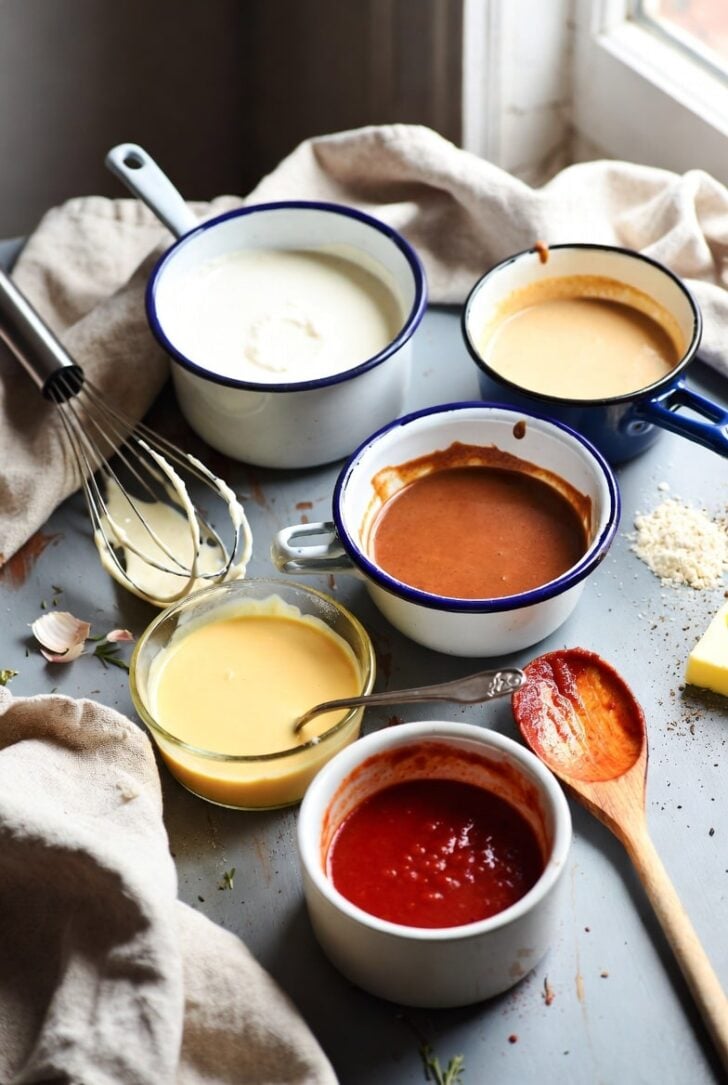
The Mother(s) of All Sauces: Foundations, Not Fossils
Every Michelin-starred kitchen runs on sauce. Before the truffles, the foams, the edible flowers, there’s always sauce.
Not just any sauce. The five French mother sauces built classical cuisine from the ground up. Rustic stew? Fine-dining entrée with that glossy reduction? You’re using one of these techniques.
Auguste Escoffier codified them first. Same guy who organized professional kitchens using the brigade system (borrowed from the French military, actually). These sauces organized kitchen chaos. Gave chefs something to build on instead of winging it every night.
Traditional? Sure. Outdated? Not even close. They’re tools for innovation. Creamy béchamel in your lasagna, bright hollandaise on Sunday eggs. These sauces show up everywhere, you just don’t always notice.
Drum roll please….
- Béchamel (milk-based)
- Velouté (light stock-based)
- Espagnole (brown, meaty)
- Hollandaise (emulsified butter)
- Sauce Tomat (tomato-based)
Coming up: Techniques, modern variations, and chef-level tips to help you master (and you will!) these instead of just reading about them – like now! It’s ok, we are just talking right 🙂
Why These Matter Today
These sauces were codified over a century ago but, you’re already using them – maybe without even realizing it!
Make mac and cheese that doesn’t split into a greasy puddle? That’s béchamel technique. Pan sauce after searing chicken? Velouté principles. Sunday hollandaise? Same emulsification that makes vinaigrettes and mayo work.
These five sauces teach you the mechanics behind hundreds of recipes. How roux thickens things. How emulsions stay stable. How slow reduction concentrates flavor. Once you understand those basics, you stop blindly following recipes and start cooking with actual control. Broken sauce? You can fix it. Too thick? Adjust on the spot. Want to riff on flavors? Go for it.
Modern cooking didn’t toss these out—it built on top of them. Chefs still use demi-glace for steaks, velouté for pot pies, hollandaise for asparagus. Home cooks who get these down cook with more confidence, waste less food, serve better dinners. Not because they’re trying to impress anyone (though maybe a little!), but because they know what’s actually happening when butter hits flour or why their sauce just broke.
They matter because they are techniques that work, not simply tradition.
For the complete, and I mean complete history of the mother sauces I have a treat for you!!! I wrote an insanely deep dive here: Deep History of the Five Mother Sauces
Sauce Is the Soul
Before the foams, and way before the plating tweezers… there’s sauce.
Not just any sauce. The element that binds it together. Yep literally and figuratively! The element that transforms a pan-seared chicken breast into dinner. Or how you turn pasta and cheese into mac and cheese that tastes incredible.
At the center of it all? The five French mother sauces.
Codified by legendary chef Auguste Escoffier in the early 20th century, these five foundational sauces looked good for sure. But they also tasted amazing of course! But they were also (yes two things!) designed to bring order to the chaos of the professional kitchen. Think of them like culinary foundations to literally build upon. Master the mother sauces, and you’ve built the bones of great cooking: roux, reduction, emulsification, balance, control.
These sauces are still everywhere you look! Every lasagna, every eggs Benedict, every bordelaise drenched filet or silky tomato braised short rib owes its soul to one of these mothers. They’re timeless not because they’re traditional, but because they work — and they evolve beautifully.
In this guide, we are are going to talk about what these sauces are… AND how to make them. But even more than that, why they matter, and how to riff on them like a chef. Each one comes with a full recipe, pro tips, and modern spins so you can actually use this in your kitchen. Tonight, or next week, you will come back to these I can promise you that.
Ok one more thing and then… Let’s make some of these MOTHERs (of all) sauces!!
First, a quick note on: Storage & Make-Ahead Notes
Béchamel Fridge keeps it good for 3 days in an airtight container. Press plastic wrap right on the surface so no skin forms. Reheats fine over low heat—add a splash of warm milk if it got too thick. Freezes okay for 2 months, though texture can turn slightly grainy when thawed. But honestly, just use it fresh.
Velouté Same as béchamel—3 days in the fridge. Plastic wrap on the surface prevents skin. Reheat gently, add warm stock if it tightened up. Freezes for 2 months but might separate a bit. Whisk well when reheating to smooth it back out.
Espagnole Fridge storage: 5 days. Freezes beautifully for 3-4 months without losing anything. Portion into small containers or ice cube trays for grab-and-go convenience. Reheats perfectly on the stove—bring to a gentle simmer, stir. Demi-glace (reduced espagnole) freezes even better, keeps basically forever frozen.
Hollandaise Don’t freeze it—emulsion breaks, turns into separated butter when thawed. Doesn’t fridge well either; splits and gets grainy. Make hollandaise fresh, serve right away. Need to hold it? Keep barely warm (around 130°F) over tepid water for 30-45 minutes tops, stirring occasionally. Past that, you’re risking disaster.
Sauce Tomat Fridge: 5 days. Freezes exceptionally well for 3-4 months. Actually tastes better the next day once flavors blend. Portion into containers or freezer bags, label them. Reheats easily on stovetop or microwave—add water if it thickened too much. One of the easiest make-ahead sauces.Retry

1. Béchamel – The Creamy Classic
Milk, butter, flour. This perfect white sauce shows up everywhere. Lasagna needs it. Mac and cheese? Halfway there already. Moussaka? Same deal.
Béchamel is one of only two mother sauces that skip stock entirely. Blond roux thickens it, infused milk enriches it. Neutral canvas that goes sweet or savory depending on what you’re making.
How to Make Béchamel
1. Start with Warm, Infused Milk
Heat your milk gently in a separate pan. Escoffier’s trick? Whole onion studded with cloves. Let it steep, don’t slice it. Flavor stays subtle that way.
2. Make a Blond Roux
Equal parts butter and flour in another pan, medium-low heat. Cook slowly until it smells nutty and turns pale golden. Stir constantly. Texture should look like wet sand, soft and a bit foamy.
Don’t rush this part. Too hot or you stop stirring? Burns fast, tastes bitter.
3. Add the Warm Milk Gradually
Strain that infused milk, add it to the roux in small batches. Whisk thoroughly after each pour. Most people mess up here by dumping cold milk in all at once. Lumps city. Going slowly emulsifies everything properly.
4. Stir Until Glossy
Keep whisking over low heat until it thickens and turns glossy. Should coat the back of a spoon when it’s ready.
Cold milk makes the sauce seize up and form lumps. Warm milk only. If you get lumps anyway, whisk vigorously off the heat in small circles. Friction beats them out.
5. Season It
Salt, white pepper, pinch of nutmeg if you’re going savory.
Classic Variations
Now, small additions are going to create entirely different sauces.
- White Sauce: Plain with just nutmeg. Shows up in British cooking over vegetables, sometimes even Christmas pudding.
- Mornay Sauce: Gruyère or cheddar melted in. Creamy. Works for mac and cheese, cauliflower gratin, lasagna.
- Soubise Sauce: Sweated onions blended into béchamel. Sweeter, silkier. Want restaurant-quality texture? Blend the onions and béchamel, then pass through a fine-mesh sieve.
Why Bechamel?
Béchamel teaches essential skills. How to make a roux, control temperature, build flavor from subtle ingredients. This is one to master. Because once you do, the rest of the mother sauces start making way more sense.
Common Mistakes & Troubleshooting
Lumpy Sauce Cold milk hit hot roux, or you dumped it all in at once. The roux seized before it could blend properly. Fix: whisk hard off the heat—small, tight circles break the lumps down. Better yet, warm your milk first and pour it slowly, whisking after each addition.
Grainy or Gritty Texture Roux didn’t cook long enough before you added liquid. Raw flour taste, weird texture. No fix here—start over. Cook that roux for at least 2-3 minutes, stirring the whole time, until it smells nutty and looks like damp sand.
Too Thick Too much flour, or it reduced too far. Thin it with warm milk (or stock), one spoonful at a time, whisking until it loosens up. Should coat a spoon but still flow.
Too Thin Not enough roux, or didn’t simmer long enough. Keep it on low heat, stir often—it’ll thicken as the starch activates. Really thin? Make a tiny batch of roux separately and whisk that in.
Scorched Bottom Heat was too high, or you walked away. Once it burns, that bitter taste spreads through the whole thing—toss it. Medium-low heat, keep stirring, use a heavy pan.
Tastes Like Raw Flour Didn’t cook the roux enough. Needs those few minutes to lose that starchy, pasty flavor. Finished sauce still tastes off? Simmer it longer—sometimes an extra 5-10 minutes clears it up.
Classic Béchamel Sauce

Classic Béchamel Sauce
Ingredients
- 4 tablespoons ½ stick unsalted butter
- 4 tablespoons all-purpose flour
- 2 cups whole milk, warmed
- ¼ teaspoon salt, or to taste
- ¼ teaspoon ground white pepper, or to taste
- Pinch of freshly grated nutmeg, optional
Instructions
Melt the Butter
- In a medium saucepan over medium heat, melt the butter until fully liquid but not browned.
Make the Roux
- Add the flour and whisk constantly for 2–3 minutes. The mixture should bubble gently and turn smooth, but not take on color — you want a blond roux.
Add Warm Milk Gradually
- Slowly pour in the warm milk a little at a time, whisking continuously to prevent lumps. Let each addition fully incorporate before adding more.
Simmer and Thicken
- Bring the mixture to a gentle simmer, stirring often. Cook for 5–8 minutes until the sauce thickens enough to coat the back of a spoon.
Season and Finish
- Remove from heat and stir in salt, white pepper, and nutmeg to taste.
Optional: For an extra-smooth sauce, strain through a fine-mesh sieve before serving.
Classic Mornay Sauce Recipe

Classic Mornay Sauce Recipe
Ingredients
- 2 tablespoons unsalted butter
- 2 tablespoons all-purpose flour
- 2 cups whole milk, warmed
- ¼ teaspoon salt, or to taste
- Pinch of white pepper
- Pinch of freshly grated nutmeg, optional
- ½ cup finely grated Gruyère cheese
- 2 tablespoons finely grated Parmesan cheese
Instructions
Make a Roux
- In a medium saucepan over medium heat, melt the butter. Add the flour and whisk constantly for 2–3 minutes until smooth and pale golden — do not let it brown.
Add Warm Milk
- Gradually whisk in the warm milk, stirring constantly to avoid lumps. Bring to a gentle simmer and cook for 5–7 minutes, stirring often, until thickened to coat the back of a spoon.
Season
- Add salt, white pepper, and nutmeg (if using). Stir well.
Add Cheese Off Heat
- Remove from heat and stir in Gruyère and Parmesan until fully melted and smooth.
Strain (Optional)
- For a smoother texture, strain the sauce through a fine mesh sieve before serving.
Classic Soubise Sauce Recipe

Classic Soubise Sauce
Ingredients
- 2 tablespoons unsalted butter
- 2 medium white onions, finely sliced (not chopped)
- 1 cup béchamel sauce, prepared in advance, warm
- Salt, to taste
- Optional: White pepper, to taste
Instructions
Sweat the Onions:
- In a heavy-bottomed pan, melt the butter over low heat. Add the sliced onions and cook slowly, covered, for 20–25 minutes, until completely soft and translucent. Do not brown them — you’re coaxing out their sweetness.
Blend Until Smooth:
- Once soft, transfer the onions (along with any butter in the pan) to a blender or food processor. Blend until completely smooth.
Incorporate the Béchamel:
- Stir the onion purée into the warm béchamel sauce over low heat. Mix gently until fully combined and warmed through.
Season:
- Taste and season with salt and optional white pepper. If desired, strain through a fine-mesh sieve for a silky texture.

2. Velouté – The Silky Chameleon
The big difference is that we use white stock instead of milk. Lighter than béchamel but just as crucial. Shows up in chicken pot pie filling, elegant fish sauces, veal dishes. The name comes from velour — velvet. That’s the texture that you are after. And Velour is french and guess what the latin root is? Villus, and that means “shaggy hair” or “tuft of hair”. What?? Ok…
How to Make Velouté
1. Warm the Stock
Pick your white stock: chicken, fish, or veal. Skip roasted bones, clarity matters here. Heat it gently in a separate pan.
2. Make a Blond Roux
Equal parts butter and flour, medium heat. Stir until it forms a pale golden paste, smells slightly nutty. Texture like wet sand.
Light roux matters here. Cook out the raw flour taste without darkening it.
3. Add the Warm Stock Gradually
Pour stock into the roux in small amounts. Whisk thoroughly after each pour. Smooth, no lumps. Slow pour gives you better control.
4. Stir Until Velvety
Whisk over medium-low heat until the sauce thickens slightly, gets glossy. Should coat the back of a spoon but still pour easily.
5. Season and Balance
Salt and white pepper. Splash of lemon juice or mild vinegar at the end brightens without taking over.
Classic Variations
A few tweaks, a few turns, velouté is an ENTIRELY different sauce!
- Mustard Velouté: Dijon stirred in after thickening. Sharp, creamy. Chicken or pork cutlets love this.
- Herb Velouté: Blend finished sauce with blanched spinach, parsley, tarragon. Bright green, aromatic. Fish or poached chicken. Blanching keeps that vivid color.
- Fish Pie Base: Fish stock, finish with cream and lemon. Seafood-friendly version.
Turkey gravy is one of the most practical applications of Velouté logic in everyday cooking. My Easy Turkey Gravy Without Drippings uses this exact approach — stock thickened deliberately, seasoned in layers, no drippings needed.
Why Veloute?
Velouté teaches restraint. You learn to pull depth from stock, balance texture with roux, finish with just enough acid to wake everything up. Start working with this one, and you’ll see why chefs reach for velouté constantly.
Common Mistakes & Troubleshooting
Lumpy Sauce Cold stock hit the roux, or you dumped it in too fast. Roux seized instead of blending. Pull it off heat, whisk hard in tight circles—breaks most lumps down. Next time? Warm stock, pour slow, whisk between each addition.
Tastes Weak or Watery Stock wasn’t good enough, or you added too much. Velouté’s only as flavorful as what you put in it. Keep simmering to concentrate it down—takes a while, but works. Start with homemade or quality store-bought stock that has actual depth.
Too Thick Reduced too much, or roux ratio was off. Loosen it with warm stock, bit by bit, whisking until it flows right. Should coat a spoon lightly, not cling.
Too Thin Not enough roux, or didn’t simmer long enough to thicken. Let it go gently on low heat, stirring now and then—flour needs time to do its thing. Still thin after 10 minutes? Whisk in some beurre manié (soft butter mashed with flour, equal parts).
Greasy Film on Top Stock had too much fat, or you skipped skimming. Spoon off that layer, or lay a paper towel flat on the surface to blot it. Better stock means less babysitting.
Cloudy or Murky Boiled it instead of simmering, or started with cloudy stock. Velouté should look clean and silky. Can’t un-cloud it—gentle heat from the beginning keeps it clear.
Tastes Floury Roux didn’t cook enough before you added stock. Should smell toasty and look pale gold, not raw. Finished sauce tastes pasty? Simmer longer—extra 5-10 minutes usually clears it.
Classic Velouté Sauce

Classic Velouté Sauce
Ingredients
- 2 tablespoons unsalted butter
- 2 tablespoons all-purpose flour
- 2 cups white stock, chicken, veal, or fish, hot
- Salt and white pepper, to taste
Instructions
Make the Roux:
- In a saucepan over medium heat, melt the butter. Add the flour and whisk constantly for 2–3 minutes to form a smooth, pale (but not browned) roux.
Add the Stock Gradually:
- Slowly pour in the hot stock in small increments, whisking constantly to prevent lumps from forming.
Simmer and Thicken:
- Bring to a gentle simmer and cook for 5–10 minutes, stirring occasionally, until the sauce thickens enough to coat the back of a spoon. Skim off any foam or skin that forms on the surface.
Season and Finish:
- Season with salt and white pepper to taste. If a silky texture is desired, strain the sauce through a fine-mesh sieve.
Use or Store:
- Serve immediately or use as a base for derivative sauces such as suprême, allemande, or mustard velouté.
Notes
Classic Mustard Velouté Sauce

Classic Mustard Velouté Sauce
Ingredients
- 2 tablespoons unsalted butter
- 2 tablespoons all-purpose flour
- 2 cups hot chicken or veal stock
- 2 tablespoons Dijon mustard, up to ¼ cup for a stronger flavor
- Salt and white pepper, to taste
- Optional 1–2 tablespoons heavy cream
- Optional 1–2 teaspoons finely chopped fresh tarragon or chives
Instructions
Make the Blond Roux:
- In a medium saucepan over medium heat, melt the butter. Add the flour and whisk constantly for 2–3 minutes until smooth and bubbling, but not browned. The roux should stay pale and foamy.
Add the Stock:
- Gradually pour in the hot stock, whisking continuously to avoid lumps. Stir until fully incorporated.
Simmer and Thicken:
- Bring the sauce to a gentle simmer. Cook for 5–7 minutes, stirring frequently, until it thickens and lightly coats the back of a spoon.
Incorporate the Mustard:
- Remove the pan from heat. Whisk in the Dijon mustard until fully blended. Adjust the amount depending on how bold you want the flavor.
Finish and Season:
- Season with salt and white pepper to taste. (Optional) Stir in the cream for added richness, and fold in chopped herbs just before serving.
Classic Fish Pie Velouté Sauce

Classic Fish Pie Velouté Sauce
Ingredients
- 4 tablespoons ½ stick unsalted butter
- 4 tablespoons all-purpose flour
- 2½ cups good-quality fish or shellfish stock, prawn stock is classic
- Salt and freshly ground white or black pepper, to taste
- Optional: ¼ to ½ cup heavy cream
- Optional: 2 tablespoons dry white wine
Instructions
Make the Roux:
- In a saucepan over medium heat, melt the butter. Add the flour and stir constantly for 2–3 minutes, forming a smooth, pale roux. Do not let it brown — you want a light base for this delicate sauce.
Add the Stock Gradually:
- Slowly whisk in the hot fish stock, a little at a time. Whisk continuously to keep the mixture lump-free and smooth.
Simmer and Thicken:
- Bring the sauce to a gentle simmer and cook for 20–30 minutes, stirring occasionally. Skim off any foam or film that rises to the surface. The sauce should be glossy and thick enough to coat the back of a spoon.
Finish the Sauce:
- Season to taste with salt and pepper. For a richer, more luxurious finish, stir in the cream and/or wine, and cook for 1–2 minutes more to incorporate.
Use Immediately:
- Layer over cooked fish, prawns, or vegetables in your pie dish before topping with mashed potatoes and baking.
Notes
This sauce is only as good as the stock you use. Homemade prawn or fish stock gives incredible depth, but high-quality store-bought works in a pinch. Avoid overly salty or artificial stocks. 2. Keep the roux light.
Do not brown the roux. A pale roux keeps the sauce delicate and prevents overpowering the subtle flavor of the fish. 3. Whisk constantly when adding stock.
This prevents lumps and ensures a silky consistency. Always add the liquid slowly and whisk thoroughly between additions. 4. Simmer gently — don’t boil.
Boiling can make the sauce grainy or split. Keep the heat low and stir regularly to prevent scorching on the bottom. 5. Season thoughtfully.
Your fish filling may already contain salt (especially if using smoked fish). Taste the sauce before seasoning, and season lightly at first. 6. Cream is optional, but elevates richness.
Adding a bit of cream softens the texture and balances the briny flavor of seafood. It’s especially helpful if using assertive fish like smoked haddock. 7. White wine adds brightness.
Just 1–2 tablespoons can lift the sauce and cut richness. Add after the stock and let it reduce slightly before finishing with cream.

3. Espagnole – The Deep and Meaty Classic
Dark, rich, layered. Built on brown stock, brown roux, mirepoix, tomato. Béchamel and velouté stay light. Espagnole goes heavy with roasted depth. Powers demi-glace, steakhouse gravies, sauces that take time.
How to Make Espagnole
1. Render Fat and Cook the Mirepoix
Bacon or pancetta in a heavy pan. Let the fat render out. Add onion, carrot, celery. Cook slowly until softened and lightly caramelized.
2. Add Tomato
Stir in tomato paste. Cook a few minutes to deepen sweetness and color. Vegetables should get some golden edges, not burn.
3. Make a Brown Roux
Add butter, then flour. Stir constantly until it darkens to deep golden brown. This gives the sauce its body.
4. Add Brown Stock Slowly
Pour in beef or veal stock in small amounts. Whisk as you go, scrape up fond from the pan bottom. That fond carries serious flavor.
5. Simmer Low and Slow
Let it bubble gently for 30 to 45 minutes. Skim foam from the top. Sauce should reduce slightly, thicken, get glossy.
Classic Variations
Espagnole rarely gets used as is – straight up. It’s the base for much more famous daughter sauces like demi or bordelaise
- Demi-Glace: Reduce Espagnole with more brown stock and wine until concentrated. Strain for a glossy, powerful glaze.
- Bordelaise: Red wine, shallots, bone marrow. Grilled beef or lamb territory.
- Sauce Chasseur: Mushrooms, shallots, white wine, touch of tomato. Rustic hunter style, often with chicken or game.
- Sauce Diane: Cream, brandy, mustard folded in. Classic pan sauce for filet mignon.
Why Espagnole?
Espagnole demands discipline. Cook slowly, layer flavors, taste constantly. Every shortcut shows up on the plate. With this one, you’ve built the foundation for demi-glace and every great brown sauce worth making.
Common Mistakes & Troubleshooting
Burnt Roux Rushed the browning or cranked the heat too high. Once it burns, that acrid taste spreads through everything—no saving it. Toss it and start over. Brown roux needs patience—medium-low heat, constant stirring, watching for deep golden color without crossing into black.
Bitter or Acrid Taste Tomato paste scorched, or vegetables burned before deglazing. Tomato needs gentle cooking to caramelize its sugars, not char. If it tastes bitter, there’s no fix—start fresh. Keep heat moderate and stir the paste for a couple minutes, just until it darkens and smells sweet.
Too Thin or Watery Didn’t reduce long enough, or used weak stock. Espagnole needs time to concentrate. Keep simmering gently until it coats a spoon thickly. Weak stock? You’ll be simmering forever and it still won’t taste right. Use proper brown stock with body.
Too Thick or Gluey Over-reduced, or too much roux for the amount of liquid. Thin it with warm stock, stirring until it loosens to the right consistency. Should be rich and glossy, not paste.
Greasy or Oily Surface Too much rendered fat from the bacon, or stock was too fatty. Skim that layer off with a spoon as it simmers. If it’s really bad, chill the sauce—fat solidifies on top and lifts right off.
Muddy or Dull Flavor Didn’t develop enough fond, or skipped deglazing properly. That caramelized stuff stuck to the pan is flavor. Scrape it up when you add stock—don’t leave it behind. Taste flat? Simmer longer to concentrate, or add a splash of red wine to brighten it.
Lumpy Texture Added stock too fast, or didn’t whisk the roux enough. Pull it off heat and whisk aggressively. Strain through a fine sieve if you need to. Prevention: add stock gradually and whisk constantly while the roux is still hot.
Classic Espagnole Sauce

Classic Espagnole Sauce Recipe
Ingredients
- 4 tablespoons 2 oz unsalted or clarified butter
- ¼ cup 2 oz all-purpose flour
- 1 small onion, finely diced
- 1 small carrot, finely diced
- 1 rib celery, finely diced
- 2 tablespoons tomato paste
- 4 cups 1 quart brown stock (veal or beef preferred), hot
- 1 bay leaf
- 1 sprig fresh thyme
- 2 –3 parsley stems
- 1 –2 garlic cloves, optional
- 5 –6 black peppercorns, optional
- Salt, to taste
Instructions
Sauté the Mirepoix:
- In a heavy-bottomed saucepan, melt the butter over medium heat. Add the diced onion, carrot, and celery. Cook gently for about 8–10 minutes, stirring occasionally, until the vegetables are softened and just beginning to brown.
Make the Brown Roux:
- Sprinkle in the flour and stir constantly for 4–6 minutes to create a deep golden brown roux. The texture should be cohesive and fragrant — but not burnt.
Incorporate Tomato Paste:
- Stir in the tomato paste and cook for 2 minutes. This caramelizes the sugars and deepens the flavor base of the sauce.
Deglaze and Add Stock:
- Slowly whisk in the hot brown stock in several additions, scraping up any fond from the bottom of the pan. Stir thoroughly after each addition to prevent lumps.
Simmer and Infuse:
- Bring to a gentle simmer. Add the bay leaf, thyme, parsley stems, and optional garlic and peppercorns. Simmer uncovered for 45–60 minutes, stirring occasionally and skimming off any foam or impurities that rise to the top.
Strain and Season:
- Strain the finished sauce through a fine-mesh sieve or chinois. Discard the solids. Season with salt to taste. The sauce should be glossy, rich, and coat the back of a spoon.
Notes
Classic Demi-Glace

Classic Demi-Glace
Ingredients
- 2 cups Espagnole sauce, prepared as described above
- 2 cups brown stock, veal or beef, homemade preferred
- Optional: bouquet garni, bay leaf, thyme, parsley stems, and optionally a celery stalk
Instructions
Combine the Liquids:
- In a heavy-bottomed saucepan or stockpot, pour in the Espagnole sauce and brown stock. Stir to combine evenly.
Add Aromatics:
- If using a bouquet garni, add it to the pot. Tuck it under the surface so it infuses evenly as the liquid reduces.
Bring to a Simmer:
- Place the pan over medium-low heat and slowly bring to a gentle simmer. Do not let it boil — high heat can cloud the sauce.
Reduce and Skim:
- Simmer uncovered for 1 to 2 hours, or until reduced by half. Skim any foam or impurities that rise to the surface to maintain clarity.
Strain and Finish:
- Remove the bouquet garni. Strain the reduced sauce through a fine-mesh sieve or cheesecloth for a smooth, glossy finish.
Notes
Classic Sauce Diane (Espagnole-Based)

Classic Sauce Diane (Espagnole-Based)
Ingredients
- 1 cup Espagnole sauce, or demi-glace
- 1 tablespoon unsalted butter
- 1 small shallot, finely minced
- 2 tablespoons Cognac or brandy
- 1 tablespoon Dijon mustard
- 2 tablespoons heavy cream
- Salt and white pepper, to taste
- Optional: ¼ cup finely chopped mushrooms
- Optional: Chopped parsley or chives, for garnish
Instructions
Sauté the Aromatics:
- In a small sauté pan, melt the butter over medium heat. Add the minced shallot (and mushrooms, if using) and cook gently for 3–4 minutes until soft and fragrant. Do not let them brown.
Deglaze with Cognac:
- Add the Cognac or brandy to the pan. Let it bubble and reduce by half, allowing the alcohol to cook off. Scrape up any browned bits from the pan for added flavor.
Add the Sauce Base:
- Stir in the Espagnole sauce or demi-glace. Bring to a gentle simmer and let reduce slightly for 3–5 minutes to intensify the flavor.
Finish with Mustard and Cream:
- Whisk in the Dijon mustard and heavy cream. Continue simmering for 2–3 minutes, stirring until the sauce is smooth, glossy, and coats the back of a spoon.
Season and Serve:
- Season with salt and white pepper to taste. Finish with chopped parsley or chives if desired. Serve warm over grilled or pan-seared steak, tenderloin, or game meats.
Notes

4. Hollandaise – The Bright and Buttery Emulsion
It’s delicate. It’s rich and it is easily ruined if you rush it. Hollandaise is the mother sauce that is the separator. The casual cooks from people who know how to control heat and emulsify on instinct. Egg yolks, butter, acid — that’s it. It’s the soul of eggs Benedict, the backbone of béarnaise, the sauce that makes asparagus feel fancy. Light, silky, lemony. Worth every penny of effort!
How to Make Hollandaise
1. Set Up a Bain-Marie
Simmer an inch of water in a saucepan. Bowl on top, but don’t let it touch the water. Add egg yolks, vinegar (or lemon), and a splash of water. Whisk until foamy.
2. Cook to Sabayon Stage
Keep whisking over gentle steam until it thickens into a light custard. Pale, airy, ribbons forming. Pull it off the heat if it warms too fast — scrambled eggs aren’t the goal.
3. Add Warm Butter Slowly
Drizzle in melted butter (clarified or whole), a few drops at first. Whisk hard. Once it starts thickening, you can increase the pour. Smooth, glossy, stable. Whole butter = more flavor. Clarified = cleaner texture. Both work.
4. Adjust Consistency
Too thick? Add a splash of warm water. Too loose? More whisking plus a bit more butter.
5. Season and Brighten
Salt at the end. Finish with lemon or vinegar to wake it up.
Classic Variations
Hollandaise spawns legends with barely any effort.
- Béarnaise: Tarragon, shallots, vinegar reduction. Classic steak partner.
- Sauce Mousseline: Fold in whipped cream. Lighter, airy, great with delicate fish.
- Sauce Maltaise: Blood orange juice and zest. Traditionally paired with asparagus.
Why Hollandaise
Hollandaise 100% technique. No roux to hide behind. No stock to lean on. Just heat control, timing, and a whisk. From here, every emulsified sauce — from béarnaise to beurre blanc — becomes far less intimidating.
Common Mistakes & Troubleshooting
Sauce Broke (Separated) Butter went in too quick, or heat climbed too high. Yolks can’t grab all that fat at once, so it splits into greasy puddles. Fix: grab a fresh yolk, whisk it with a teaspoon of water in a clean bowl, then slowly drizzle the broken sauce back in—builds a new emulsion. Prevention? Add butter in a thin stream, watch your heat.
Scrambled or Curdled Yolks Way too hot. Yolks turned into scrambled eggs instead of smooth custard. No saving this one—toss it, start fresh. Use a bain-marie (bowl sitting over barely simmering water, not touching), and pull the bowl off whenever it feels too warm.
Too Thick Added butter too slowly at the end, or it cooled down and seized up. Thin it out with warm water or lemon juice, few drops at a time, whisking till it loosens. Should glide off a spoon, not cling like mayo.
Too Thin Never reached sabayon stage before adding butter, or butter was cold. Keep whisking over gentle heat till it thickens—yolks need warmth to hold the emulsion. Still watery? Whisk in more melted butter slowly, or start a new yolk base and incorporate the thin sauce into that.
Tastes Greasy or Heavy Used whole butter instead of clarified, or didn’t balance with acid. Whole butter adds milk solids that weigh things down. Fix: squeeze in more lemon or add a splash of vinegar to cut the richness. Next time, clarify your butter or finish with extra citrus.
No Flavor or Flat Forgot to season, or skipped the lemon. Hollandaise without salt and acid is just warm butter—not much going on. Taste as you finish, adjust accordingly.
Won’t Thicken Heat’s too low, or yolks didn’t emulsify properly. Bump the heat up slightly (carefully) and keep whisking till it starts ribboning. Ten minutes in and nothing’s happening? Yolks might’ve been fridge-cold—restart with room-temp yolks.Retry
Classic Hollandaise Sauce

Classic Hollandaise Sauce
Ingredients
- 3 large egg yolks
- ¾ cup clarified butter, warm, not hot
- 1½ –2 teaspoons fresh lemon juice
- 1 tablespoon water or white wine, optional, for thinning
- Pinch of salt
- Pinch of cayenne or white pepper, optional
Instructions
Set Up the Bain-Marie:
- In a heatproof bowl, whisk together the egg yolks, lemon juice, and water or wine (if using). Place the bowl over a saucepan of barely simmering water. Ensure the bottom of the bowl does not touch the water.
Whisk to Sabayon Stage:
- Whisk the yolk mixture vigorously until it thickens, lightens in color, and reaches ribbon consistency. This step usually takes about 3–5 minutes. Regulate the heat so the yolks don’t scramble.
Emulsify with Butter:
- Remove the bowl from the heat. Slowly drizzle in the warm clarified butter while whisking constantly. The sauce should thicken gradually into a smooth, glossy emulsion.
Season and Adjust:
- Season with salt and a pinch of cayenne or white pepper. If needed, adjust the consistency with a few drops of warm water.
Serve or Hold Warm:
- Serve immediately or keep warm over barely tepid water. Do not overheat or the sauce may split.
Notes
Classic Béarnaise Sauce

Classic Béarnaise Sauce
Ingredients
- 3 large egg yolks
- 1/3 cup white wine vinegar
- 1/3 cup dry white wine
- 2 tablespoons finely chopped shallots
- 1 –2 tablespoons chopped fresh tarragon stems, for reduction
- 1/8 teaspoon crushed black peppercorns
- 3/4 cup clarified butter, warm
- 2 tablespoons chopped fresh tarragon leaves
- 1 tablespoon chopped fresh chervil, optional but classic
- Salt, to taste
Instructions
Make the Reduction:
- In a small saucepan, combine the white wine vinegar, white wine, chopped shallots, tarragon stems, and crushed peppercorns. Simmer gently over medium heat until the liquid reduces to about 2–3 tablespoons. This takes around 8–10 minutes.
Strain and Prepare the Base:
- Strain the reduction into a heatproof bowl, discarding the solids. Let cool slightly, then whisk in the egg yolks.
Cook the Sabayon:
- Place the bowl over a saucepan of barely simmering water (bain-marie), ensuring the bottom of the bowl doesn’t touch the water. Whisk constantly until the yolks lighten in color, thicken, and form soft ribbons when the whisk is lifted — about 3–5 minutes.
Emulsify with Butter:
- Remove the bowl from heat. While whisking constantly, slowly drizzle in the warm clarified butter — starting with a few drops, then increasing to a steady stream once the emulsion forms. Continue until all the butter is incorporated and the sauce is thick and glossy.
Finish the Sauce:
- Stir in the chopped fresh tarragon leaves and chervil (if using). Season with salt to taste.
Serve Immediately:
- Serve warm, ideally over grilled steak, roast lamb, or steamed vegetables. Keep warm over barely tepid water if not serving immediately — never direct heat.
Notes
Classic Sauce Maltaise

Classic Sauce Maltaise
Ingredients
- 4 large egg yolks
- 2-3 tablespoon 1 tablespoon water and 1–2 tablespoons white wine vinegar
- 1 cup clarified butter, warm
- 1 tablespoon fresh lemon juice
- 3 tablespoons blood orange juice, strained and reduced by half, if desired
- 3 tablespoons blood orange zest, finely julienned and blanched
- Salt, to taste
Instructions
Blanch the Zest:
- Julienne the blood orange zest into fine strips. Blanch in boiling water for 3–4 minutes, drain, and repeat once more. Set aside to cool.
Reduce the Juice:
- Squeeze and strain fresh blood orange juice. Simmer in a small saucepan until reduced by half and slightly syrupy. You should end up with about 1½ tablespoons concentrated juice. Set aside.
Make the Sabayon Base:
- In a heatproof bowl, whisk together the egg yolks, water, and vinegar. Place the bowl over a saucepan of gently simmering water (bain-marie), ensuring the bottom of the bowl doesn’t touch the water.
Whisk to Ribbon Stage:
- Whisk constantly until the yolks lighten in color and thicken into a sabayon — the mixture should form soft ribbons when lifted.
Emulsify with Butter:
- Remove the bowl from the heat. Slowly whisk in the warm clarified butter, a few drops at first, then in a steady stream, until the sauce is thick and fully emulsified.
Finish the Sauce:
- Whisk in the lemon juice and the reduced blood orange juice. Season with salt to taste. Gently stir in the blanched zest.
Serve Immediately:
- Keep the sauce warm (not hot) over tepid water until ready to serve. Ideal with steamed asparagus, grilled fish, or poached eggs.
Notes

5. Sauce Tomat – The Rustic Classic
Rustic and familiar. Sauce tomat is tomatoes treated with classical discipline — slow simmering, balanced aromatics, controlled reduction. Shows up in braises, stews, pasta dishes, and anywhere tomato needs to taste richer, not louder. Simple ingredients, deliberate technique.
How to Make Sauce Tomat
1. Sweat the Aromatics
Onions in olive oil over medium-low heat. Soft, translucent, no browning. Add minced garlic for the last 30 seconds. Sweetness, not sharpness.
2. Add the Tomatoes
Canned whole peeled tomatoes or peeled fresh tomatoes. Stir them in and bring to a gentle simmer. Off-season? Canned usually tastes better.
3. Simmer and Reduce
Low and slow. Let excess moisture cook off, let the tomato deepen. A glossy layer of oil rising to the top means it’s working. Stir occasionally.
4. Season and Balance
Salt to taste. Splash of vinegar or lemon to lift the acidity. Strain for smoothness or leave rustic. Your call.
Classic Variations
Sauce tomat goes Mediterranean a thousand ways, well not actually a thousand!!
- Sauce Provençale: Garlic, olives, capers, thyme, rosemary. Bright, briny, perfect with fish or roasted vegetables.
- Romesco-Style: Blend with roasted red peppers, toasted almonds, olive oil, garlic, vinegar. Rich, smoky, nutty.
- Puttanesca-Inspired: Anchovies, capers, olives, chili flakes. Bold, salty, built for pasta or seafood.
Why Sauce Tomat
Sauce tomat is control. You learn reduction, balancing acidity, and coaxing maximum flavor from humble ingredients. This goes without saying but after this one, every tomato-based sauce — Italian, French, Spanish, whatever — gets better instantly.
Common Mistakes & Troubleshooting
Tastes Acidic or Sour Tomatoes were harsh, or you rushed the cooking. Long simmering softens that sharp bite. Fix: tiny pinch of sugar cuts the acid without making it sweet. Let it simmer longer to mellow out.
Watery or Thin Didn’t cook it down enough, or tomatoes had tons of liquid. Keep it bubbling gently till moisture evaporates. Oil should pool on top, sauce should look glossy. Rush this? Gets watery and dull.
Tastes Bitter Burned the garlic or aromatics, or left seeds and pith from fresh tomatoes. Once bitter hits, no going back—dump it. Prevention: cook aromatics low and slow, seed tomatoes right.
Too Thick or Paste-Like Cooked it too far, or didn’t start with enough liquid. Thin with water, stock, or wine—stir till it moves. Should coat a spoon, not stick.
Lacks Depth Aromatics didn’t cook long enough, or you skipped oil. Tomato sauce builds on properly sweated onions and garlic. Can’t fix bland after the fact. Bay leaf or herbs while it cooks help.
Greasy Surface Too much oil, or meat fat didn’t render. Skim the excess off, or dab with paper towel. Some oil’s good—layer of it isn’t.
Grainy Texture Seeds and skins stayed chunky, or you didn’t strain. Want smooth? Push through a food mill or sieve. Want rustic? Leave it.
Tastes Flat Forgot acid at the end, or underseasoned. Salt brings everything forward, splash of vinegar or lemon brightens it. Taste before serving, fix it then.
Classic Sauce Tomat

Classic Sauce Tomat (Escoffier-Style)
Ingredients
- 3 oz salted pork belly or unsmoked bacon, diced
- 2 oz unsalted butter
- 1 small onion, finely chopped
- 1 small carrot, finely chopped
- 1 small stalk celery or 1 small leek, finely chopped
- 3 oz all-purpose flour, about 1/3 to 1/2 cup
- 5 lbs ripe tomatoes, peeled, seeded, and chopped (or equivalent canned whole tomatoes)
- 1 quart white veal stock or broth
- 1 bay leaf
- 1 sprig thyme
- 1 –2 cloves garlic, crushed (optional)
- Salt and pepper, to taste
- Pinch of sugar, optional, to balance acidity
Instructions
Render the Pork Belly:
- In a heavy-bottomed pot, render the pork belly or diced bacon over low heat until most of the fat has been released but before it crisps.
Build the Mirepoix Base:
- Add the butter to the pot, then stir in the chopped onion, carrot, and celery or leek. Sauté gently over medium heat until softened and lightly golden — do not brown.
Make the Blond Roux:
- Sprinkle in the flour and stir constantly to form a blond roux. Cook for about 2–3 minutes, allowing the flour to lose its raw flavor without taking on color.
Add Tomatoes and Stock:
- Stir in the chopped tomatoes and veal stock. Add the bay leaf, thyme, and optional garlic. Mix well to combine.
Simmer Gently:
- Bring to a gentle simmer. Cover and cook on low heat, or transfer to a 350°F oven and cook for about 90 minutes. Skim off any impurities or foam that rise to the surface.
Strain and Finish:
- Once the sauce is thick and well-reduced, remove the bay leaf and thyme. Pass the sauce through a food mill or fine-mesh sieve for a smooth, refined texture.
Season:
- Taste the sauce and adjust with salt, pepper, and a pinch of sugar if needed to balance acidity. Serve warm or store for use as a base in countless classic preparations.
Notes
Classic Sauce Provençale

Classic Sauce Provençale
Ingredients
- 2 tablespoons olive oil
- 1 small onion or 1 shallot, finely chopped
- 2 cloves garlic, minced
- 1½ cups high-quality canned whole tomatoes, drained and chopped (or 3–4 ripe tomatoes, peeled and chopped)
- ½ cup dry white wine, optional but traditional
- 1 teaspoon tomato paste, optional, for added depth
- 1 teaspoon herbes de Provence, or a mix of thyme, oregano, rosemary, basil
- 1 tablespoon capers, drained
- ¼ cup black olives, preferably Niçoise or Kalamata, pitted and halved
- Salt and freshly ground black pepper, to taste
- Pinch of sugar, only if needed to balance acidity
- Chopped fresh parsley or basil, to finish
Instructions
Sauté the aromatics
- In a medium sauté pan, heat the olive oil over medium heat. Add the chopped onion or shallot and cook gently until soft and translucent, about 5–7 minutes. Do not let it brown.
Add garlic and wine
- Add the minced garlic and cook for about 30 seconds, just until fragrant. If using wine, pour it in now and let it simmer until reduced by half — about 3–5 minutes.
Build the sauce
- Stir in the chopped tomatoes and tomato paste (if using). Add the herbes de Provence, a pinch of salt and pepper, and a small pinch of sugar only if your tomatoes are too acidic. Stir well to combine.
Simmer gently
- Reduce heat and let the sauce simmer uncovered for about 20 minutes, stirring occasionally, until it thickens slightly and the flavors are well integrated.
Finish with capers and olives
- Add the capers and olives during the final 2–3 minutes of cooking so they stay bright and flavorful. Stir to distribute evenly.
Season and garnish
- Taste and adjust the seasoning with salt and pepper. Finish with chopped fresh parsley or basil just before serving.
Notes
Classic Puttanesca Sauce

Classic Puttanesca Sauce
Ingredients
- 12 oz spaghetti
- 3 tbsp extra-virgin olive oil, plus more for finishing
- 6 cloves garlic, thinly sliced
- 6 anchovy fillets, finely chopped
- ½ tsp crushed red pepper flakes
- ¼ tsp freshly ground black pepper
- 2 tbsp tomato paste
- ¼ cup dry white wine, e.g., Pinot Grigio or Soave
- 1 28 oz can San Marzano whole peeled tomatoes, hand-crushed
- 2 tbsp capers, drained
- 1 cup pitted olives, roughly chopped (Kalamata, Gaeta, or a blend)
- 1 tsp colatura di alici, Italian fish sauce, plus more to finish
- Zest of 1 lemon, to finish
- Chopped flat-leaf parsley, for garnish
- A few torn fresh basil leaves, optional
- Salt, to taste
- Optional: ¼ tsp sugar, if tomatoes are very acidic
Instructions
Cook the Pasta
- Bring a large pot of well-salted water to a boil.
- Cook the spaghetti until just shy of al dente.
- Reserve ½ cup pasta water, then drain and set aside.
Build the Garlic-Anchovy Base
- In a large sauté pan or skillet, heat 3 tbsp olive oil over medium-low heat.
- Add the garlic and anchovies. Cook slowly, stirring frequently, for 3–4 minutes, until the garlic is golden and the anchovies have fully melted into the oil.
- Stir in the crushed red pepper flakes and black pepper, cook for 10 seconds.
Develop the Sauce
- Add the tomato paste and stir constantly for 1–2 minutes, letting it darken and caramelize.
- Deglaze with ¼ cup dry white wine, scraping up any fond. Simmer until reduced by half — about 2 minutes.
Simmer with Tomatoes & Olives
- Add the hand-crushed tomatoes, capers, and ½ cup of the chopped olives (reserving the other ½ cup for later).
- Simmer uncovered, stirring occasionally, for 10–15 minutes, until the sauce thickens and flavors meld.
- If the tomatoes are overly acidic, add ¼ tsp sugar.
- Taste and adjust salt as needed (but do so cautiously — the colatura is still coming).
Finish the Sauce
- Remove from heat.
- Stir in:
- The remaining ½ cup olives (for bright, assertive olive flavor)
- 1 tsp colatura di alici (for depth and finish)
- Add the cooked pasta to the pan and toss to coat.
- Loosen with reserved pasta water, a splash at a time, until the sauce clings silkily.
Plate & Garnish
- Plate hot.
- Finish each portion with:
- A drizzle of high-quality olive oil
- Lemon zest, microplaned just before serving
- Chopped parsley and a few torn basil leaves, if using
Notes
Quick Reference: The Five at a Glance
We’ve walked through each sauce—how to make them, what goes wrong, how to fix it. Now let’s step back and see how they all connect.
Each mother sauce does something different in the kitchen. Different techniques, different purposes, different challenges. Some are beginner-friendly, some need serious attention. Some freeze like champions, others fall apart if you look at them wrong. Knowing which is which helps you pick the right sauce for the job—and avoid disasters when you’re meal prepping.
Here’s everything laid out:

Think of this as your kitchen cheat sheet. Need something creamy for lasagna? Béchamel. Pan sauce for chicken? Velouté. Rich glaze for steak? Espagnole or demi-glace. Buttery finish for asparagus? Hollandaise. Braising base for short ribs? Sauce tomat.
Get these five down, and you’ve unlocked the foundation of classical cooking—plus a lot more confidence when you’re standing at the stove.
Use These Techniques In:
Béchamel:
- Lasagna Like You Mean It
- One More Bite Mac & Cheese
- Bacon Brandy Mac and Cheese
- Savory Mac and Cheese
Velouté:
Espagnole:
Hollandaise:
Sauce Tomat: